

MCl n þ M(OR) n ! 2MO n=2 þ nRCl
and the second route involves the reaction of a metal halide with an ether:
MCl n þ (n=2)ROR ! MO n=2 þ nRCl
In both reactions, some of the driving force comes from the removal of the volatile
product RCl. This first of the two methods has been employed by Colvin and coworkers [63] to prepare capped TiO 2 nanoparticles in refluxing heptadecane with
trioctyl phosphine oxide as the capping agent:
MCl n þ M(OR) n ! 2MO n=2 þ nRCl
The particles formed clear solutions in non-polar solvents, from which they could
be precipitated through the addition of a polar solvent such as acetone. When trioctyl phosphine oxide was not taken with the starting materials, insoluble precipitates were obtained.
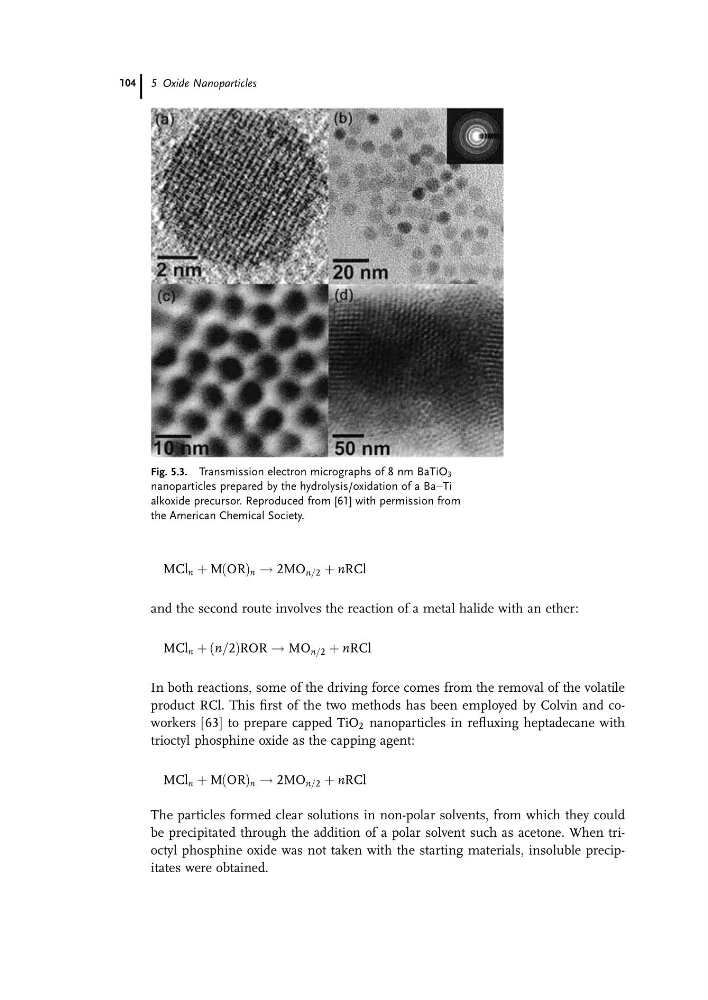
Fig. 5.3. Transmission electron micrographs of 8 nm BaTiO 3
nanoparticles prepared by the hydrolysis/oxidation of a BaaTi
alkoxide precursor. Reproduced from [61] with permission from
the American Chemical Society.
5 Oxide Nanoparticles
104
and the second route involves the reaction of a metal halide with an ether:
MCl n þ (n=2)ROR ! MO n=2 þ nRCl
In both reactions, some of the driving force comes from the removal of the volatile
product RCl. This first of the two methods has been employed by Colvin and coworkers [63] to prepare capped TiO 2 nanoparticles in refluxing heptadecane with
trioctyl phosphine oxide as the capping agent:
MCl n þ M(OR) n ! 2MO n=2 þ nRCl
The particles formed clear solutions in non-polar solvents, from which they could
be precipitated through the addition of a polar solvent such as acetone. When trioctyl phosphine oxide was not taken with the starting materials, insoluble precipitates were obtained.
Fig. 5.3. Transmission electron micrographs of 8 nm BaTiO 3
nanoparticles prepared by the hydrolysis/oxidation of a BaaTi
alkoxide precursor. Reproduced from [61] with permission from
the American Chemical Society.
5 Oxide Nanoparticles
104