

has been replaced by a CMV promoter allows for direct transfection/immunization with plasmid DNA [5]. Alphavirus vectors
have demonstrated a favorable flexibility related to immunization
as delivery is possible as naked RNA replicons, recombinant viral
particles, and DNA plasmids.
In the context of immunization studies in animal models, VEE
particles expressing the hemagglutinin (HA) gene from the Hong
Kong influenza A isolate A/HK/156/97 protected vaccinated
chicken against challenges with lethal doses of influenza virus
[6]. In another approach, immunization of mice with SFV particles
expressing the HA and nucleoprotein (NP) genes provided protection against influenza virus challenges [7]. In the context of Lassa
virus vaccine development, VEE particles expressing Lassa virus
glycoproteins of distantly related clades I and IV from a bicistronic
VEE vector with two 26S subgenomic promoters were subjected to
immunization studies in mice, resulting in protection against challenges against Lassa virus [8]. Moreover, VEE particles expressing
the Ebola virus NP (EBOV-NP) and EBOV glycoprotein
(GP) rendered both immunized mice and guinea pigs resistant to
challenges with lethal doses of EBOV [9, 10]. In another study,
vaccination of primates with VEE particles resulted in protection
against intramuscular and aerosol challenges with EBOV
[11]. Related to RNA-based delivery, in a comparative study, synthetic mRNA and self-amplifying VEE RNA expressing influenza
HA both provided protection against influenza HA challenges, but
RNA
Capsid
Membrane
Envelope
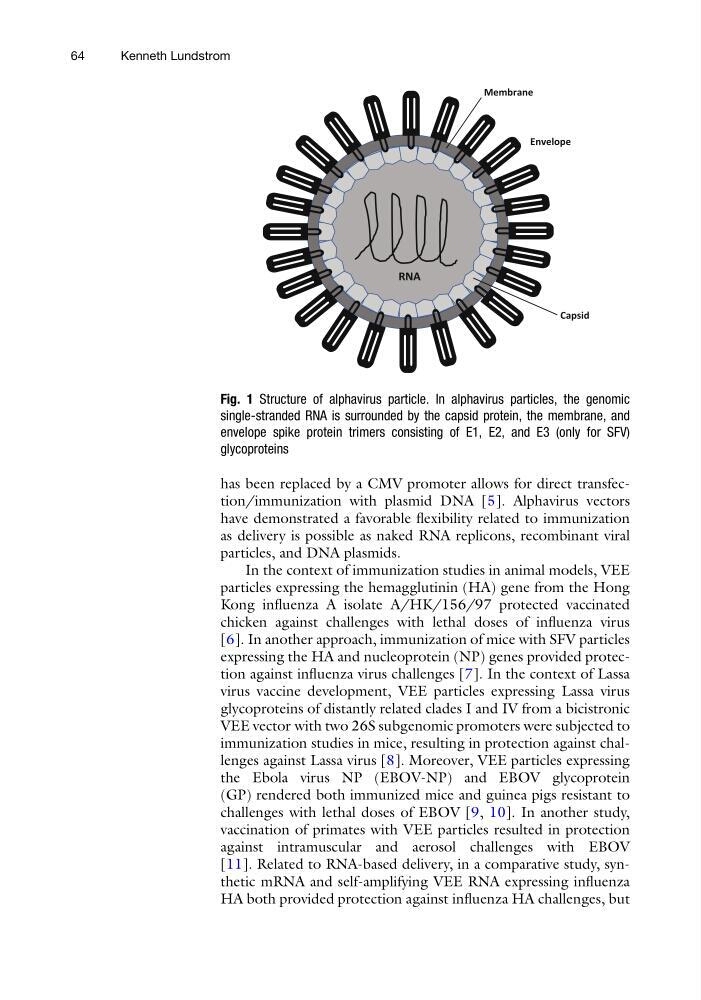
Fig. 1 Structure of alphavirus particle. In alphavirus particles, the genomic
single-stranded RNA is surrounded by the capsid protein, the membrane, and
envelope spike protein trimers consisting of E1, E2, and E3 (only for SFV)
glycoproteins
64
Kenneth Lundstrom
have demonstrated a favorable flexibility related to immunization
as delivery is possible as naked RNA replicons, recombinant viral
particles, and DNA plasmids.
In the context of immunization studies in animal models, VEE
particles expressing the hemagglutinin (HA) gene from the Hong
Kong influenza A isolate A/HK/156/97 protected vaccinated
chicken against challenges with lethal doses of influenza virus
[6]. In another approach, immunization of mice with SFV particles
expressing the HA and nucleoprotein (NP) genes provided protection against influenza virus challenges [7]. In the context of Lassa
virus vaccine development, VEE particles expressing Lassa virus
glycoproteins of distantly related clades I and IV from a bicistronic
VEE vector with two 26S subgenomic promoters were subjected to
immunization studies in mice, resulting in protection against challenges against Lassa virus [8]. Moreover, VEE particles expressing
the Ebola virus NP (EBOV-NP) and EBOV glycoprotein
(GP) rendered both immunized mice and guinea pigs resistant to
challenges with lethal doses of EBOV [9, 10]. In another study,
vaccination of primates with VEE particles resulted in protection
against intramuscular and aerosol challenges with EBOV
[11]. Related to RNA-based delivery, in a comparative study, synthetic mRNA and self-amplifying VEE RNA expressing influenza
HA both provided protection against influenza HA challenges, but
RNA
Capsid
Membrane
Envelope
Fig. 1 Structure of alphavirus particle. In alphavirus particles, the genomic
single-stranded RNA is surrounded by the capsid protein, the membrane, and
envelope spike protein trimers consisting of E1, E2, and E3 (only for SFV)
glycoproteins
64
Kenneth Lundstrom