

Plot%Bacterial killing as : 100 À %bacterial survival
%Bacterial survival ¼
Average no:of bacterial CFU in þ PMNs condition
Average no:of bacterial CFU in No PMNs condition
 100
4 Notes
1. Wherever possible, prepare the syringes just prior to vaccination. The vaccine needs to be shaken well prior to injection and
works best if prepared fresh. Do not allow the polysaccharides
to precipitate and settle in the syringe. This happens if large
volumes are preloaded in a single syringe or there is a delay in
administering the vaccine. If precipitates form, give a gentle tap
to the syringe to dissipate these.
2. Regardless of the method used for intramuscular injections,
care must be taken to avoid hitting and injuring the sciatic
nerve which runs along the length of the femur. The mouse
can be anaesthetized or manually restrained by another person.
Aim to direct the needle caudally rather than cranially, into the
caudal thigh muscles. The mouse needs to be properly
restrained for this injection as any loose hold could cause injury
to the muscles or the nerve. A restrainer can also be used for i.
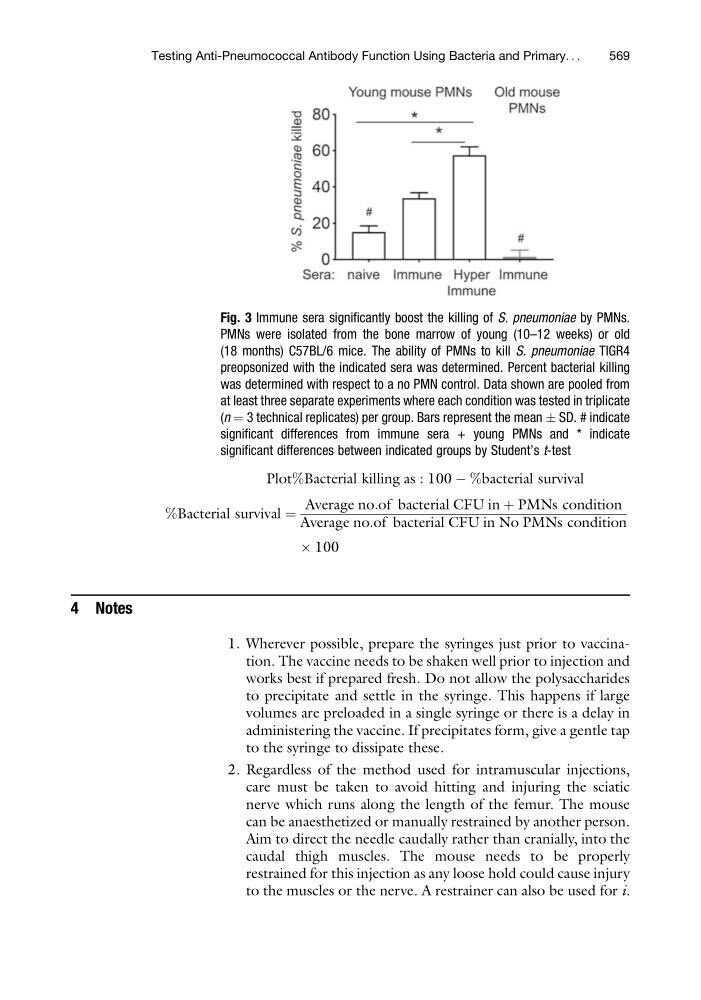
Fig. 3 Immune sera significantly boost the killing of S. pneumoniae by PMNs.
PMNs were isolated from the bone marrow of young (10–12 weeks) or old
(18 months) C57BL/6 mice. The ability of PMNs to kill S. pneumoniae TIGR4
preopsonized with the indicated sera was determined. Percent bacterial killing
was determined with respect to a no PMN control. Data shown are pooled from
at least three separate experiments where each condition was tested in triplicate
(n ¼ 3 technical replicates) per group. Bars represent the mean Æ SD. # indicate
significant differences from immune sera + young PMNs and * indicate
significant differences between indicated groups by Student’s t-test
Testing Anti-Pneumococcal Antibody Function Using Bacteria and Primary. . .
569
%Bacterial survival ¼
Average no:of bacterial CFU in þ PMNs condition
Average no:of bacterial CFU in No PMNs condition
 100
4 Notes
1. Wherever possible, prepare the syringes just prior to vaccination. The vaccine needs to be shaken well prior to injection and
works best if prepared fresh. Do not allow the polysaccharides
to precipitate and settle in the syringe. This happens if large
volumes are preloaded in a single syringe or there is a delay in
administering the vaccine. If precipitates form, give a gentle tap
to the syringe to dissipate these.
2. Regardless of the method used for intramuscular injections,
care must be taken to avoid hitting and injuring the sciatic
nerve which runs along the length of the femur. The mouse
can be anaesthetized or manually restrained by another person.
Aim to direct the needle caudally rather than cranially, into the
caudal thigh muscles. The mouse needs to be properly
restrained for this injection as any loose hold could cause injury
to the muscles or the nerve. A restrainer can also be used for i.
Fig. 3 Immune sera significantly boost the killing of S. pneumoniae by PMNs.
PMNs were isolated from the bone marrow of young (10–12 weeks) or old
(18 months) C57BL/6 mice. The ability of PMNs to kill S. pneumoniae TIGR4
preopsonized with the indicated sera was determined. Percent bacterial killing
was determined with respect to a no PMN control. Data shown are pooled from
at least three separate experiments where each condition was tested in triplicate
(n ¼ 3 technical replicates) per group. Bars represent the mean Æ SD. # indicate
significant differences from immune sera + young PMNs and * indicate
significant differences between indicated groups by Student’s t-test
Testing Anti-Pneumococcal Antibody Function Using Bacteria and Primary. . .
569