

as aluminum (oxy)hydroxide, aluminum (hydroxy)phosphate, aluminum potassium sulfate, at a relatively high aluminum concentration (~1%, w/v). Trehalose alone at a concentration as low as 2%
(w/v) is sufficient as the excipient during the TFFD process [24]. It
is worth noting that although the freezing of the thin films in the
thin-film freezing (TFF) process is rapid, with an estimated cooling
rate of >100 K/s (e.g., also reported at >1000 K/s), it is not as fast
as that in the spray freeze-drying process (e.g., about 10
6 K/s)
[20, 26, 27]. It is speculated that what makes TFF so effective is
that, due to the relatively large size of the droplets before they
impact the cryogenically cooled surface and the thin films form
thereafter, the overall air-liquid interface of the falling droplets
and the spreading films generated during TFF are smaller, in comparison to the large gas-liquid interface generated when atomized
droplets are sprayed through liquid nitrogen vapor into liquid
nitrogen [20, 26, 27]. Thin-film freeze-dried vaccine powder is
not sensitive to freeze–thaw cycles and can be stored at temperatures as high as 40
C for months without compromising its immunogenicity [25]. For a longer-term storage, a method to minimize
the humidity in the container, and thus moisture content in the
powder, need to be used. The following describes a procedure for
preparing aluminum salt-adjuvanted vaccine dry powder using the
TFFD method.
2 Materials
2.1 Reagents
1. 2% (w/v) Alhydrogel
® (aluminum content, 9–11 mg/mL).
2. Gardasil
® .
3. Engerix-B
®
.
4. 5 N sodium hydroxide (NaOH) solution (pH 12–14).
5. 5 N acetic acid (CH 3 COOH) solution.
6. 0.9% (w/v) sodium chloride (physiological normal saline).
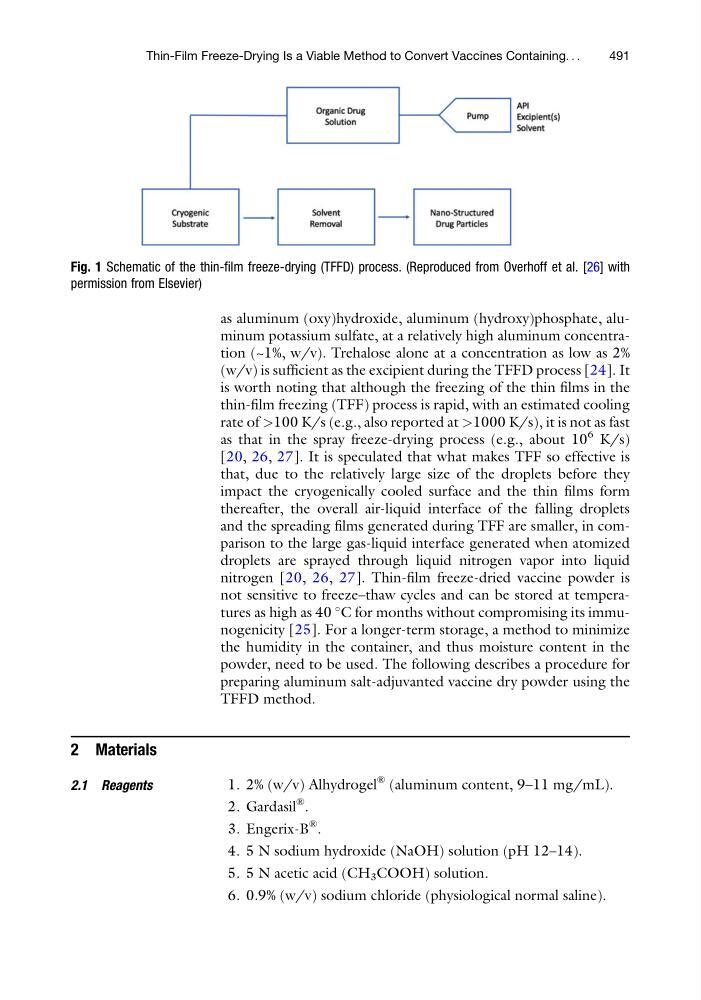
Fig. 1 Schematic of the thin-film freeze-drying (TFFD) process. (Reproduced from Overhoff et al. [26] with
permission from Elsevier)
Thin-Film Freeze-Drying Is a Viable Method to Convert Vaccines Containing. . .
491
(w/v) is sufficient as the excipient during the TFFD process [24]. It
is worth noting that although the freezing of the thin films in the
thin-film freezing (TFF) process is rapid, with an estimated cooling
rate of >100 K/s (e.g., also reported at >1000 K/s), it is not as fast
as that in the spray freeze-drying process (e.g., about 10
6 K/s)
[20, 26, 27]. It is speculated that what makes TFF so effective is
that, due to the relatively large size of the droplets before they
impact the cryogenically cooled surface and the thin films form
thereafter, the overall air-liquid interface of the falling droplets
and the spreading films generated during TFF are smaller, in comparison to the large gas-liquid interface generated when atomized
droplets are sprayed through liquid nitrogen vapor into liquid
nitrogen [20, 26, 27]. Thin-film freeze-dried vaccine powder is
not sensitive to freeze–thaw cycles and can be stored at temperatures as high as 40
C for months without compromising its immunogenicity [25]. For a longer-term storage, a method to minimize
the humidity in the container, and thus moisture content in the
powder, need to be used. The following describes a procedure for
preparing aluminum salt-adjuvanted vaccine dry powder using the
TFFD method.
2 Materials
2.1 Reagents
1. 2% (w/v) Alhydrogel
® (aluminum content, 9–11 mg/mL).
2. Gardasil
® .
3. Engerix-B
®
.
4. 5 N sodium hydroxide (NaOH) solution (pH 12–14).
5. 5 N acetic acid (CH 3 COOH) solution.
6. 0.9% (w/v) sodium chloride (physiological normal saline).
Fig. 1 Schematic of the thin-film freeze-drying (TFFD) process. (Reproduced from Overhoff et al. [26] with
permission from Elsevier)
Thin-Film Freeze-Drying Is a Viable Method to Convert Vaccines Containing. . .
491