

following: a positive charge [4] to decease cell membrane electronic
repulsion and therefore enhance antigen uptake by APCs [5] in
addition to the native and engineered features of both biomaterial
and bacterial components for the dual purpose of adjuvancy and
designed delivery of antigen content.
The bacterial component of the hybrid vector consists of a
nonpathogenic E. coli strain with both natural adjuvant features
and the capability to harbor antigens in simple plasmid-based formats. A genetic antigen will be designed for delivery to and expression within the target APC; whereas, a protein antigen will first be
expressed within the E. coli cell prior to APC delivery. The surface
cationic polymer component of the hybrid vector can feature either
synthetic or natural polymers [6] and naturally associates with the
negatively charged surface of E. coli [7]. By varying polymer content and structure [8] and the E. coli strains carrying antigen
content, there is the potential to systematically optimize antigen
delivery through this approach for the purpose of advanced vaccine
response outcomes [9].
2 Materials
2.1 Cloning
Materials
1. dexB forward cloning primer: TAAGCACATATGCAAG
AAAAATGGTGGCATAATGCCGTAG.
2. dexB reverse cloning primer: TAAGCACTCGAGTTCCACA
CAGAAAGCATCCCA.
3. glpO forward cloning primer: TAAGCAGAGCTCGAAT
TTTCAAAAAAAACACGTGAATTGTC.
4. glpO reverse cloning primer: TAAGCACTCGAGATTTTTTA
ATTCTGCTAAATCGTTGTTAG.
5. stkP forward cloning primer: TAAGCACATATGATCCAAAT
CGGCAAGATTTT.
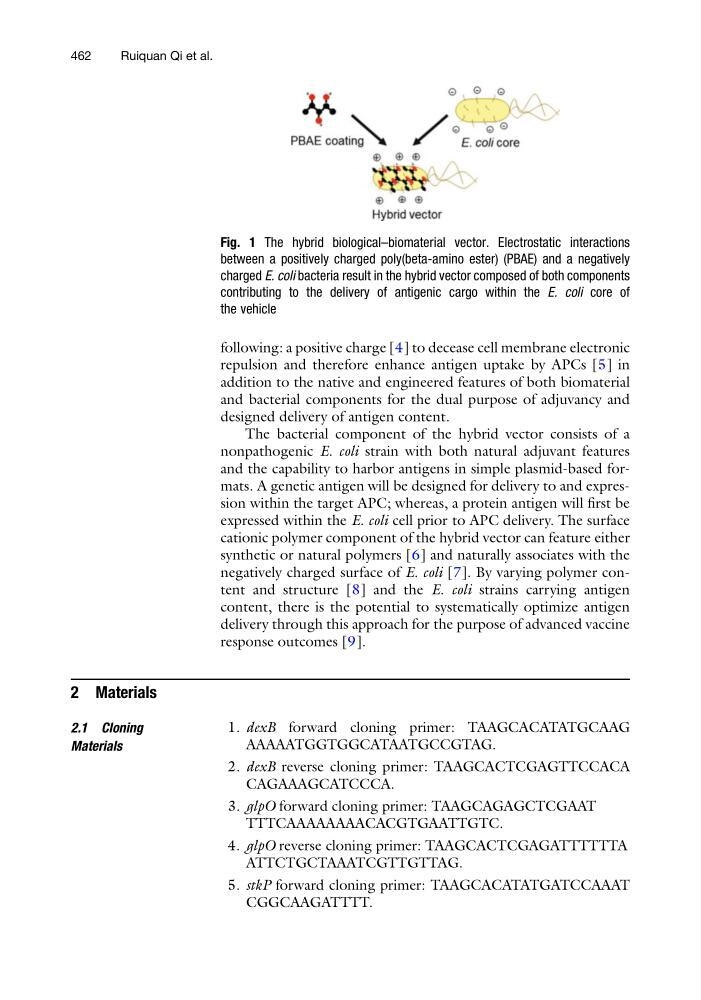
Fig. 1 The hybrid biological–biomaterial vector. Electrostatic interactions
between a positively charged poly(beta-amino ester) (PBAE) and a negatively
charged E. coli bacteria result in the hybrid vector composed of both components
contributing to the delivery of antigenic cargo within the E. coli core of
the vehicle
462
Ruiquan Qi et al.
repulsion and therefore enhance antigen uptake by APCs [5] in
addition to the native and engineered features of both biomaterial
and bacterial components for the dual purpose of adjuvancy and
designed delivery of antigen content.
The bacterial component of the hybrid vector consists of a
nonpathogenic E. coli strain with both natural adjuvant features
and the capability to harbor antigens in simple plasmid-based formats. A genetic antigen will be designed for delivery to and expression within the target APC; whereas, a protein antigen will first be
expressed within the E. coli cell prior to APC delivery. The surface
cationic polymer component of the hybrid vector can feature either
synthetic or natural polymers [6] and naturally associates with the
negatively charged surface of E. coli [7]. By varying polymer content and structure [8] and the E. coli strains carrying antigen
content, there is the potential to systematically optimize antigen
delivery through this approach for the purpose of advanced vaccine
response outcomes [9].
2 Materials
2.1 Cloning
Materials
1. dexB forward cloning primer: TAAGCACATATGCAAG
AAAAATGGTGGCATAATGCCGTAG.
2. dexB reverse cloning primer: TAAGCACTCGAGTTCCACA
CAGAAAGCATCCCA.
3. glpO forward cloning primer: TAAGCAGAGCTCGAAT
TTTCAAAAAAAACACGTGAATTGTC.
4. glpO reverse cloning primer: TAAGCACTCGAGATTTTTTA
ATTCTGCTAAATCGTTGTTAG.
5. stkP forward cloning primer: TAAGCACATATGATCCAAAT
CGGCAAGATTTT.
Fig. 1 The hybrid biological–biomaterial vector. Electrostatic interactions
between a positively charged poly(beta-amino ester) (PBAE) and a negatively
charged E. coli bacteria result in the hybrid vector composed of both components
contributing to the delivery of antigenic cargo within the E. coli core of
the vehicle
462
Ruiquan Qi et al.