

mine), as a helper lipid, promotes formation of more fusogenic
inverted hexagonal structures, facilitating endosomal escape of
nucleic acids [13, 14]. Additional implementation of
DC-cholesterol (3ß-[N-(N
0 ,N
0 -dimethylaminoethane)-carbamoyl]
cholesterol hydrochloride) or DOPC (1,2-dioleoyl-sn-glycero-3phosphocholine) may improve serum resistance and shelf life of
compositions.
Here, we demonstrate a simple and convenient method of
lipid-based vaccine carrier preparation and activity testing, utilizing
only basic easily accessible laboratory equipment. The method is
based on lipofecting activity of semisynthetic cationic forms of plant
polyprenols (trimethylpolyprenylammonium iodides; PTAI;
Fig. 2a) [15, 16] that were shown to be nontoxic [17, 18] and
efficient in vaccine delivery [9]. These results also inspired synthesis
of other cationic polyprenyl derivatives designed for practical applications in liposomology [19].
The protocol for preparation of PTAI-based vaccine carriers
consists of dissolution of lipids in ethanol, mixing and vortexing
of all lipid components in ethanol, and its subsequent mixing and
vortexing with aqueous solution. This simple procedure results in
preparation of stable reagents that can be used with DNA or RNA
both in vitro and in vivo. This composition can be easily modified
by users with different cationic and neutral lipids and other substances like poly-L-lysine or polyethylene glycol (PEG) for specific
applications.
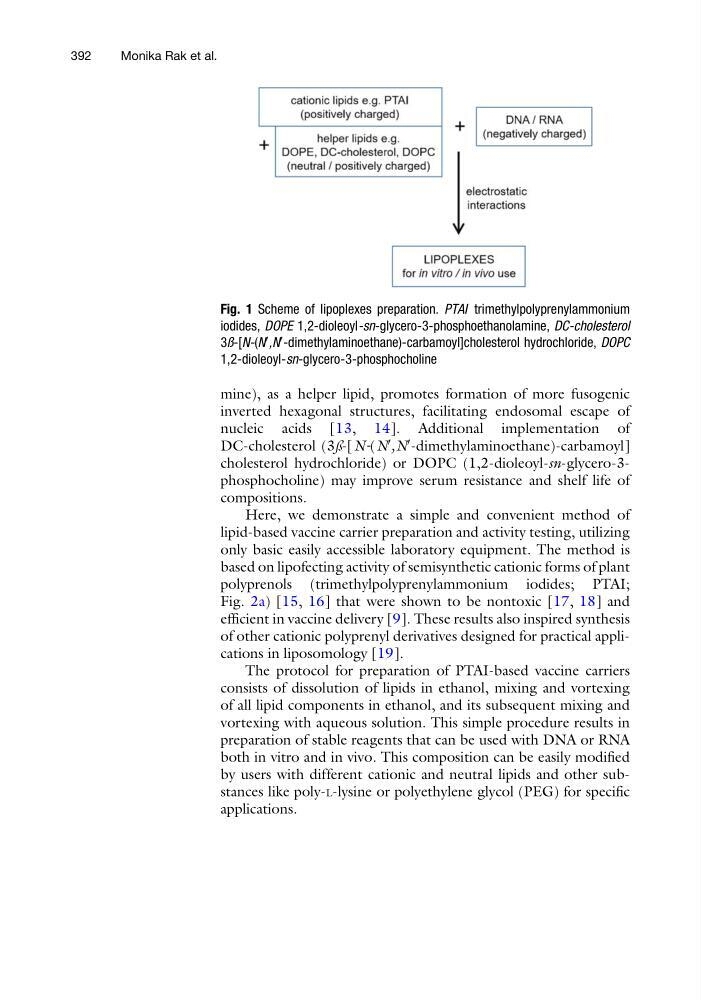
Fig. 1 Scheme of lipoplexes preparation. PTAI trimethylpolyprenylammonium
iodides, DOPE 1,2-dioleoyl-sn-glycero-3-phosphoethanolamine, DC-cholesterol
3ß-[N-(N
0
,N
0 -dimethylaminoethane)-carbamoyl]cholesterol hydrochloride, DOPC
1,2-dioleoyl-sn-glycero-3-phosphocholine
392
Monika Rak et al.
inverted hexagonal structures, facilitating endosomal escape of
nucleic acids [13, 14]. Additional implementation of
DC-cholesterol (3ß-[N-(N
0 ,N
0 -dimethylaminoethane)-carbamoyl]
cholesterol hydrochloride) or DOPC (1,2-dioleoyl-sn-glycero-3phosphocholine) may improve serum resistance and shelf life of
compositions.
Here, we demonstrate a simple and convenient method of
lipid-based vaccine carrier preparation and activity testing, utilizing
only basic easily accessible laboratory equipment. The method is
based on lipofecting activity of semisynthetic cationic forms of plant
polyprenols (trimethylpolyprenylammonium iodides; PTAI;
Fig. 2a) [15, 16] that were shown to be nontoxic [17, 18] and
efficient in vaccine delivery [9]. These results also inspired synthesis
of other cationic polyprenyl derivatives designed for practical applications in liposomology [19].
The protocol for preparation of PTAI-based vaccine carriers
consists of dissolution of lipids in ethanol, mixing and vortexing
of all lipid components in ethanol, and its subsequent mixing and
vortexing with aqueous solution. This simple procedure results in
preparation of stable reagents that can be used with DNA or RNA
both in vitro and in vivo. This composition can be easily modified
by users with different cationic and neutral lipids and other substances like poly-L-lysine or polyethylene glycol (PEG) for specific
applications.
Fig. 1 Scheme of lipoplexes preparation. PTAI trimethylpolyprenylammonium
iodides, DOPE 1,2-dioleoyl-sn-glycero-3-phosphoethanolamine, DC-cholesterol
3ß-[N-(N
0
,N
0 -dimethylaminoethane)-carbamoyl]cholesterol hydrochloride, DOPC
1,2-dioleoyl-sn-glycero-3-phosphocholine
392
Monika Rak et al.