

Zika VLP pellet and gently pipette to dissolve the pellet followed by aliquoting and storage at 4
C (see Note 28).
3.4 Detection of Zika
VLP by Western Blot
Acrylamide solution can cause acute toxicity to the skin, eyes,
respiratory and reproductive organs, and is a probable neurotoxin
and human carcinogen. Work with acrylamide must be undertaken
carefully, and personal protective equipment (PPE) such as a lab
coat, gloves and goggles are required when handling acrylamide.
The toxicity is significantly reduced when acrylamide is polymerized, but some unpolymerized solution might remain, with the
associated potential risk. The following protocol is for one
SDS-PAGE gel (8.3 cm  7.3 cm  1.5 mm)
1. Clean the glass plates with 70% ethanol and assemble the glass
plate sandwich to the gel casting component. Mark the level
between separating and stacking gels with a marker pen.
2. Prepare a 10% separating gel by mixing 4.275 mL of water,
2.25 mL of 40% acrylamide, 2.25 mL of 1.5 M Tris–HCl pH
8.8, 90 μL of 10% SDS, and 135 μL of 10% APS in a 25 mL
glass beaker and mix by swirling.
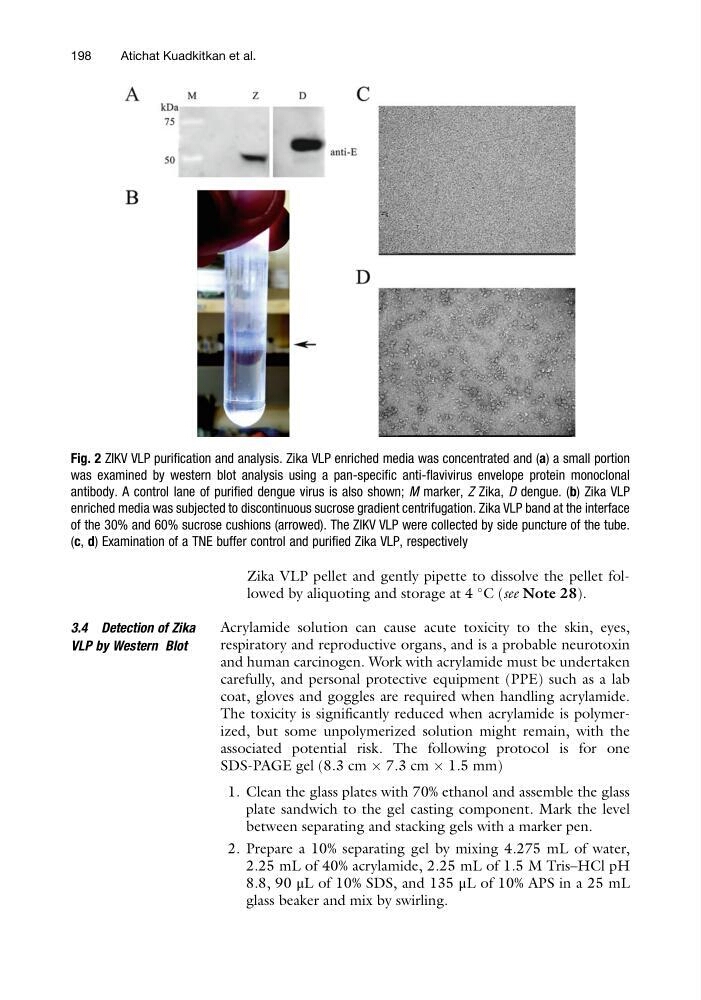
Fig. 2 ZIKV VLP purification and analysis. Zika VLP enriched media was concentrated and (a) a small portion
was examined by western blot analysis using a pan-specific anti-flavivirus envelope protein monoclonal
antibody. A control lane of purified dengue virus is also shown; M marker, Z Zika, D dengue. (b) Zika VLP
enriched media was subjected to discontinuous sucrose gradient centrifugation. Zika VLP band at the interface
of the 30% and 60% sucrose cushions (arrowed). The ZIKV VLP were collected by side puncture of the tube.
(c, d) Examination of a TNE buffer control and purified Zika VLP, respectively
198
Atichat Kuadkitkan et al.
C (see Note 28).
3.4 Detection of Zika
VLP by Western Blot
Acrylamide solution can cause acute toxicity to the skin, eyes,
respiratory and reproductive organs, and is a probable neurotoxin
and human carcinogen. Work with acrylamide must be undertaken
carefully, and personal protective equipment (PPE) such as a lab
coat, gloves and goggles are required when handling acrylamide.
The toxicity is significantly reduced when acrylamide is polymerized, but some unpolymerized solution might remain, with the
associated potential risk. The following protocol is for one
SDS-PAGE gel (8.3 cm  7.3 cm  1.5 mm)
1. Clean the glass plates with 70% ethanol and assemble the glass
plate sandwich to the gel casting component. Mark the level
between separating and stacking gels with a marker pen.
2. Prepare a 10% separating gel by mixing 4.275 mL of water,
2.25 mL of 40% acrylamide, 2.25 mL of 1.5 M Tris–HCl pH
8.8, 90 μL of 10% SDS, and 135 μL of 10% APS in a 25 mL
glass beaker and mix by swirling.
Fig. 2 ZIKV VLP purification and analysis. Zika VLP enriched media was concentrated and (a) a small portion
was examined by western blot analysis using a pan-specific anti-flavivirus envelope protein monoclonal
antibody. A control lane of purified dengue virus is also shown; M marker, Z Zika, D dengue. (b) Zika VLP
enriched media was subjected to discontinuous sucrose gradient centrifugation. Zika VLP band at the interface
of the 30% and 60% sucrose cushions (arrowed). The ZIKV VLP were collected by side puncture of the tube.
(c, d) Examination of a TNE buffer control and purified Zika VLP, respectively
198
Atichat Kuadkitkan et al.