

68
J. Zhou and S. Chang
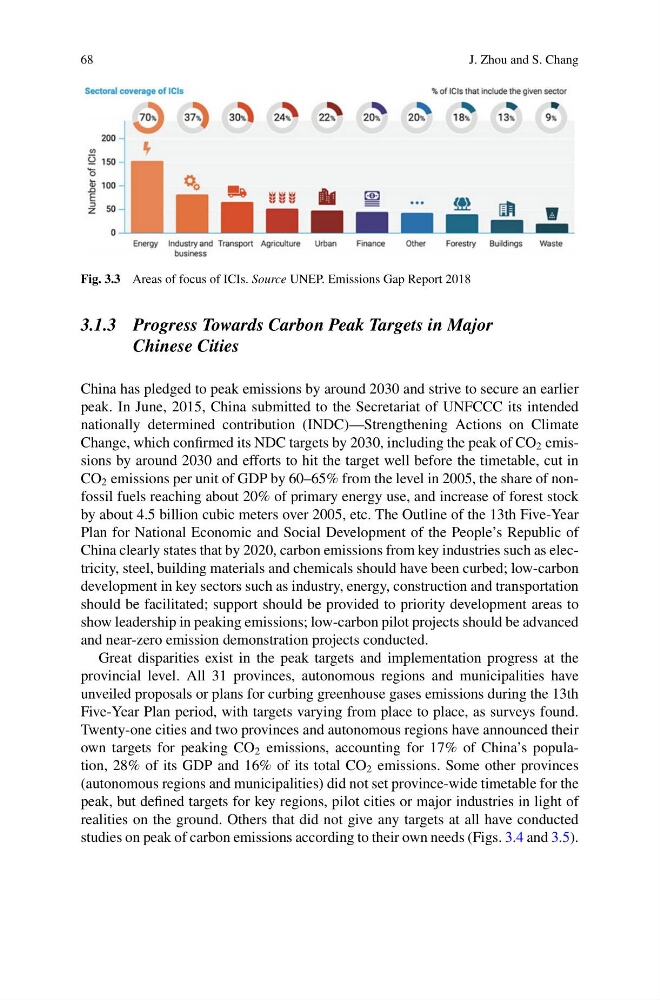
Fig. 3.3 Areas of focus of ICIs. Source UNEP. Emissions Gap Report 2018
3.1.3 Progress Towards Carbon Peak Targets in Major
Chinese Cities
China has pledged to peak emissions by around 2030 and strive to secure an earlier
peak. In June, 2015, China submitted to the Secretariat of UNFCCC its intended
nationally determined contribution (INDC)—Strengthening Actions on Climate
Change, which confirmed its NDC targets by 2030, including the peak of CO 2 emissions by around 2030 and efforts to hit the target well before the timetable, cut in
CO 2 emissions per unit of GDP by 60–65% from the level in 2005, the share of nonfossil fuels reaching about 20% of primary energy use, and increase of forest stock
by about 4.5 billion cubic meters over 2005, etc. The Outline of the 13th Five-Year
Plan for National Economic and Social Development of the People’s Republic of
China clearly states that by 2020, carbon emissions from key industries such as electricity, steel, building materials and chemicals should have been curbed; low-carbon
development in key sectors such as industry, energy, construction and transportation
should be facilitated; support should be provided to priority development areas to
show leadership in peaking emissions; low-carbon pilot projects should be advanced
and near-zero emission demonstration projects conducted.
Great disparities exist in the peak targets and implementation progress at the
provincial level. All 31 provinces, autonomous regions and municipalities have
unveiled proposals or plans for curbing greenhouse gases emissions during the 13th
Five-Year Plan period, with targets varying from place to place, as surveys found.
Twenty-one cities and two provinces and autonomous regions have announced their
own targets for peaking CO 2 emissions, accounting for 17% of China’s population, 28% of its GDP and 16% of its total CO 2 emissions. Some other provinces
(autonomous regions and municipalities) did not set province-wide timetable for the
peak, but defined targets for key regions, pilot cities or major industries in light of
realities on the ground. Others that did not give any targets at all have conducted
studies on peak of carbon emissions according to their own needs (Figs. 3.4 and 3.5).
J. Zhou and S. Chang
Fig. 3.3 Areas of focus of ICIs. Source UNEP. Emissions Gap Report 2018
3.1.3 Progress Towards Carbon Peak Targets in Major
Chinese Cities
China has pledged to peak emissions by around 2030 and strive to secure an earlier
peak. In June, 2015, China submitted to the Secretariat of UNFCCC its intended
nationally determined contribution (INDC)—Strengthening Actions on Climate
Change, which confirmed its NDC targets by 2030, including the peak of CO 2 emissions by around 2030 and efforts to hit the target well before the timetable, cut in
CO 2 emissions per unit of GDP by 60–65% from the level in 2005, the share of nonfossil fuels reaching about 20% of primary energy use, and increase of forest stock
by about 4.5 billion cubic meters over 2005, etc. The Outline of the 13th Five-Year
Plan for National Economic and Social Development of the People’s Republic of
China clearly states that by 2020, carbon emissions from key industries such as electricity, steel, building materials and chemicals should have been curbed; low-carbon
development in key sectors such as industry, energy, construction and transportation
should be facilitated; support should be provided to priority development areas to
show leadership in peaking emissions; low-carbon pilot projects should be advanced
and near-zero emission demonstration projects conducted.
Great disparities exist in the peak targets and implementation progress at the
provincial level. All 31 provinces, autonomous regions and municipalities have
unveiled proposals or plans for curbing greenhouse gases emissions during the 13th
Five-Year Plan period, with targets varying from place to place, as surveys found.
Twenty-one cities and two provinces and autonomous regions have announced their
own targets for peaking CO 2 emissions, accounting for 17% of China’s population, 28% of its GDP and 16% of its total CO 2 emissions. Some other provinces
(autonomous regions and municipalities) did not set province-wide timetable for the
peak, but defined targets for key regions, pilot cities or major industries in light of
realities on the ground. Others that did not give any targets at all have conducted
studies on peak of carbon emissions according to their own needs (Figs. 3.4 and 3.5).