

56
J. Wu and H. Zhao
-20
-10
0
10
20
30
40
50
60
70
0
20000000
40000000
60000000
80000000
100000000
120000000
140000000
160000000
2007 2008 2009 2010 2011 2012 2013 2014 2015 2016 2017 2018
Change rate of actual use of foreign capital (%)
Actual use of foreign capital (ten thousand yuan)
China's Cities
Eastern Cities
Central Cities
Western Cities
China's Cities
Eastern Cities
Central Cities
Western Cities
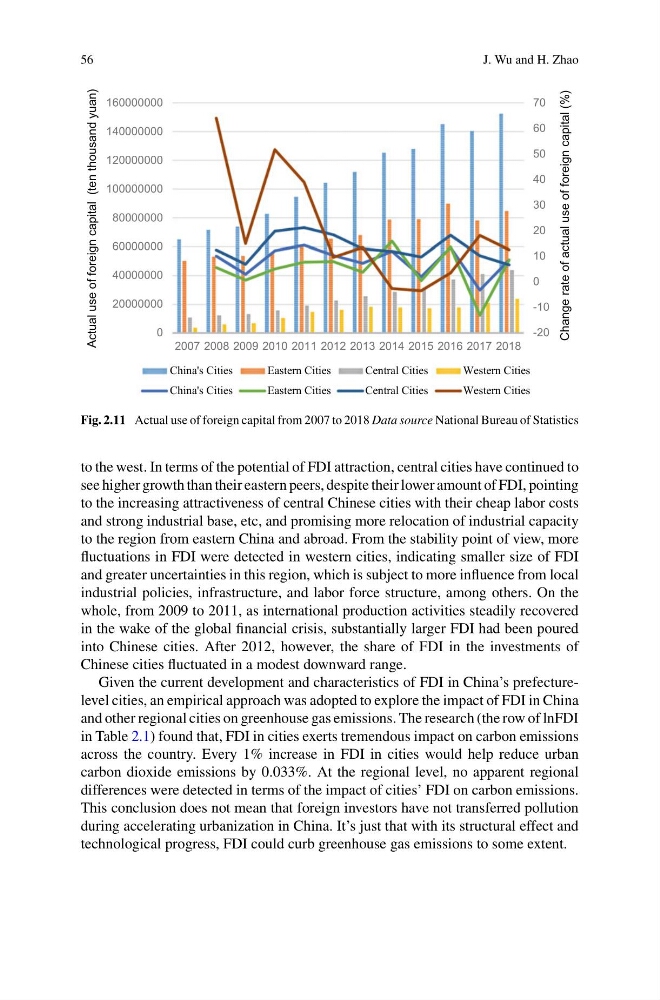
Fig. 2.11 Actual use of foreign capital from 2007 to 2018 Data source National Bureau of Statistics
to the west. In terms of the potential of FDI attraction, central cities have continued to
see higher growth than their eastern peers, despite their lower amount of FDI, pointing
to the increasing attractiveness of central Chinese cities with their cheap labor costs
and strong industrial base, etc, and promising more relocation of industrial capacity
to the region from eastern China and abroad. From the stability point of view, more
fluctuations in FDI were detected in western cities, indicating smaller size of FDI
and greater uncertainties in this region, which is subject to more influence from local
industrial policies, infrastructure, and labor force structure, among others. On the
whole, from 2009 to 2011, as international production activities steadily recovered
in the wake of the global financial crisis, substantially larger FDI had been poured
into Chinese cities. After 2012, however, the share of FDI in the investments of
Chinese cities fluctuated in a modest downward range.
Given the current development and characteristics of FDI in China’s prefecturelevel cities, an empirical approach was adopted to explore the impact of FDI in China
and other regional cities on greenhouse gas emissions. The research (the row of lnFDI
in Table 2.1) found that, FDI in cities exerts tremendous impact on carbon emissions
across the country. Every 1% increase in FDI in cities would help reduce urban
carbon dioxide emissions by 0.033%. At the regional level, no apparent regional
differences were detected in terms of the impact of cities’ FDI on carbon emissions.
This conclusion does not mean that foreign investors have not transferred pollution
during accelerating urbanization in China. It’s just that with its structural effect and
technological progress, FDI could curb greenhouse gas emissions to some extent.
J. Wu and H. Zhao
-20
-10
0
10
20
30
40
50
60
70
0
20000000
40000000
60000000
80000000
100000000
120000000
140000000
160000000
2007 2008 2009 2010 2011 2012 2013 2014 2015 2016 2017 2018
Change rate of actual use of foreign capital (%)
Actual use of foreign capital (ten thousand yuan)
China's Cities
Eastern Cities
Central Cities
Western Cities
China's Cities
Eastern Cities
Central Cities
Western Cities
Fig. 2.11 Actual use of foreign capital from 2007 to 2018 Data source National Bureau of Statistics
to the west. In terms of the potential of FDI attraction, central cities have continued to
see higher growth than their eastern peers, despite their lower amount of FDI, pointing
to the increasing attractiveness of central Chinese cities with their cheap labor costs
and strong industrial base, etc, and promising more relocation of industrial capacity
to the region from eastern China and abroad. From the stability point of view, more
fluctuations in FDI were detected in western cities, indicating smaller size of FDI
and greater uncertainties in this region, which is subject to more influence from local
industrial policies, infrastructure, and labor force structure, among others. On the
whole, from 2009 to 2011, as international production activities steadily recovered
in the wake of the global financial crisis, substantially larger FDI had been poured
into Chinese cities. After 2012, however, the share of FDI in the investments of
Chinese cities fluctuated in a modest downward range.
Given the current development and characteristics of FDI in China’s prefecturelevel cities, an empirical approach was adopted to explore the impact of FDI in China
and other regional cities on greenhouse gas emissions. The research (the row of lnFDI
in Table 2.1) found that, FDI in cities exerts tremendous impact on carbon emissions
across the country. Every 1% increase in FDI in cities would help reduce urban
carbon dioxide emissions by 0.033%. At the regional level, no apparent regional
differences were detected in terms of the impact of cities’ FDI on carbon emissions.
This conclusion does not mean that foreign investors have not transferred pollution
during accelerating urbanization in China. It’s just that with its structural effect and
technological progress, FDI could curb greenhouse gas emissions to some extent.