

18
L. Ma et al.
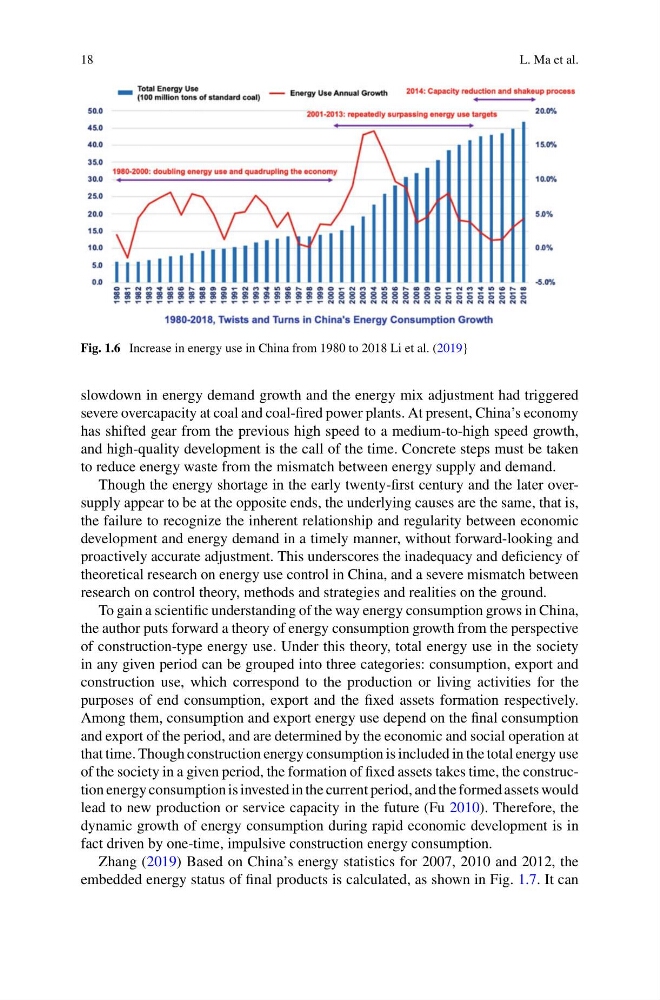
Fig. 1.6 Increase in energy use in China from 1980 to 2018 Li et al. (2019}
slowdown in energy demand growth and the energy mix adjustment had triggered
severe overcapacity at coal and coal-fired power plants. At present, China’s economy
has shifted gear from the previous high speed to a medium-to-high speed growth,
and high-quality development is the call of the time. Concrete steps must be taken
to reduce energy waste from the mismatch between energy supply and demand.
Though the energy shortage in the early twenty-first century and the later oversupply appear to be at the opposite ends, the underlying causes are the same, that is,
the failure to recognize the inherent relationship and regularity between economic
development and energy demand in a timely manner, without forward-looking and
proactively accurate adjustment. This underscores the inadequacy and deficiency of
theoretical research on energy use control in China, and a severe mismatch between
research on control theory, methods and strategies and realities on the ground.
To gain a scientific understanding of the way energy consumption grows in China,
the author puts forward a theory of energy consumption growth from the perspective
of construction-type energy use. Under this theory, total energy use in the society
in any given period can be grouped into three categories: consumption, export and
construction use, which correspond to the production or living activities for the
purposes of end consumption, export and the fixed assets formation respectively.
Among them, consumption and export energy use depend on the final consumption
and export of the period, and are determined by the economic and social operation at
that time. Though construction energy consumption is included in the total energy use
of the society in a given period, the formation of fixed assets takes time, the construction energy consumption is invested in the current period, and the formed assets would
lead to new production or service capacity in the future (Fu 2010). Therefore, the
dynamic growth of energy consumption during rapid economic development is in
fact driven by one-time, impulsive construction energy consumption.
Zhang (2019) Based on China’s energy statistics for 2007, 2010 and 2012, the
embedded energy status of final products is calculated, as shown in Fig. 1.7. It can
L. Ma et al.
Fig. 1.6 Increase in energy use in China from 1980 to 2018 Li et al. (2019}
slowdown in energy demand growth and the energy mix adjustment had triggered
severe overcapacity at coal and coal-fired power plants. At present, China’s economy
has shifted gear from the previous high speed to a medium-to-high speed growth,
and high-quality development is the call of the time. Concrete steps must be taken
to reduce energy waste from the mismatch between energy supply and demand.
Though the energy shortage in the early twenty-first century and the later oversupply appear to be at the opposite ends, the underlying causes are the same, that is,
the failure to recognize the inherent relationship and regularity between economic
development and energy demand in a timely manner, without forward-looking and
proactively accurate adjustment. This underscores the inadequacy and deficiency of
theoretical research on energy use control in China, and a severe mismatch between
research on control theory, methods and strategies and realities on the ground.
To gain a scientific understanding of the way energy consumption grows in China,
the author puts forward a theory of energy consumption growth from the perspective
of construction-type energy use. Under this theory, total energy use in the society
in any given period can be grouped into three categories: consumption, export and
construction use, which correspond to the production or living activities for the
purposes of end consumption, export and the fixed assets formation respectively.
Among them, consumption and export energy use depend on the final consumption
and export of the period, and are determined by the economic and social operation at
that time. Though construction energy consumption is included in the total energy use
of the society in a given period, the formation of fixed assets takes time, the construction energy consumption is invested in the current period, and the formed assets would
lead to new production or service capacity in the future (Fu 2010). Therefore, the
dynamic growth of energy consumption during rapid economic development is in
fact driven by one-time, impulsive construction energy consumption.
Zhang (2019) Based on China’s energy statistics for 2007, 2010 and 2012, the
embedded energy status of final products is calculated, as shown in Fig. 1.7. It can