

94
J. Zhou and S. Chang
*URZWK6FHQDULRLQ
*URZWK6FHQDULRLQ
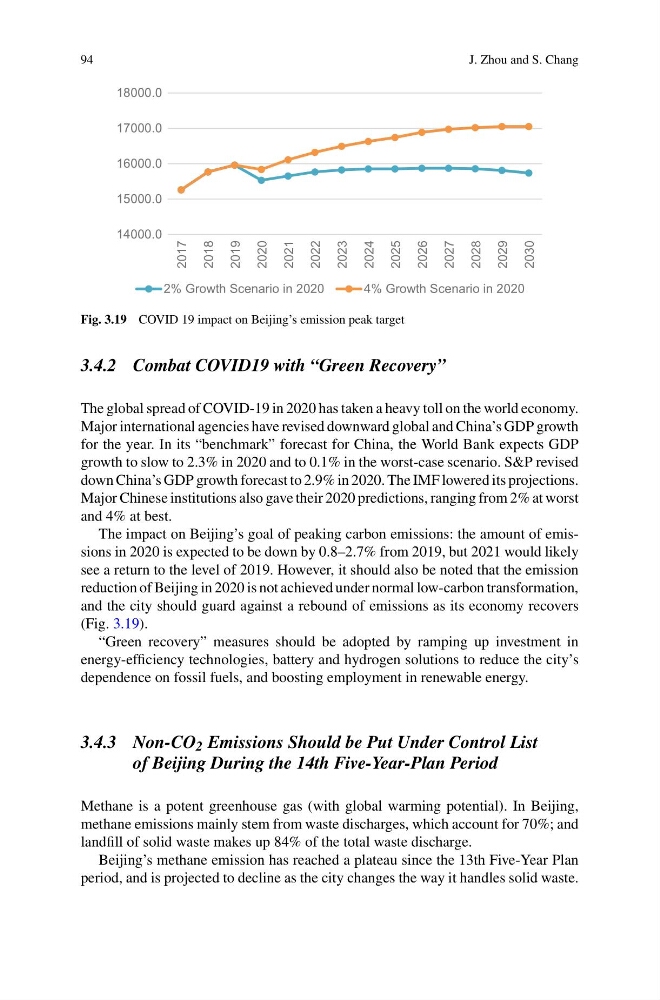
Fig. 3.19 COVID 19 impact on Beijing’s emission peak target
3.4.2 Combat COVID19 with “Green Recovery”
The global spread of COVID-19 in 2020 has taken a heavy toll on the world economy.
Major international agencies have revised downward global and China’s GDP growth
for the year. In its “benchmark” forecast for China, the World Bank expects GDP
growth to slow to 2.3% in 2020 and to 0.1% in the worst-case scenario. S&P revised
down China’s GDP growth forecast to 2.9% in 2020. The IMF lowered its projections.
Major Chinese institutions also gave their 2020 predictions, ranging from 2% at worst
and 4% at best.
The impact on Beijing’s goal of peaking carbon emissions: the amount of emissions in 2020 is expected to be down by 0.8–2.7% from 2019, but 2021 would likely
see a return to the level of 2019. However, it should also be noted that the emission
reduction of Beijing in 2020 is not achieved under normal low-carbon transformation,
and the city should guard against a rebound of emissions as its economy recovers
(Fig. 3.19).
“Green recovery” measures should be adopted by ramping up investment in
energy-efficiency technologies, battery and hydrogen solutions to reduce the city’s
dependence on fossil fuels, and boosting employment in renewable energy.
3.4.3 Non-CO 2 Emissions Should be Put Under Control List
of Beijing During the 14th Five-Year-Plan Period
Methane is a potent greenhouse gas (with global warming potential). In Beijing,
methane emissions mainly stem from waste discharges, which account for 70%; and
landfill of solid waste makes up 84% of the total waste discharge.
Beijing’s methane emission has reached a plateau since the 13th Five-Year Plan
period, and is projected to decline as the city changes the way it handles solid waste.
J. Zhou and S. Chang
*URZWK6FHQDULRLQ
*URZWK6FHQDULRLQ
Fig. 3.19 COVID 19 impact on Beijing’s emission peak target
3.4.2 Combat COVID19 with “Green Recovery”
The global spread of COVID-19 in 2020 has taken a heavy toll on the world economy.
Major international agencies have revised downward global and China’s GDP growth
for the year. In its “benchmark” forecast for China, the World Bank expects GDP
growth to slow to 2.3% in 2020 and to 0.1% in the worst-case scenario. S&P revised
down China’s GDP growth forecast to 2.9% in 2020. The IMF lowered its projections.
Major Chinese institutions also gave their 2020 predictions, ranging from 2% at worst
and 4% at best.
The impact on Beijing’s goal of peaking carbon emissions: the amount of emissions in 2020 is expected to be down by 0.8–2.7% from 2019, but 2021 would likely
see a return to the level of 2019. However, it should also be noted that the emission
reduction of Beijing in 2020 is not achieved under normal low-carbon transformation,
and the city should guard against a rebound of emissions as its economy recovers
(Fig. 3.19).
“Green recovery” measures should be adopted by ramping up investment in
energy-efficiency technologies, battery and hydrogen solutions to reduce the city’s
dependence on fossil fuels, and boosting employment in renewable energy.
3.4.3 Non-CO 2 Emissions Should be Put Under Control List
of Beijing During the 14th Five-Year-Plan Period
Methane is a potent greenhouse gas (with global warming potential). In Beijing,
methane emissions mainly stem from waste discharges, which account for 70%; and
landfill of solid waste makes up 84% of the total waste discharge.
Beijing’s methane emission has reached a plateau since the 13th Five-Year Plan
period, and is projected to decline as the city changes the way it handles solid waste.