

588
S. Yagi
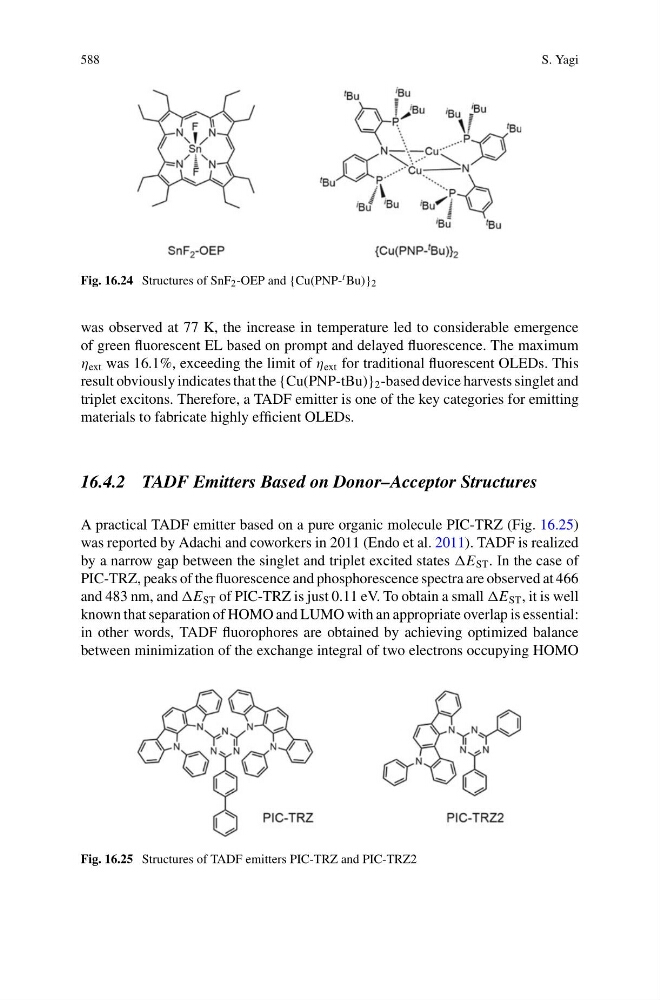
Fig. 16.24 Structures of SnF 2 -OEP and {Cu(PNP- t Bu)} 2
was observed at 77 K, the increase in temperature led to considerable emergence
of green fluorescent EL based on prompt and delayed fluorescence. The maximum
η ext was 16.1%, exceeding the limit of η ext for traditional fluorescent OLEDs. This
result obviously indicates that the {Cu(PNP-tBu)} 2 -based device harvests singlet and
triplet excitons. Therefore, a TADF emitter is one of the key categories for emitting
materials to fabricate highly efficient OLEDs.
16.4.2 TADF Emitters Based on Donor–Acceptor Structures
A practical TADF emitter based on a pure organic molecule PIC-TRZ (Fig. 16.25)
was reported by Adachi and coworkers in 2011 (Endo et al. 2011). TADF is realized
by a narrow gap between the singlet and triplet excited states E ST . In the case of
PIC-TRZ, peaks of the fluorescence and phosphorescence spectra are observed at 466
and 483 nm, and E ST of PIC-TRZ is just 0.11 eV. To obtain a small E ST , it is well
known that separation of HOMO and LUMO with an appropriate overlap is essential:
in other words, TADF fluorophores are obtained by achieving optimized balance
between minimization of the exchange integral of two electrons occupying HOMO
Fig. 16.25 Structures of TADF emitters PIC-TRZ and PIC-TRZ2