

1 Polymethine Dyes
9
N
X
C 2 H 5
X
N
C 2 H 5
X
C(CH 3 ) 2
C(CH 3 ) 2
C(CH 3 ) 2
O
O
O
S
S
S
S
(CH=CH)
(CH=CH)
(CH=CH)
Se
Se
Se
Se
n
1
2
3
0
1
2
0
1
2
3
0
1
2
0
1
2
3
max / nm
545
636
745
372
485
580
422
557
650
762
522
605
708
429
570
660
770
n
Y
N
C 2 H 5
N
C 2 H 5
H 3 C
CH 3 H 3 C
CH 3
S
N
C 2 H 5
O
N
S
C 2 H 5
O
n
S
S
n
N
S
C 2 H 5
N
S
C 2 H 5
O
S
Y
CH
N
max / nm
553
602
n
0
1
2
max / nm
542
613
714
N
CH 3
H 3 C CH 3
N(C 2 H 5 ) 2
n
n
0
1
2
3
max / nm
432
528
605
635
n
1
2
max / nm
525
568
*
*
N
X
C 2 H 5
X
N
C 2 H 5
R
X
O
O
S
S
Se
Se
R
H
CH 3
H
CH 3
H
CH3
max / nm
483
491
557
543
570
553
*
*
1.37
1.40
1.41
1.42
1.38
1.43
Y
N
C 2 H 5
H 3 C CH 3
N
C 2 H 5
H 3 C CH 3
Y λ
λ
λ
λ
λ
λ
λ
CH
N
max / nm
422
375
*
1.39
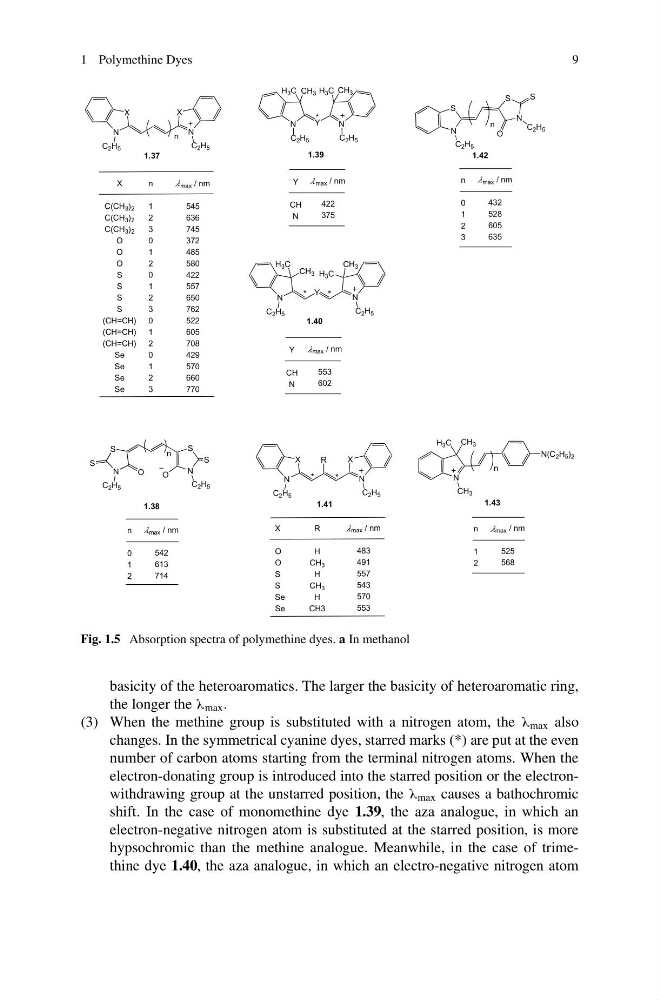
Fig. 1.5 Absorption spectra of polymethine dyes. a In methanol
basicity of the heteroaromatics. The larger the basicity of heteroaromatic ring,
the longer the λ max .
(3) When the methine group is substituted with a nitrogen atom, the λ max also
changes. In the symmetrical cyanine dyes, starred marks (*) are put at the even
number of carbon atoms starting from the terminal nitrogen atoms. When the
electron-donating group is introduced into the starred position or the electronwithdrawing group at the unstarred position, the λ max causes a bathochromic
shift. In the case of monomethine dye 1.39, the aza analogue, in which an
electron-negative nitrogen atom is substituted at the starred position, is more
hypsochromic than the methine analogue. Meanwhile, in the case of trimethine dye 1.40, the aza analogue, in which an electro-negative nitrogen atom
9
N
X
C 2 H 5
X
N
C 2 H 5
X
C(CH 3 ) 2
C(CH 3 ) 2
C(CH 3 ) 2
O
O
O
S
S
S
S
(CH=CH)
(CH=CH)
(CH=CH)
Se
Se
Se
Se
n
1
2
3
0
1
2
0
1
2
3
0
1
2
0
1
2
3
max / nm
545
636
745
372
485
580
422
557
650
762
522
605
708
429
570
660
770
n
Y
N
C 2 H 5
N
C 2 H 5
H 3 C
CH 3 H 3 C
CH 3
S
N
C 2 H 5
O
N
S
C 2 H 5
O
n
S
S
n
N
S
C 2 H 5
N
S
C 2 H 5
O
S
Y
CH
N
max / nm
553
602
n
0
1
2
max / nm
542
613
714
N
CH 3
H 3 C CH 3
N(C 2 H 5 ) 2
n
n
0
1
2
3
max / nm
432
528
605
635
n
1
2
max / nm
525
568
*
*
N
X
C 2 H 5
X
N
C 2 H 5
R
X
O
O
S
S
Se
Se
R
H
CH 3
H
CH 3
H
CH3
max / nm
483
491
557
543
570
553
*
*
1.37
1.40
1.41
1.42
1.38
1.43
Y
N
C 2 H 5
H 3 C CH 3
N
C 2 H 5
H 3 C CH 3
Y λ
λ
λ
λ
λ
λ
λ
CH
N
max / nm
422
375
*
1.39
Fig. 1.5 Absorption spectra of polymethine dyes. a In methanol
basicity of the heteroaromatics. The larger the basicity of heteroaromatic ring,
the longer the λ max .
(3) When the methine group is substituted with a nitrogen atom, the λ max also
changes. In the symmetrical cyanine dyes, starred marks (*) are put at the even
number of carbon atoms starting from the terminal nitrogen atoms. When the
electron-donating group is introduced into the starred position or the electronwithdrawing group at the unstarred position, the λ max causes a bathochromic
shift. In the case of monomethine dye 1.39, the aza analogue, in which an
electron-negative nitrogen atom is substituted at the starred position, is more
hypsochromic than the methine analogue. Meanwhile, in the case of trimethine dye 1.40, the aza analogue, in which an electro-negative nitrogen atom