

1 Polymethine Dyes
7
N
CH 3
I
+
CH 3
H 3 C CH 3
N(C 2 H 5 ) 2
OHC
N
CH 3
H 3 C CH 3
I
N(C 2 H 5 ) 2
1.36
N
I
N
S
C 2 H 5
+
1.17
COCH 3
N
S
C 2 H 5
O
S
+
N
S
C 2 H 5
1.30
N
S
C 2 H 5
O
S
base
N
N
C 6 H 5
O
H 3 C
2
+
N
N
C 6 H 5
O
H 3 C
1.34
N
N
C 6 H 5
CH 3
O
base
base
N
S
C 2 H 5
O
S
+
base
C 6 H 5
N
N
S
O
S
C 2 H 5
C 6 H 5
N
CHO
1.32
N
H
N
1.29
1.31
1.21
1.33
1.21
1.26
1.35
+
1.28
base
1.26
1.27
(1-11)
2
N
CH 3
I
CH 3
H 3 C CH 3
I
(1-12)
(1-13)
(1-14)
(1-15)
O
OH
Cl
N
H 3 C
H 3 C
CH 3
Cl
N
H 3 C
CH 3
CH 3
N
S
CH 3
I
+
C 2 H 5
1.8
CH 3
1.23
O
H 3 C
CH 3
base
N
S
I
C 2 H 5
1.24
CH 3
H 3 C
CH 3
base
N
S
I
C 2 H 5
1.25
H 3 C
CH 3
S
N
CH 3
(1-10)
I 1.12
S
N
H 3 C
C 2 H 5 S
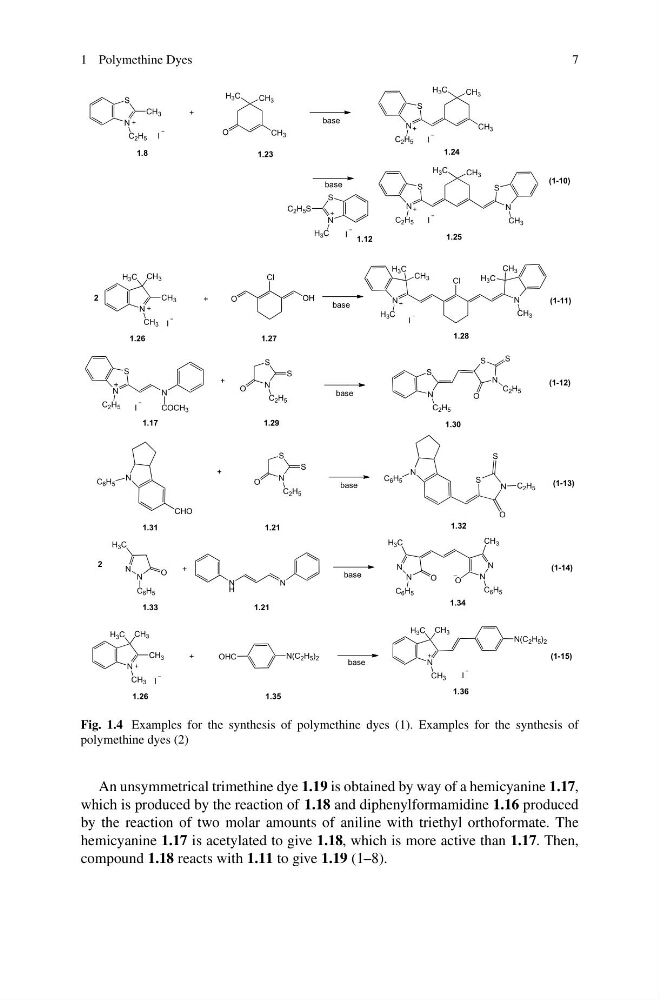
Fig. 1.4 Examples for the synthesis of polymethine dyes (1). Examples for the synthesis of
polymethine dyes (2)
An unsymmetrical trimethine dye 1.19 is obtained by way of a hemicyanine 1.17,
which is produced by the reaction of 1.18 and diphenylformamidine 1.16 produced
by the reaction of two molar amounts of aniline with triethyl orthoformate. The
hemicyanine 1.17 is acetylated to give 1.18, which is more active than 1.17. Then,
compound 1.18 reacts with 1.11 to give 1.19 (1–8).
7
N
CH 3
I
+
CH 3
H 3 C CH 3
N(C 2 H 5 ) 2
OHC
N
CH 3
H 3 C CH 3
I
N(C 2 H 5 ) 2
1.36
N
I
N
S
C 2 H 5
+
1.17
COCH 3
N
S
C 2 H 5
O
S
+
N
S
C 2 H 5
1.30
N
S
C 2 H 5
O
S
base
N
N
C 6 H 5
O
H 3 C
2
+
N
N
C 6 H 5
O
H 3 C
1.34
N
N
C 6 H 5
CH 3
O
base
base
N
S
C 2 H 5
O
S
+
base
C 6 H 5
N
N
S
O
S
C 2 H 5
C 6 H 5
N
CHO
1.32
N
H
N
1.29
1.31
1.21
1.33
1.21
1.26
1.35
+
1.28
base
1.26
1.27
(1-11)
2
N
CH 3
I
CH 3
H 3 C CH 3
I
(1-12)
(1-13)
(1-14)
(1-15)
O
OH
Cl
N
H 3 C
H 3 C
CH 3
Cl
N
H 3 C
CH 3
CH 3
N
S
CH 3
I
+
C 2 H 5
1.8
CH 3
1.23
O
H 3 C
CH 3
base
N
S
I
C 2 H 5
1.24
CH 3
H 3 C
CH 3
base
N
S
I
C 2 H 5
1.25
H 3 C
CH 3
S
N
CH 3
(1-10)
I 1.12
S
N
H 3 C
C 2 H 5 S
Fig. 1.4 Examples for the synthesis of polymethine dyes (1). Examples for the synthesis of
polymethine dyes (2)
An unsymmetrical trimethine dye 1.19 is obtained by way of a hemicyanine 1.17,
which is produced by the reaction of 1.18 and diphenylformamidine 1.16 produced
by the reaction of two molar amounts of aniline with triethyl orthoformate. The
hemicyanine 1.17 is acetylated to give 1.18, which is more active than 1.17. Then,
compound 1.18 reacts with 1.11 to give 1.19 (1–8).