

128
Y. Kubota
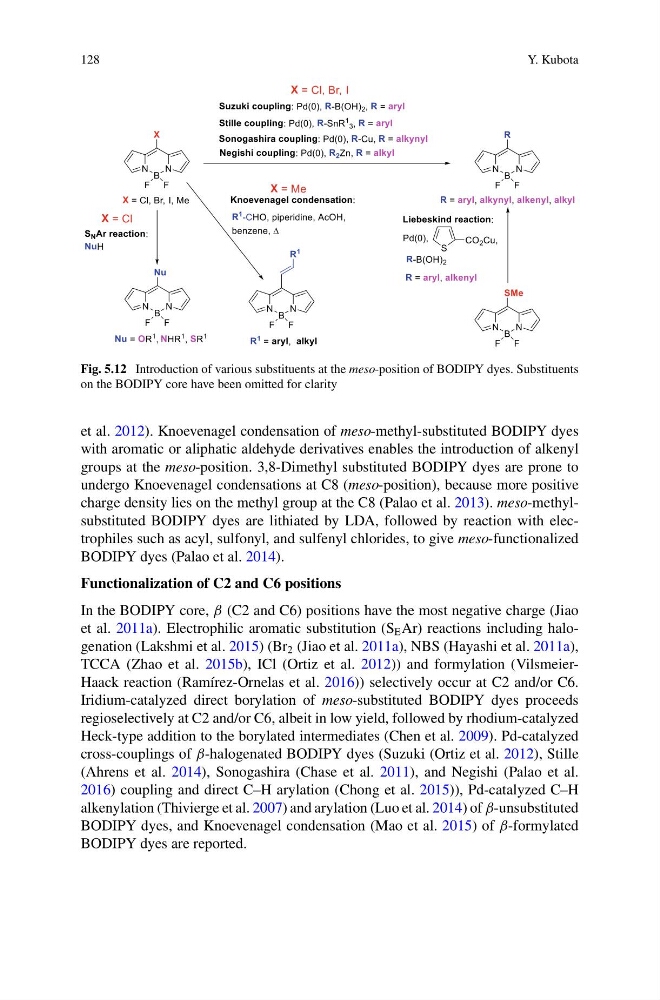
Fig. 5.12 Introduction of various substituents at the meso-position of BODIPY dyes. Substituents
on the BODIPY core have been omitted for clarity
et al. 2012). Knoevenagel condensation of meso-methyl-substituted BODIPY dyes
with aromatic or aliphatic aldehyde derivatives enables the introduction of alkenyl
groups at the meso-position. 3,8-Dimethyl substituted BODIPY dyes are prone to
undergo Knoevenagel condensations at C8 (meso-position), because more positive
charge density lies on the methyl group at the C8 (Palao et al. 2013). meso-methylsubstituted BODIPY dyes are lithiated by LDA, followed by reaction with electrophiles such as acyl, sulfonyl, and sulfenyl chlorides, to give meso-functionalized
BODIPY dyes (Palao et al. 2014).
Functionalization of C2 and C6 positions
In the BODIPY core, β (C2 and C6) positions have the most negative charge (Jiao
et al. 2011a). Electrophilic aromatic substitution (S E Ar) reactions including halogenation (Lakshmi et al. 2015) (Br 2 (Jiao et al. 2011a), NBS (Hayashi et al. 2011a),
TCCA (Zhao et al. 2015b), ICl (Ortiz et al. 2012)) and formylation (VilsmeierHaack reaction (Ramírez-Ornelas et al. 2016)) selectively occur at C2 and/or C6.
Iridium-catalyzed direct borylation of meso-substituted BODIPY dyes proceeds
regioselectively at C2 and/or C6, albeit in low yield, followed by rhodium-catalyzed
Heck-type addition to the borylated intermediates (Chen et al. 2009). Pd-catalyzed
cross-couplings of β-halogenated BODIPY dyes (Suzuki (Ortiz et al. 2012), Stille
(Ahrens et al. 2014), Sonogashira (Chase et al. 2011), and Negishi (Palao et al.
2016) coupling and direct C–H arylation (Chong et al. 2015)), Pd-catalyzed C–H
alkenylation (Thivierge et al. 2007) and arylation (Luo et al. 2014) of β-unsubstituted
BODIPY dyes, and Knoevenagel condensation (Mao et al. 2015) of β-formylated
BODIPY dyes are reported.
Y. Kubota
Fig. 5.12 Introduction of various substituents at the meso-position of BODIPY dyes. Substituents
on the BODIPY core have been omitted for clarity
et al. 2012). Knoevenagel condensation of meso-methyl-substituted BODIPY dyes
with aromatic or aliphatic aldehyde derivatives enables the introduction of alkenyl
groups at the meso-position. 3,8-Dimethyl substituted BODIPY dyes are prone to
undergo Knoevenagel condensations at C8 (meso-position), because more positive
charge density lies on the methyl group at the C8 (Palao et al. 2013). meso-methylsubstituted BODIPY dyes are lithiated by LDA, followed by reaction with electrophiles such as acyl, sulfonyl, and sulfenyl chlorides, to give meso-functionalized
BODIPY dyes (Palao et al. 2014).
Functionalization of C2 and C6 positions
In the BODIPY core, β (C2 and C6) positions have the most negative charge (Jiao
et al. 2011a). Electrophilic aromatic substitution (S E Ar) reactions including halogenation (Lakshmi et al. 2015) (Br 2 (Jiao et al. 2011a), NBS (Hayashi et al. 2011a),
TCCA (Zhao et al. 2015b), ICl (Ortiz et al. 2012)) and formylation (VilsmeierHaack reaction (Ramírez-Ornelas et al. 2016)) selectively occur at C2 and/or C6.
Iridium-catalyzed direct borylation of meso-substituted BODIPY dyes proceeds
regioselectively at C2 and/or C6, albeit in low yield, followed by rhodium-catalyzed
Heck-type addition to the borylated intermediates (Chen et al. 2009). Pd-catalyzed
cross-couplings of β-halogenated BODIPY dyes (Suzuki (Ortiz et al. 2012), Stille
(Ahrens et al. 2014), Sonogashira (Chase et al. 2011), and Negishi (Palao et al.
2016) coupling and direct C–H arylation (Chong et al. 2015)), Pd-catalyzed C–H
alkenylation (Thivierge et al. 2007) and arylation (Luo et al. 2014) of β-unsubstituted
BODIPY dyes, and Knoevenagel condensation (Mao et al. 2015) of β-formylated
BODIPY dyes are reported.