

106
S. Shimizu
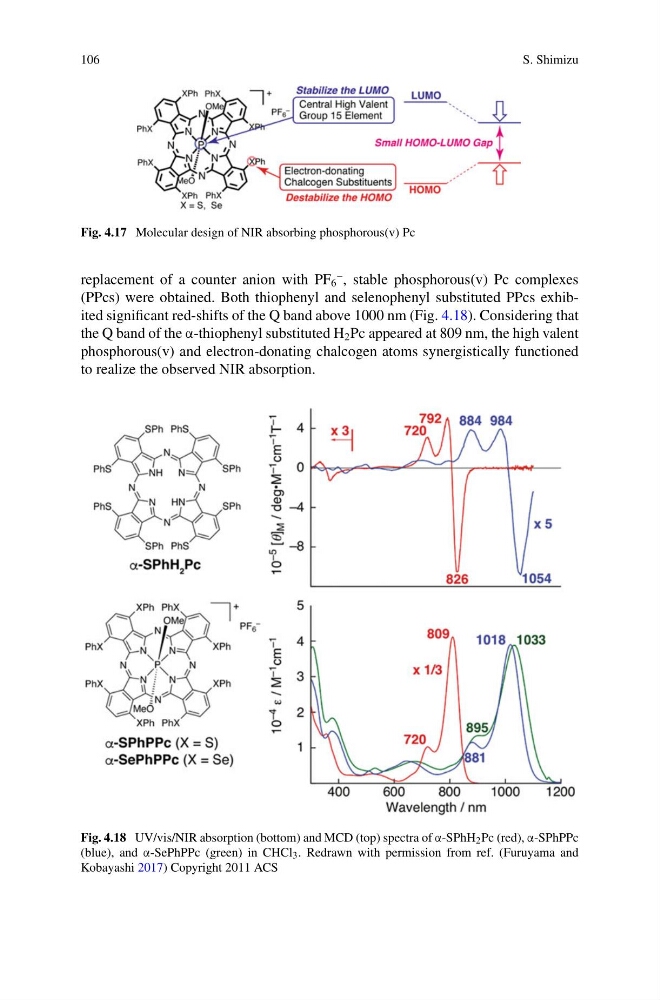
Fig. 4.17 Molecular design of NIR absorbing phosphorous(v) Pc
replacement of a counter anion with PF 6
– , stable phosphorous(v) Pc complexes
(PPcs) were obtained. Both thiophenyl and selenophenyl substituted PPcs exhibited significant red-shifts of the Q band above 1000 nm (Fig. 4.18). Considering that
the Q band of the α-thiophenyl substituted H 2 Pc appeared at 809 nm, the high valent
phosphorous(v) and electron-donating chalcogen atoms synergistically functioned
to realize the observed NIR absorption.
Fig. 4.18 UV/vis/NIR absorption (bottom) and MCD (top) spectra of α-SPhH 2 Pc (red), α-SPhPPc
(blue), and α-SePhPPc (green) in CHCl 3 . Redrawn with permission from ref. (Furuyama and
Kobayashi 2017) Copyright 2011 ACS
S. Shimizu
Fig. 4.17 Molecular design of NIR absorbing phosphorous(v) Pc
replacement of a counter anion with PF 6
– , stable phosphorous(v) Pc complexes
(PPcs) were obtained. Both thiophenyl and selenophenyl substituted PPcs exhibited significant red-shifts of the Q band above 1000 nm (Fig. 4.18). Considering that
the Q band of the α-thiophenyl substituted H 2 Pc appeared at 809 nm, the high valent
phosphorous(v) and electron-donating chalcogen atoms synergistically functioned
to realize the observed NIR absorption.
Fig. 4.18 UV/vis/NIR absorption (bottom) and MCD (top) spectra of α-SPhH 2 Pc (red), α-SPhPPc
(blue), and α-SePhPPc (green) in CHCl 3 . Redrawn with permission from ref. (Furuyama and
Kobayashi 2017) Copyright 2011 ACS