

μ i = μ
∗
i + RT ln a i
(2.65)
μ
∗
i in the above equation refers to the chemical potential of pure component i, and a i is the activity of component i.
2.6 PHYSICAL AND CHEMICAL EQUILIBRIA
2.6.1 The equilibrium constant
Consider the general chemical reaction
aA + bB ⇌ cC + dD
(2.66)
The extent of the reaction can be described by the ratio of the product
concentrations to the reactant concentrations, all raised to the power of
the corresponding stoichiometric coefficient. This ratio is called the
reaction quotient, Q, and is defined by Equation 2.67:
Q =
C
½
c D
½
d
A
½
a B
½
b
(2.67)
The value of Q changes during the reaction, but eventually levels off to a
constant value when the reaction reaches equilibrium. Beyond this point
the concentration of all species is constant and Q = K, the equilibrium
constant (Equation 2.68):
K =
C
½
c
eq D
½
d
eq
A
½
a
eq B
½
b
eq
(2.68)
μ (bulk)
μ ( f ilm)
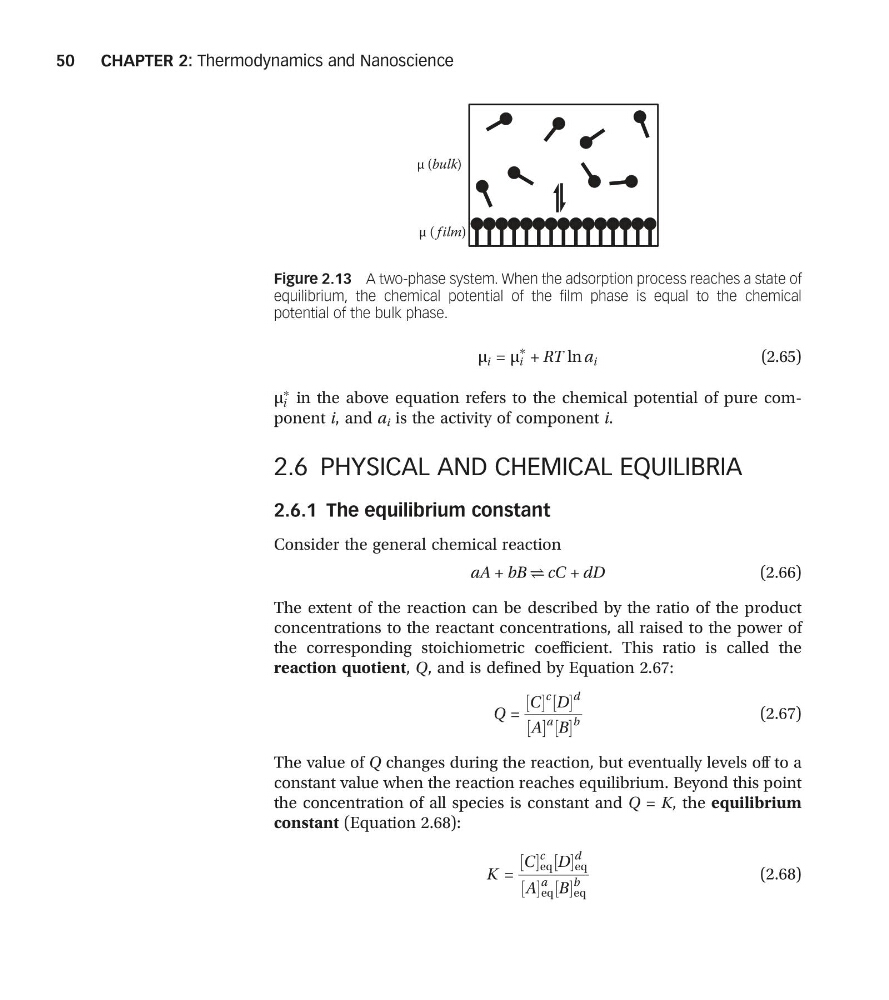
Figure 2.13 A two-phase system. When the adsorption process reaches a state of
equilibrium, the chemical potential of the film phase is equal to the chemical
potential of the bulk phase.
CHAPTER 2: Thermodynamics and Nanoscience
50
∗
i + RT ln a i
(2.65)
μ
∗
i in the above equation refers to the chemical potential of pure component i, and a i is the activity of component i.
2.6 PHYSICAL AND CHEMICAL EQUILIBRIA
2.6.1 The equilibrium constant
Consider the general chemical reaction
aA + bB ⇌ cC + dD
(2.66)
The extent of the reaction can be described by the ratio of the product
concentrations to the reactant concentrations, all raised to the power of
the corresponding stoichiometric coefficient. This ratio is called the
reaction quotient, Q, and is defined by Equation 2.67:
Q =
C
½
c D
½
d
A
½
a B
½
b
(2.67)
The value of Q changes during the reaction, but eventually levels off to a
constant value when the reaction reaches equilibrium. Beyond this point
the concentration of all species is constant and Q = K, the equilibrium
constant (Equation 2.68):
K =
C
½
c
eq D
½
d
eq
A
½
a
eq B
½
b
eq
(2.68)
μ (bulk)
μ ( f ilm)
Figure 2.13 A two-phase system. When the adsorption process reaches a state of
equilibrium, the chemical potential of the film phase is equal to the chemical
potential of the bulk phase.
CHAPTER 2: Thermodynamics and Nanoscience
50