

consequently producing a negative shift in the measured frequency. If the
adsorbed material is sufficiently well behaved (i.e., is relatively thin and
rigid), then the Sauerbrey relation can be applied, allowing us to calculate
the mass of the adsorbed thin film.
QCM-D has a wide variety of applications. It is widely used in a biophysical context to detect interactions between biomacromolecules, such
as between an enzyme and its substrate. It is also commonly used to
examine the characteristics of polymer thin film formation as well as film
behaviors under different conditions. Another application is determination of the effectiveness of different detergents to clean a given surface.
8.3 ELLIPSOMETRY
There are many approaches to determining the thickness of a nanofilm.
As discussed in Chapter 6, measuring the absorbance of light through a
nanofilm is one way to determine its thickness. However, determining
thickness from absorbance measurements requires knowledge of both
molar absorptivity and the concentration of the material comprising the
film. It may be challenging to obtain the concentration of the molecules in
such a film.
Film thickness can also be measured by mechanical methods such as
dragging a stylus over the surface of a material. This method is the basis of
the technique known as profilometry. A profilometer can be used to
measure a film’s thickness and roughness. In this method, a diamond
stylus is moved vertically in contact with the surface of the nanofilm, then
moved laterally across the surface for a specified distance and specified
contact force. A profilometer can measure small surface variations in
Fluid in
Fluid out
Nano-assembly
Coating on crystal
QCM
crystal
Applied voltage
O-ring seal
QCM liquid cell
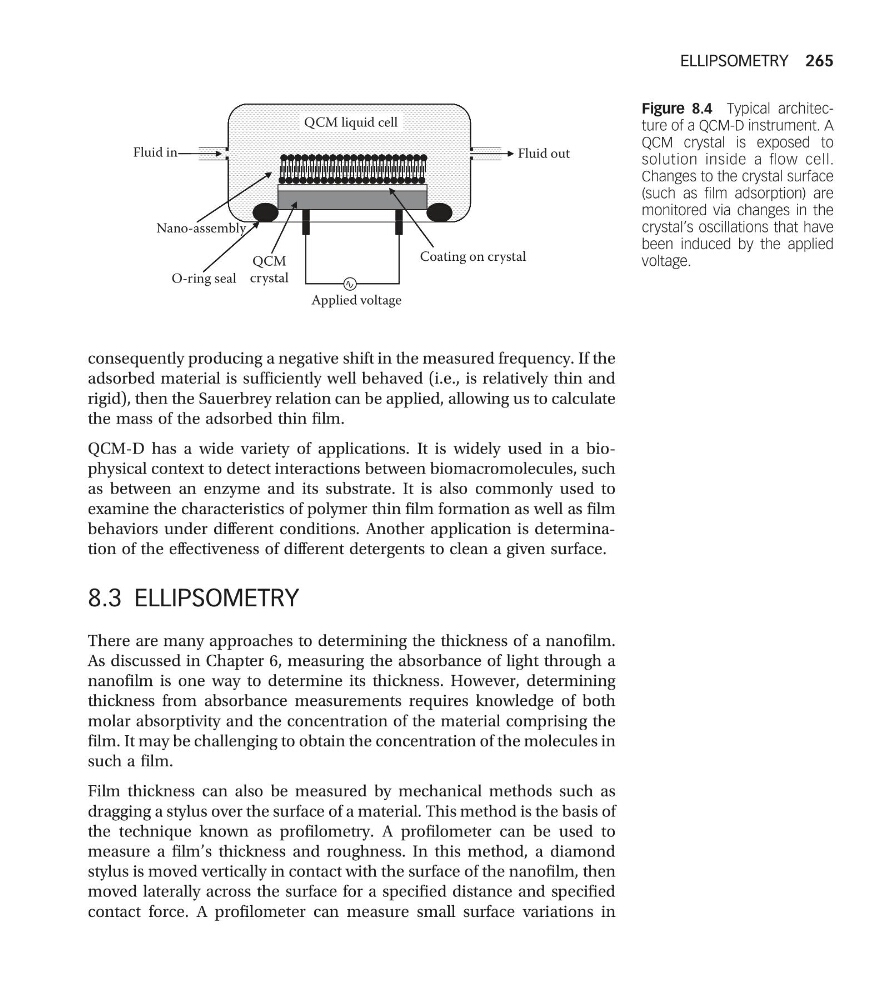
Figure 8.4 Typical architecture of a QCM-D instrument. A
QCM crystal is exposed to
solution inside a flow cell.
Changes to the crystal surface
(such as film adsorption) are
monitored via changes in the
crystal’s oscillations that have
been induced by the applied
voltage.
ELLIPSOMETRY 265
adsorbed material is sufficiently well behaved (i.e., is relatively thin and
rigid), then the Sauerbrey relation can be applied, allowing us to calculate
the mass of the adsorbed thin film.
QCM-D has a wide variety of applications. It is widely used in a biophysical context to detect interactions between biomacromolecules, such
as between an enzyme and its substrate. It is also commonly used to
examine the characteristics of polymer thin film formation as well as film
behaviors under different conditions. Another application is determination of the effectiveness of different detergents to clean a given surface.
8.3 ELLIPSOMETRY
There are many approaches to determining the thickness of a nanofilm.
As discussed in Chapter 6, measuring the absorbance of light through a
nanofilm is one way to determine its thickness. However, determining
thickness from absorbance measurements requires knowledge of both
molar absorptivity and the concentration of the material comprising the
film. It may be challenging to obtain the concentration of the molecules in
such a film.
Film thickness can also be measured by mechanical methods such as
dragging a stylus over the surface of a material. This method is the basis of
the technique known as profilometry. A profilometer can be used to
measure a film’s thickness and roughness. In this method, a diamond
stylus is moved vertically in contact with the surface of the nanofilm, then
moved laterally across the surface for a specified distance and specified
contact force. A profilometer can measure small surface variations in
Fluid in
Fluid out
Nano-assembly
Coating on crystal
QCM
crystal
Applied voltage
O-ring seal
QCM liquid cell
Figure 8.4 Typical architecture of a QCM-D instrument. A
QCM crystal is exposed to
solution inside a flow cell.
Changes to the crystal surface
(such as film adsorption) are
monitored via changes in the
crystal’s oscillations that have
been induced by the applied
voltage.
ELLIPSOMETRY 265