

72 J. KRANE
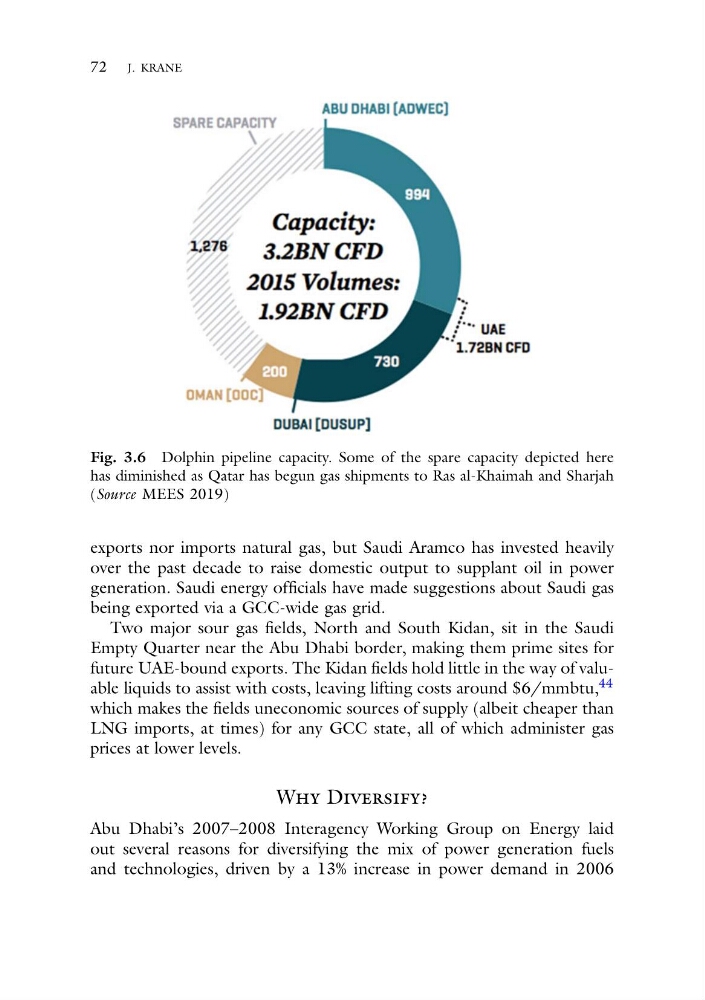
Fig. 3.6 Dolphin pipeline capacity. Some of the spare capacity depicted here
has diminished as Qatar has begun gas shipments to Ras al-Khaimah and Sharjah
(Source MEES 2019)
exports nor imports natural gas, but Saudi Aramco has invested heavily
over the past decade to raise domestic output to supplant oil in power
generation. Saudi energy officials have made suggestions about Saudi gas
being exported via a GCC-wide gas grid.
Two major sour gas fields, North and South Kidan, sit in the Saudi
Empty Quarter near the Abu Dhabi border, making them prime sites for
future UAE-bound exports. The Kidan fields hold little in the way of valuable liquids to assist with costs, leaving lifting costs around $6/mmbtu, 44
which makes the fields uneconomic sources of supply (albeit cheaper than
LNG imports, at times) for any GCC state, all of which administer gas
prices at lower levels.
Why Diversify?
Abu Dhabi’s 2007–2008 Interagency Working Group on Energy laid
out several reasons for diversifying the mix of power generation fuels
and technologies, driven by a 13% increase in power demand in 2006
Fig. 3.6 Dolphin pipeline capacity. Some of the spare capacity depicted here
has diminished as Qatar has begun gas shipments to Ras al-Khaimah and Sharjah
(Source MEES 2019)
exports nor imports natural gas, but Saudi Aramco has invested heavily
over the past decade to raise domestic output to supplant oil in power
generation. Saudi energy officials have made suggestions about Saudi gas
being exported via a GCC-wide gas grid.
Two major sour gas fields, North and South Kidan, sit in the Saudi
Empty Quarter near the Abu Dhabi border, making them prime sites for
future UAE-bound exports. The Kidan fields hold little in the way of valuable liquids to assist with costs, leaving lifting costs around $6/mmbtu, 44
which makes the fields uneconomic sources of supply (albeit cheaper than
LNG imports, at times) for any GCC state, all of which administer gas
prices at lower levels.
Why Diversify?
Abu Dhabi’s 2007–2008 Interagency Working Group on Energy laid
out several reasons for diversifying the mix of power generation fuels
and technologies, driven by a 13% increase in power demand in 2006