

100 F. AL-SULAYMAN
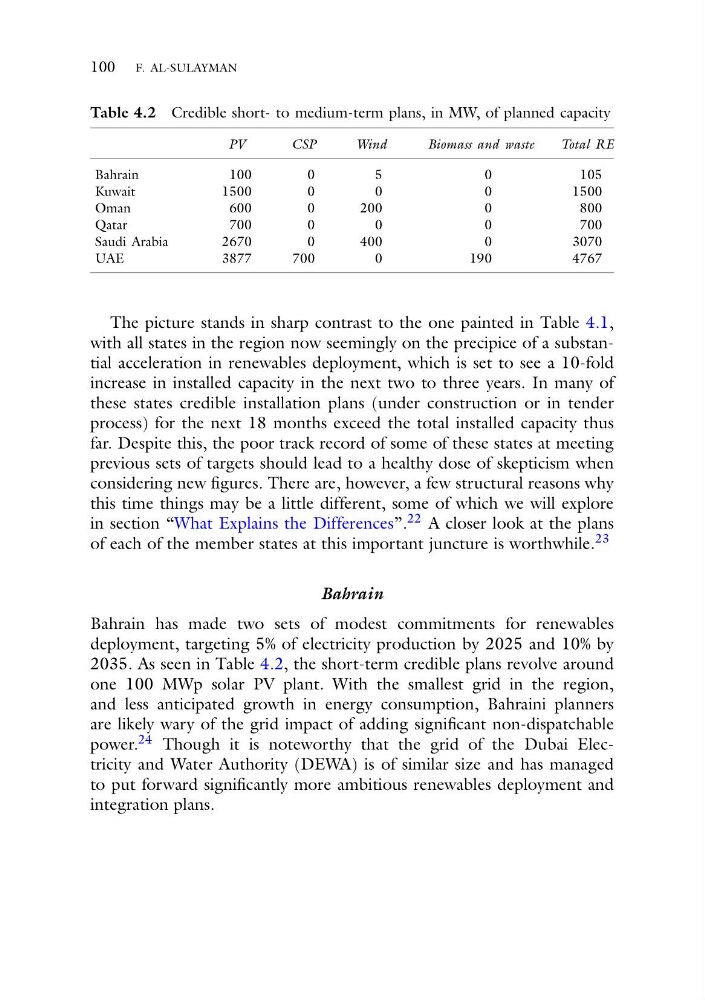
Table 4.2 Credible short- to medium-term plans, in MW, of planned capacity
PV
CSP
Wind
Biomass and waste
Total RE
Bahrain
100
0
5
0
105
Kuwait
1500
0
0
0
1500
Oman
600
0
200
0
800
Qatar
700
0
0
0
700
Saudi Arabia
2670
0
400
0
3070
UAE
3877
700
0
190
4767
The picture stands in sharp contrast to the one painted in Table 4.1,
with all states in the region now seemingly on the precipice of a substantial acceleration in renewables deployment, which is set to see a 10-fold
increase in installed capacity in the next two to three years. In many of
these states credible installation plans (under construction or in tender
process) for the next 18 months exceed the total installed capacity thus
far. Despite this, the poor track record of some of these states at meeting
previous sets of targets should lead to a healthy dose of skepticism when
considering new figures. There are, however, a few structural reasons why
this time things may be a little different, some of which we will explore
in section “What Explains the Differences”. 22 A closer look at the plans
of each of the member states at this important juncture is worthwhile. 23
Bahrain
Bahrain has made two sets of modest commitments for renewables
deployment, targeting 5% of electricity production by 2025 and 10% by
2035. As seen in Table 4.2, the short-term credible plans revolve around
one 100 MWp solar PV plant. With the smallest grid in the region,
and less anticipated growth in energy consumption, Bahraini planners
are likely wary of the grid impact of adding significant non-dispatchable
power. 24 Though it is noteworthy that the grid of the Dubai Electricity and Water Authority (DEWA) is of similar size and has managed
to put forward significantly more ambitious renewables deployment and
integration plans.
Table 4.2 Credible short- to medium-term plans, in MW, of planned capacity
PV
CSP
Wind
Biomass and waste
Total RE
Bahrain
100
0
5
0
105
Kuwait
1500
0
0
0
1500
Oman
600
0
200
0
800
Qatar
700
0
0
0
700
Saudi Arabia
2670
0
400
0
3070
UAE
3877
700
0
190
4767
The picture stands in sharp contrast to the one painted in Table 4.1,
with all states in the region now seemingly on the precipice of a substantial acceleration in renewables deployment, which is set to see a 10-fold
increase in installed capacity in the next two to three years. In many of
these states credible installation plans (under construction or in tender
process) for the next 18 months exceed the total installed capacity thus
far. Despite this, the poor track record of some of these states at meeting
previous sets of targets should lead to a healthy dose of skepticism when
considering new figures. There are, however, a few structural reasons why
this time things may be a little different, some of which we will explore
in section “What Explains the Differences”. 22 A closer look at the plans
of each of the member states at this important juncture is worthwhile. 23
Bahrain
Bahrain has made two sets of modest commitments for renewables
deployment, targeting 5% of electricity production by 2025 and 10% by
2035. As seen in Table 4.2, the short-term credible plans revolve around
one 100 MWp solar PV plant. With the smallest grid in the region,
and less anticipated growth in energy consumption, Bahraini planners
are likely wary of the grid impact of adding significant non-dispatchable
power. 24 Though it is noteworthy that the grid of the Dubai Electricity and Water Authority (DEWA) is of similar size and has managed
to put forward significantly more ambitious renewables deployment and
integration plans.