

556 ◾ Fundamental Food Microbiology
Electrochemical Immunosensor 37
Electrochemical immunosensors are extensions of the conventional antibody-based enzyme
immunoassays (ELISA) in which catalysis of substrates by an enzyme conjugated to an antibody
produces products in the form of pH change, ions, or oxygen consumption, which generate electrical signals on a transducer. Potentiometric, capacitive, and amperometric transducers have been
used for such applications. In amperometric detection, for example, ALP conjugated to an antibody hydrolyzes p-nitrophenyl phosphate to produce phenol, which is then detected by voltammetry. In light-addressable potentiometric sensors (LAPS), the capture antibody is first immobilized
on a membrane or magnetic beads for capture of target cells. In a sandwich format, a fluorescentlabeled detection antibody is allowed to react with the target cells. A urease-labeled antifluorescent
antibody is then added. In the presence of urea, ammonia (NH 3 ) is produced, which changes the
pH of the solution on the n-type silicon chip coated with a pH-sensitive insulator that records the
voltage change. These sensors are very sensitive and have been used for detection of Salmonella and
Esc. coli O157:H7 in 30–90 minutes.
Piezoelectric (PZ) Biosensor 38
Piezoelectric (PZ) biosensors detect changes in the mass on the surface of a quartz crystal in a
quartz crystal microbalance (QCM) sensor. Antibodies or receptors are used for specific capture
of pathogens, which increases the mass of the crystal, thereby changing the resonance frequency
when an oscillating electric field is applied across the device. The frequency variation is measured
by a quartz crystal analyzer. PZ has been used for detection of Staphylococcal enterotoxins and
cells of Salmonella Typhimurium, Salmonella Paratyphi, Lis. monocytogenes, Bac. cereus, and Esc.
coli O157:H7, Vibrio spp, and Campylobacter jejuni.
Impedance-Based Biochip Sensor 39–41
The impedance microbiology concept has been in existence for more than a century; however,
its popularity grew only in the mid-’70s. Impedance is based on changes in conductance in a
medium resulting from the microbial metabolism of inert substrates into electrically charged ionic
compounds and acidic byproducts (e.g., amino acids, lactic acids, and acetic acids). This causes
a change in the electrical impedance (resistance to flow of an alternating current) and conductance of the medium. By measuring these two parameters, bacterial growth in a medium as a
Bacteria
Antibody
Prism
Light beam
Detector
Surface plasmon
resonance boundary
Coupling layer
Metal layer
θ
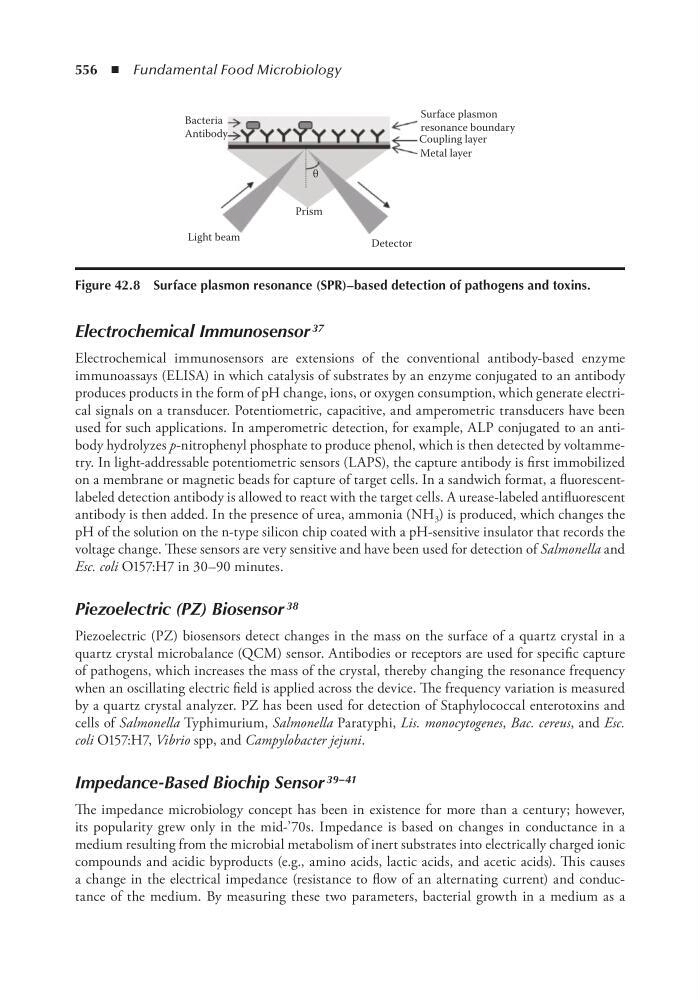
Figure 42.8 Surface plasmon resonance (SPR)–based detection of pathogens and toxins.
Electrochemical Immunosensor 37
Electrochemical immunosensors are extensions of the conventional antibody-based enzyme
immunoassays (ELISA) in which catalysis of substrates by an enzyme conjugated to an antibody
produces products in the form of pH change, ions, or oxygen consumption, which generate electrical signals on a transducer. Potentiometric, capacitive, and amperometric transducers have been
used for such applications. In amperometric detection, for example, ALP conjugated to an antibody hydrolyzes p-nitrophenyl phosphate to produce phenol, which is then detected by voltammetry. In light-addressable potentiometric sensors (LAPS), the capture antibody is first immobilized
on a membrane or magnetic beads for capture of target cells. In a sandwich format, a fluorescentlabeled detection antibody is allowed to react with the target cells. A urease-labeled antifluorescent
antibody is then added. In the presence of urea, ammonia (NH 3 ) is produced, which changes the
pH of the solution on the n-type silicon chip coated with a pH-sensitive insulator that records the
voltage change. These sensors are very sensitive and have been used for detection of Salmonella and
Esc. coli O157:H7 in 30–90 minutes.
Piezoelectric (PZ) Biosensor 38
Piezoelectric (PZ) biosensors detect changes in the mass on the surface of a quartz crystal in a
quartz crystal microbalance (QCM) sensor. Antibodies or receptors are used for specific capture
of pathogens, which increases the mass of the crystal, thereby changing the resonance frequency
when an oscillating electric field is applied across the device. The frequency variation is measured
by a quartz crystal analyzer. PZ has been used for detection of Staphylococcal enterotoxins and
cells of Salmonella Typhimurium, Salmonella Paratyphi, Lis. monocytogenes, Bac. cereus, and Esc.
coli O157:H7, Vibrio spp, and Campylobacter jejuni.
Impedance-Based Biochip Sensor 39–41
The impedance microbiology concept has been in existence for more than a century; however,
its popularity grew only in the mid-’70s. Impedance is based on changes in conductance in a
medium resulting from the microbial metabolism of inert substrates into electrically charged ionic
compounds and acidic byproducts (e.g., amino acids, lactic acids, and acetic acids). This causes
a change in the electrical impedance (resistance to flow of an alternating current) and conductance of the medium. By measuring these two parameters, bacterial growth in a medium as a
Bacteria
Antibody
Prism
Light beam
Detector
Surface plasmon
resonance boundary
Coupling layer
Metal layer
θ
Figure 42.8 Surface plasmon resonance (SPR)–based detection of pathogens and toxins.