

498 ◾ Fundamental Food Microbiology
(ii) terpenoides, (iii) phenylpropenes, (iv) and others. Essential oils are generally more inhibitory
against gram-positive than gram-negative bacteria. It is postulated that the lipopolysaccharide
(LPS) of the outer membrane of gram-negative bacteria creates a barrier for active ingredients
to interact with the bacteria. The antimicrobial action of phenolic compounds in essential oils is
concentration-dependent. At low concentrations, phenols affect enzyme activity associated with
energy production; at high concentrations, they cause protein denaturation. Essential oils alter
cell membrane permeability, causing loss of macromolecules from the interior, and also interfere
with membrane function, such as electron transport, nutrient uptake, protein, and nucleic acid
synthesis, and enzyme activity.
The antimicrobial activity of EO is extracted from leaves (sage, rosemary, basil, oregano, thyme,
and marjoram), flowers or buds (cloves), bulbs (onion, garlic), seeds (nutmeg, fennel, parsley, grape
seed, etc.), fruits (pepper and cardamom), and barks and skins (cinnamon, lemon). Examples of some
of the active components include cinnamaldehyde in cinnamon; eugenol (2-methoxy-4-allyl phenol) in
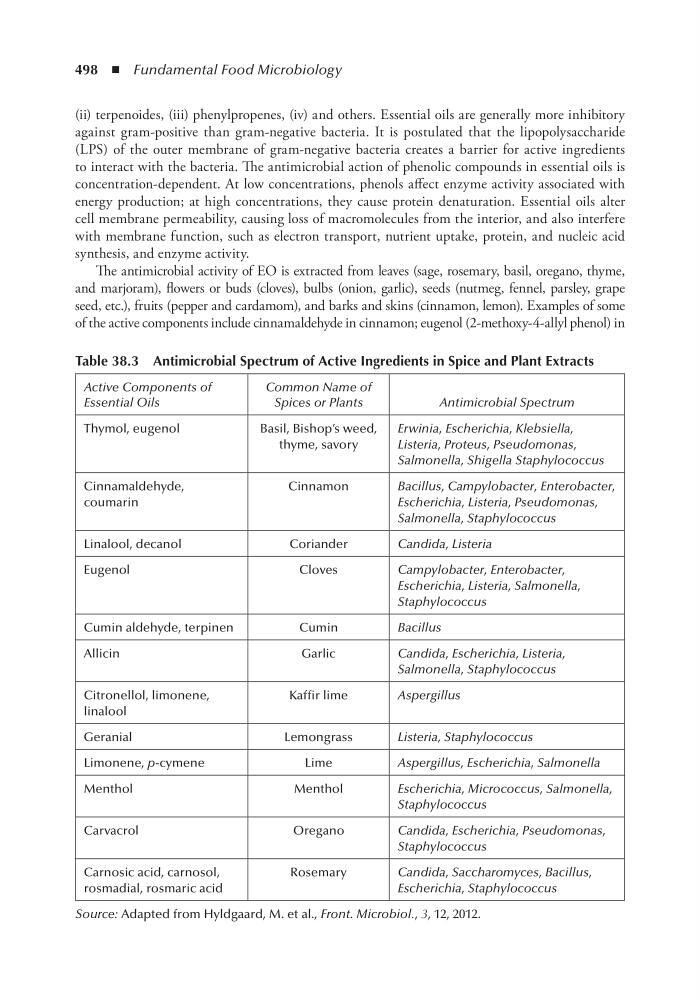
table 38.3 Antimicrobial Spectrum of Active ingredients in Spice and Plant extracts
Active Components of
Essential Oils
Common Name of
Spices or Plants
Antimicrobial Spectrum
Thymol, eugenol
Basil, Bishop’s weed,
thyme, savory
Erwinia, Escherichia, Klebsiella,
Listeria, Proteus, Pseudomonas,
Salmonella, Shigella Staphylococcus
Cinnamaldehyde,
coumarin
Cinnamon
Bacillus, Campylobacter, Enterobacter,
Escherichia, Listeria, Pseudomonas,
Salmonella, Staphylococcus
Linalool, decanol
Coriander
Candida, Listeria
Eugenol
Cloves
Campylobacter, Enterobacter,
Escherichia, Listeria, Salmonella,
Staphylococcus
Cumin aldehyde, terpinen
Cumin
Bacillus
Allicin
Garlic
Candida, Escherichia, Listeria,
Salmonella, Staphylococcus
Citronellol, limonene,
linalool
Kaffir lime
Aspergillus
Geranial
Lemongrass
Listeria, Staphylococcus
Limonene, p-cymene
Lime
Aspergillus, Escherichia, Salmonella
Menthol
Menthol
Escherichia, Micrococcus, Salmonella,
Staphylococcus
Carvacrol
Oregano
Candida, Escherichia, Pseudomonas,
Staphylococcus
Carnosic acid, carnosol,
rosmadial, rosmaric acid
Rosemary
Candida, Saccharomyces, Bacillus,
Escherichia, Staphylococcus
Source: Adapted from Hyldgaard, M. et al., Front. Microbiol., 3, 12, 2012.
(ii) terpenoides, (iii) phenylpropenes, (iv) and others. Essential oils are generally more inhibitory
against gram-positive than gram-negative bacteria. It is postulated that the lipopolysaccharide
(LPS) of the outer membrane of gram-negative bacteria creates a barrier for active ingredients
to interact with the bacteria. The antimicrobial action of phenolic compounds in essential oils is
concentration-dependent. At low concentrations, phenols affect enzyme activity associated with
energy production; at high concentrations, they cause protein denaturation. Essential oils alter
cell membrane permeability, causing loss of macromolecules from the interior, and also interfere
with membrane function, such as electron transport, nutrient uptake, protein, and nucleic acid
synthesis, and enzyme activity.
The antimicrobial activity of EO is extracted from leaves (sage, rosemary, basil, oregano, thyme,
and marjoram), flowers or buds (cloves), bulbs (onion, garlic), seeds (nutmeg, fennel, parsley, grape
seed, etc.), fruits (pepper and cardamom), and barks and skins (cinnamon, lemon). Examples of some
of the active components include cinnamaldehyde in cinnamon; eugenol (2-methoxy-4-allyl phenol) in
table 38.3 Antimicrobial Spectrum of Active ingredients in Spice and Plant extracts
Active Components of
Essential Oils
Common Name of
Spices or Plants
Antimicrobial Spectrum
Thymol, eugenol
Basil, Bishop’s weed,
thyme, savory
Erwinia, Escherichia, Klebsiella,
Listeria, Proteus, Pseudomonas,
Salmonella, Shigella Staphylococcus
Cinnamaldehyde,
coumarin
Cinnamon
Bacillus, Campylobacter, Enterobacter,
Escherichia, Listeria, Pseudomonas,
Salmonella, Staphylococcus
Linalool, decanol
Coriander
Candida, Listeria
Eugenol
Cloves
Campylobacter, Enterobacter,
Escherichia, Listeria, Salmonella,
Staphylococcus
Cumin aldehyde, terpinen
Cumin
Bacillus
Allicin
Garlic
Candida, Escherichia, Listeria,
Salmonella, Staphylococcus
Citronellol, limonene,
linalool
Kaffir lime
Aspergillus
Geranial
Lemongrass
Listeria, Staphylococcus
Limonene, p-cymene
Lime
Aspergillus, Escherichia, Salmonella
Menthol
Menthol
Escherichia, Micrococcus, Salmonella,
Staphylococcus
Carvacrol
Oregano
Candida, Escherichia, Pseudomonas,
Staphylococcus
Carnosic acid, carnosol,
rosmadial, rosmaric acid
Rosemary
Candida, Saccharomyces, Bacillus,
Escherichia, Staphylococcus
Source: Adapted from Hyldgaard, M. et al., Front. Microbiol., 3, 12, 2012.