

Control by Low pH and Organic Acids ◾ 479
bacteria but almost ineffective against yeasts at concentrations used in foods. The inhibitory concentration of undissociated acid is 0.05% against molds and bacteria. The antimicrobial action is
produced through the acidification of cytoplasm as well as destabilization of membrane proton
gradients. 2
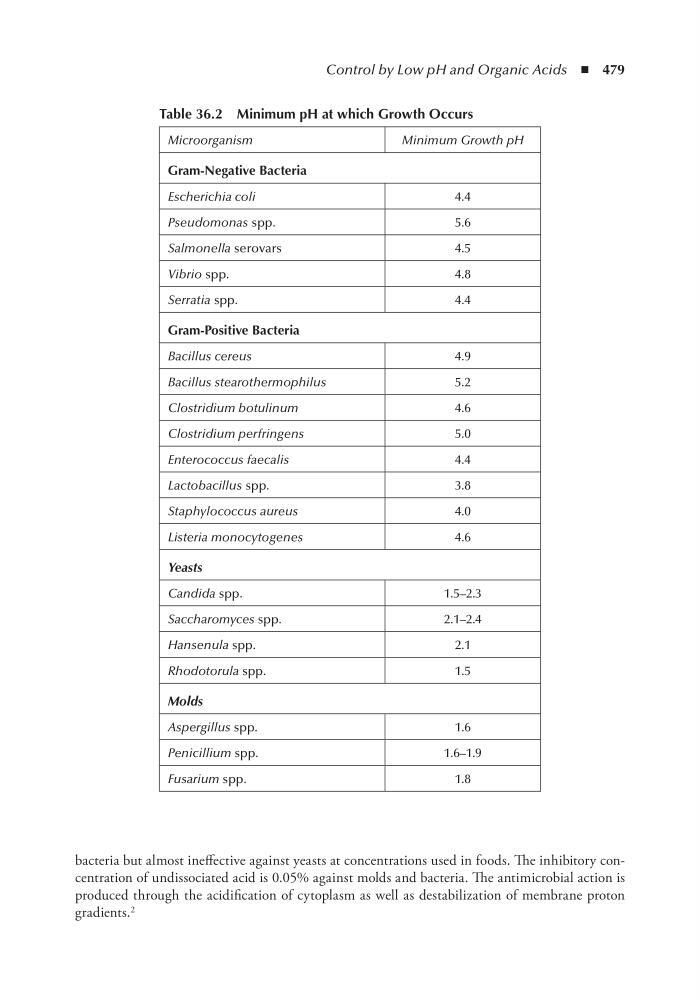
table 36.2 Minimum pH at which Growth occurs
Microorganism
Minimum Growth pH
Gram-negative Bacteria
Escherichia coli
4.4
Pseudomonas spp.
5.6
Salmonella serovars
4.5
Vibrio spp.
4.8
Serratia spp.
4.4
Gram-Positive Bacteria
Bacillus cereus
4.9
Bacillus stearothermophilus
5.2
Clostridium botulinum
4.6
Clostridium perfringens
5.0
Enterococcus faecalis
4.4
Lactobacillus spp.
3.8
Staphylococcus aureus
4.0
Listeria monocytogenes
4.6
Yeasts
Candida spp.
1.5–2.3
Saccharomyces spp.
2.1–2.4
Hansenula spp.
2.1
Rhodotorula spp.
1.5
Molds
Aspergillus spp.
1.6
Penicillium spp.
1.6–1.9
Fusarium spp.
1.8
bacteria but almost ineffective against yeasts at concentrations used in foods. The inhibitory concentration of undissociated acid is 0.05% against molds and bacteria. The antimicrobial action is
produced through the acidification of cytoplasm as well as destabilization of membrane proton
gradients. 2
table 36.2 Minimum pH at which Growth occurs
Microorganism
Minimum Growth pH
Gram-negative Bacteria
Escherichia coli
4.4
Pseudomonas spp.
5.6
Salmonella serovars
4.5
Vibrio spp.
4.8
Serratia spp.
4.4
Gram-Positive Bacteria
Bacillus cereus
4.9
Bacillus stearothermophilus
5.2
Clostridium botulinum
4.6
Clostridium perfringens
5.0
Enterococcus faecalis
4.4
Lactobacillus spp.
3.8
Staphylococcus aureus
4.0
Listeria monocytogenes
4.6
Yeasts
Candida spp.
1.5–2.3
Saccharomyces spp.
2.1–2.4
Hansenula spp.
2.1
Rhodotorula spp.
1.5
Molds
Aspergillus spp.
1.6
Penicillium spp.
1.6–1.9
Fusarium spp.
1.8