

440 ◾ Fundamental Food Microbiology
QACs are advantageous as sanitizers because they are highly stable, noncorrosive, nonirritating, nontoxic, show a residual bacteriostatic effect (however, they need to be rinsed before the
use of the equipment), and show a detergent effect. The disadvantages are high cost; low activity
against many gram-negatives, spores, and viruses; incompatibility with anionic synthetic detergents; and have a rinsing requirement before use because of film formation on equipment surfaces.
Some gram-negative bacteria, such as Pseudomonas spp., can grow in diluted QAC solutions.
H 2 O 2
H 2 O 2 is a very effective germicide and kills vegetative cells, spores, and viruses. The use of H 2 O 2
solutions in food (milk and liquid egg) is discussed in Chapters 17 and 38. Its use as a sanitizer is
briefly described here. The U.S. Food and Drug Administration has approved its use for sanitation
of equipment and containers used in the aseptic packaging of foods and beverages. Equipment and
container surfaces can be sterilized in 15 minutes with a 30%–50% solution; the treatment time
can be reduced if the temperature of the solution is raised to 150°F–160°F (65.6°C–71.7°C). Use of
H 2 O 2 in the vapor phase can also be effective in killing microorganisms on food-contact surfaces.
Organic materials greatly reduce the germicidal effect of H 2 O 2 .
Decontamination and Sanitization of Fruits and Vegetables
Fruits and vegetables have been responsible for large numbers of outbreaks and illnesses in recent
years (see also Chapter 24). Fruits and vegetables generally are eaten raw or minimally processed,
that is, they did not receive a treatment step for reduction of pathogens, spores, or toxins to a
safe level; thus, these products are highly vulnerable to spoilage and pathogen contamination. 7,8
The FDA guidelines emphasized (i) prevention of entry of pathogens into produce over disinfecting them as a corrective strategy, (ii) adoption of good agricultural and management practice
(GAMP), (iii) prevention of entry of pathogens into the supply chain, (iv) minimizing contamination through water, (v) management of animal manure as fertilizers, and (v) workers’ hygiene
and sanitation practice to improve produce safety. 7 Recently, there is an increased emphasis on
the application of on-farm HACCP practice to reduce pathogens on produce. 9 Generally, proper
washing and sanitization are employed to increase shelf life and product safety. Freshly harvested
produce is routinely washed to remove soils, pesticide residues, insects, plant debris, and microorganisms. For disinfection of produce, several chemical sanitizers have been tried, such as chlorine, chlorine dioxide, bromine, iodine, trisodium phosphate, quaternary ammonium compounds,
acids, hydrogen peroxide, and ozone. Some of these, including chlorine (50–200 ppm), ozone
(0.1–2.5 ppm), chlorine dioxide (0.5–5 ppm), and peroxyactic acid (<80 ppm), are permitted on
R
R
N
R
R
2
3
1
4
+
:
:
Cl or Br
–
–
:
:
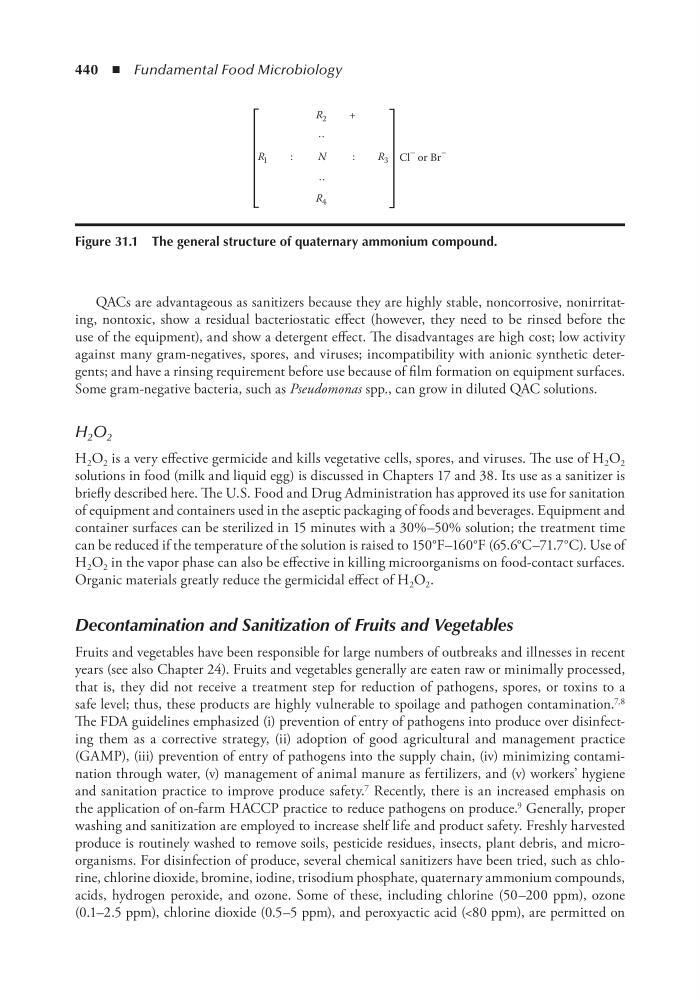
Figure 31.1 the general structure of quaternary ammonium compound.
QACs are advantageous as sanitizers because they are highly stable, noncorrosive, nonirritating, nontoxic, show a residual bacteriostatic effect (however, they need to be rinsed before the
use of the equipment), and show a detergent effect. The disadvantages are high cost; low activity
against many gram-negatives, spores, and viruses; incompatibility with anionic synthetic detergents; and have a rinsing requirement before use because of film formation on equipment surfaces.
Some gram-negative bacteria, such as Pseudomonas spp., can grow in diluted QAC solutions.
H 2 O 2
H 2 O 2 is a very effective germicide and kills vegetative cells, spores, and viruses. The use of H 2 O 2
solutions in food (milk and liquid egg) is discussed in Chapters 17 and 38. Its use as a sanitizer is
briefly described here. The U.S. Food and Drug Administration has approved its use for sanitation
of equipment and containers used in the aseptic packaging of foods and beverages. Equipment and
container surfaces can be sterilized in 15 minutes with a 30%–50% solution; the treatment time
can be reduced if the temperature of the solution is raised to 150°F–160°F (65.6°C–71.7°C). Use of
H 2 O 2 in the vapor phase can also be effective in killing microorganisms on food-contact surfaces.
Organic materials greatly reduce the germicidal effect of H 2 O 2 .
Decontamination and Sanitization of Fruits and Vegetables
Fruits and vegetables have been responsible for large numbers of outbreaks and illnesses in recent
years (see also Chapter 24). Fruits and vegetables generally are eaten raw or minimally processed,
that is, they did not receive a treatment step for reduction of pathogens, spores, or toxins to a
safe level; thus, these products are highly vulnerable to spoilage and pathogen contamination. 7,8
The FDA guidelines emphasized (i) prevention of entry of pathogens into produce over disinfecting them as a corrective strategy, (ii) adoption of good agricultural and management practice
(GAMP), (iii) prevention of entry of pathogens into the supply chain, (iv) minimizing contamination through water, (v) management of animal manure as fertilizers, and (v) workers’ hygiene
and sanitation practice to improve produce safety. 7 Recently, there is an increased emphasis on
the application of on-farm HACCP practice to reduce pathogens on produce. 9 Generally, proper
washing and sanitization are employed to increase shelf life and product safety. Freshly harvested
produce is routinely washed to remove soils, pesticide residues, insects, plant debris, and microorganisms. For disinfection of produce, several chemical sanitizers have been tried, such as chlorine, chlorine dioxide, bromine, iodine, trisodium phosphate, quaternary ammonium compounds,
acids, hydrogen peroxide, and ozone. Some of these, including chlorine (50–200 ppm), ozone
(0.1–2.5 ppm), chlorine dioxide (0.5–5 ppm), and peroxyactic acid (<80 ppm), are permitted on
R
R
N
R
R
2
3
1
4
+
:
:
Cl or Br
–
–
:
:
Figure 31.1 the general structure of quaternary ammonium compound.