

428 ◾ Fundamental Food Microbiology
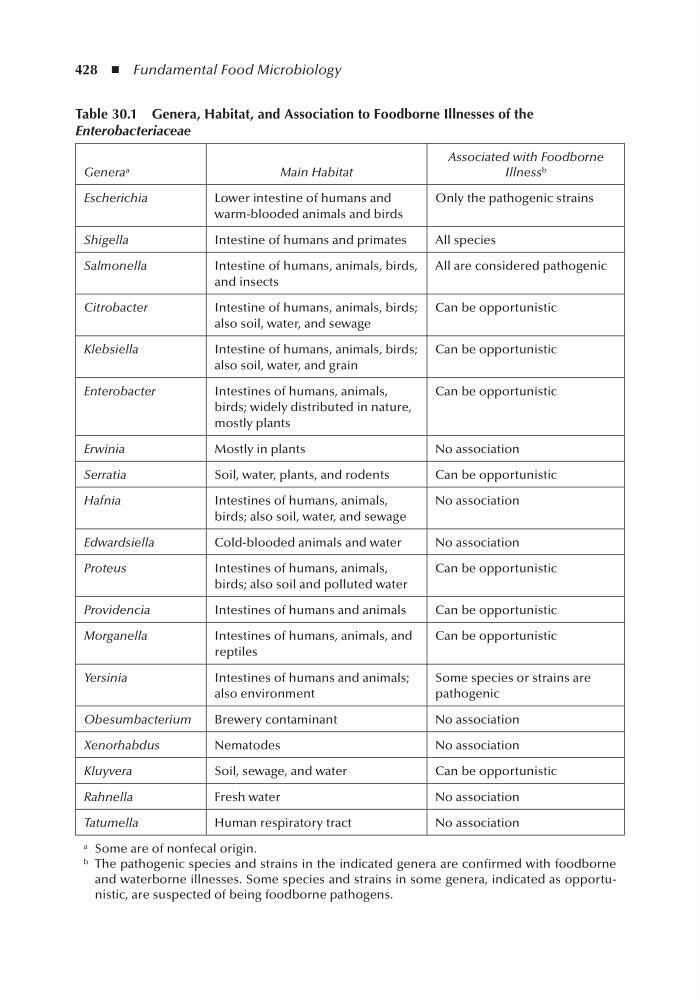
table 30.1 Genera, Habitat, and Association to Foodborne illnesses of the
Enterobacteriaceae
Genera a
Main Habitat
Associated with Foodborne
Illness b
Escherichia
Lower intestine of humans and
warm-blooded animals and birds
Only the pathogenic strains
Shigella
Intestine of humans and primates
All species
Salmonella
Intestine of humans, animals, birds,
and insects
All are considered pathogenic
Citrobacter
Intestine of humans, animals, birds;
also soil, water, and sewage
Can be opportunistic
Klebsiella
Intestine of humans, animals, birds;
also soil, water, and grain
Can be opportunistic
Enterobacter
Intestines of humans, animals,
birds; widely distributed in nature,
mostly plants
Can be opportunistic
Erwinia
Mostly in plants
No association
Serratia
Soil, water, plants, and rodents
Can be opportunistic
Hafnia
Intestines of humans, animals,
birds; also soil, water, and sewage
No association
Edwardsiella
Cold-blooded animals and water
No association
Proteus
Intestines of humans, animals,
birds; also soil and polluted water
Can be opportunistic
Providencia
Intestines of humans and animals
Can be opportunistic
Morganella
Intestines of humans, animals, and
reptiles
Can be opportunistic
Yersinia
Intestines of humans and animals;
also environment
Some species or strains are
pathogenic
Obesumbacterium
Brewery contaminant
No association
Xenorhabdus
Nematodes
No association
Kluyvera
Soil, sewage, and water
Can be opportunistic
Rahnella
Fresh water
No association
Tatumella
Human respiratory tract
No association
a Some are of nonfecal origin.
b The pathogenic species and strains in the indicated genera are confirmed with foodborne
and waterborne illnesses. Some species and strains in some genera, indicated as opportunistic, are suspected of being foodborne pathogens.
table 30.1 Genera, Habitat, and Association to Foodborne illnesses of the
Enterobacteriaceae
Genera a
Main Habitat
Associated with Foodborne
Illness b
Escherichia
Lower intestine of humans and
warm-blooded animals and birds
Only the pathogenic strains
Shigella
Intestine of humans and primates
All species
Salmonella
Intestine of humans, animals, birds,
and insects
All are considered pathogenic
Citrobacter
Intestine of humans, animals, birds;
also soil, water, and sewage
Can be opportunistic
Klebsiella
Intestine of humans, animals, birds;
also soil, water, and grain
Can be opportunistic
Enterobacter
Intestines of humans, animals,
birds; widely distributed in nature,
mostly plants
Can be opportunistic
Erwinia
Mostly in plants
No association
Serratia
Soil, water, plants, and rodents
Can be opportunistic
Hafnia
Intestines of humans, animals,
birds; also soil, water, and sewage
No association
Edwardsiella
Cold-blooded animals and water
No association
Proteus
Intestines of humans, animals,
birds; also soil and polluted water
Can be opportunistic
Providencia
Intestines of humans and animals
Can be opportunistic
Morganella
Intestines of humans, animals, and
reptiles
Can be opportunistic
Yersinia
Intestines of humans and animals;
also environment
Some species or strains are
pathogenic
Obesumbacterium
Brewery contaminant
No association
Xenorhabdus
Nematodes
No association
Kluyvera
Soil, sewage, and water
Can be opportunistic
Rahnella
Fresh water
No association
Tatumella
Human respiratory tract
No association
a Some are of nonfecal origin.
b The pathogenic species and strains in the indicated genera are confirmed with foodborne
and waterborne illnesses. Some species and strains in some genera, indicated as opportunistic, are suspected of being foodborne pathogens.