

New and Emerging Foodborne Pathogens ◾ 415
possible reasons for the increase in foodborne gastroenteritis by pathogenic Esc. coli strains is the
ability of pathogenic Enterobacteriaceae to transfer plasmids among themselves that encode for
toxin production and colonization in the digestive tract. Such a plasmid transfer in the environment
from a pathogenic strain into a nonpathogenic strain will enable the new variant strain to establish
in the intestine and produce illness, and a food can be a vehicle through which the pathogen can be
consumed. Bacteriophage encoded virulence factors, such as Shiga-toxin (Stx), can be transferred
from Shiga-toxigenic Esc. coli to other Esc. coli. For example, the 2011 outbreak in Germany caused
by Esc. coli O104:H4 is an enteroaggregative Esc. coli that has possibly acquired bacteriopophage
encoded stx gene and became a highly virulent strain. (See Esc. coli O104:H4 description below).
Antibiotic Resistance 10
There are some concerns that the use of unrestricted antibiotics in animals for therapeutic and growthpromoting purposes has provided the antibiotic-resistant pathogens with a better chance of competing
with the sensitive microorganisms and establishing themselves in the environment. In the absence
of competition, these pathogens can predominate and, through contamination of a food, emerge as
new foodborne pathogens. Such an assumption was made against some sanitary practices used in
the processing and handling of foods. Some of the practices are designed to overcome problems from
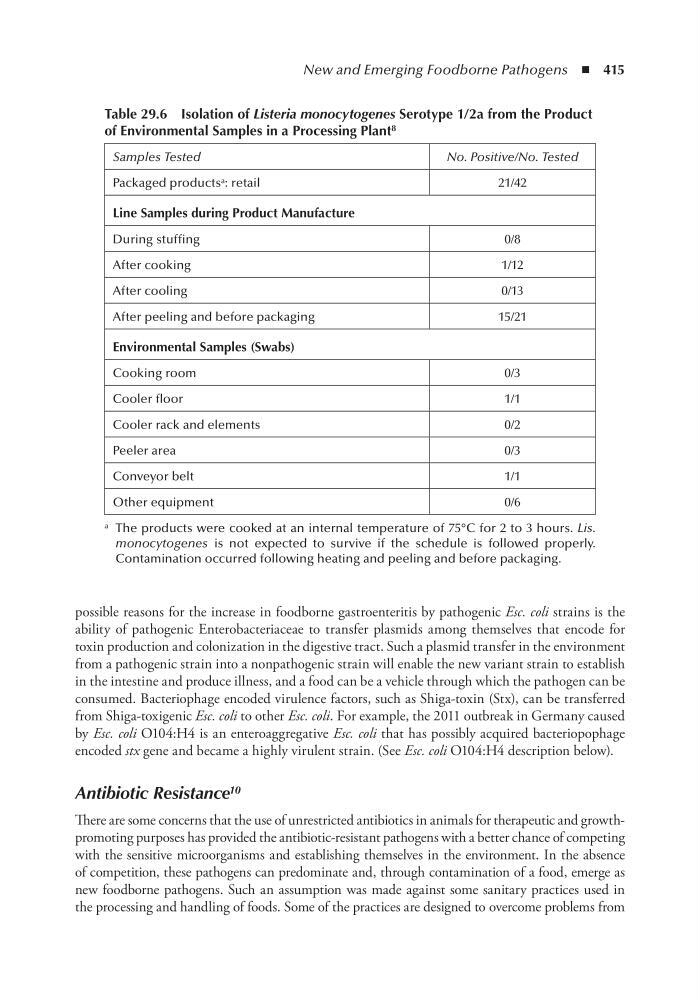
table 29.6 isolation of Listeria monocytogenes Serotype 1/2a from the Product
of environmental Samples in a Processing Plant 8
Samples Tested
No. Positive/No. Tested
Packaged products a : retail
21/42
Line Samples during Product Manufacture
During stuffing
0/8
After cooking
1/12
After cooling
0/13
After peeling and before packaging
15/21
environmental Samples (Swabs)
Cooking room
0/3
Cooler floor
1/1
Cooler rack and elements
0/2
Peeler area
0/3
Conveyor belt
1/1
Other equipment
0/6
a The products were cooked at an internal temperature of 75°C for 2 to 3 hours. Lis.
monocytogenes is not expected to survive if the schedule is followed properly.
Contamination occurred following heating and peeling and before packaging.
possible reasons for the increase in foodborne gastroenteritis by pathogenic Esc. coli strains is the
ability of pathogenic Enterobacteriaceae to transfer plasmids among themselves that encode for
toxin production and colonization in the digestive tract. Such a plasmid transfer in the environment
from a pathogenic strain into a nonpathogenic strain will enable the new variant strain to establish
in the intestine and produce illness, and a food can be a vehicle through which the pathogen can be
consumed. Bacteriophage encoded virulence factors, such as Shiga-toxin (Stx), can be transferred
from Shiga-toxigenic Esc. coli to other Esc. coli. For example, the 2011 outbreak in Germany caused
by Esc. coli O104:H4 is an enteroaggregative Esc. coli that has possibly acquired bacteriopophage
encoded stx gene and became a highly virulent strain. (See Esc. coli O104:H4 description below).
Antibiotic Resistance 10
There are some concerns that the use of unrestricted antibiotics in animals for therapeutic and growthpromoting purposes has provided the antibiotic-resistant pathogens with a better chance of competing
with the sensitive microorganisms and establishing themselves in the environment. In the absence
of competition, these pathogens can predominate and, through contamination of a food, emerge as
new foodborne pathogens. Such an assumption was made against some sanitary practices used in
the processing and handling of foods. Some of the practices are designed to overcome problems from
table 29.6 isolation of Listeria monocytogenes Serotype 1/2a from the Product
of environmental Samples in a Processing Plant 8
Samples Tested
No. Positive/No. Tested
Packaged products a : retail
21/42
Line Samples during Product Manufacture
During stuffing
0/8
After cooking
1/12
After cooling
0/13
After peeling and before packaging
15/21
environmental Samples (Swabs)
Cooking room
0/3
Cooler floor
1/1
Cooler rack and elements
0/2
Peeler area
0/3
Conveyor belt
1/1
Other equipment
0/6
a The products were cooked at an internal temperature of 75°C for 2 to 3 hours. Lis.
monocytogenes is not expected to survive if the schedule is followed properly.
Contamination occurred following heating and peeling and before packaging.