

380 ◾ Fundamental Food Microbiology
Disease and Symptoms
Vib. cholerae is not contagious. A person must consume a large number of viable cells through contaminated food or water to contract the disease. Fecal-oral infection is also possible. The infective
dose for cholera is approximately 10 6 viable cells per person, but it varies with age and health. An
infection dose of 10 2 –10 3 has been reported for outbreaks in Bangladesh. The incubation period
ranges from one to five days, but is usually two days. After consumption, bacteria reach the intestine and colonize in the epithelial cell lining with the help of TCP. Bacteria then produce CT,
and the toxin activates the adenylate cyclase, resulting in fluid loss. The toxin does not cause any
cell damage or visible pathological lesions. The diarrhea caused by non-O1/O139 is milder than
cholera and they are most common in the United States. The symptoms include the sudden onset
of profuse watery diarrhea and vomiting. Loss of fluid results in dehydration. Other symptoms in
severe cases are painful muscle cramps and clouded mental status. Many infected persons may not
have any symptoms or have mild to moderate diarrhea. Treatments consist of rapid replacement of
fluids, along with electrolytes, and administration of proper antibiotics. In addition to diarrhea,
the non-O1 toxins also cause infection of soft tissues and septicemia.
Food Association
Food can serve as a source of Vib. cholerae if it is contaminated directly with human feces from
the patient or previously contaminated water. The handling of food by a person suffering from the
disease can also contaminate food because of poor personal hygiene. In addition, food originating from natural reservoirs of the causative bacteria can be contaminated and spread cholera. The
natural reservoirs include marine and brackish water environments. Testing of samples of water,
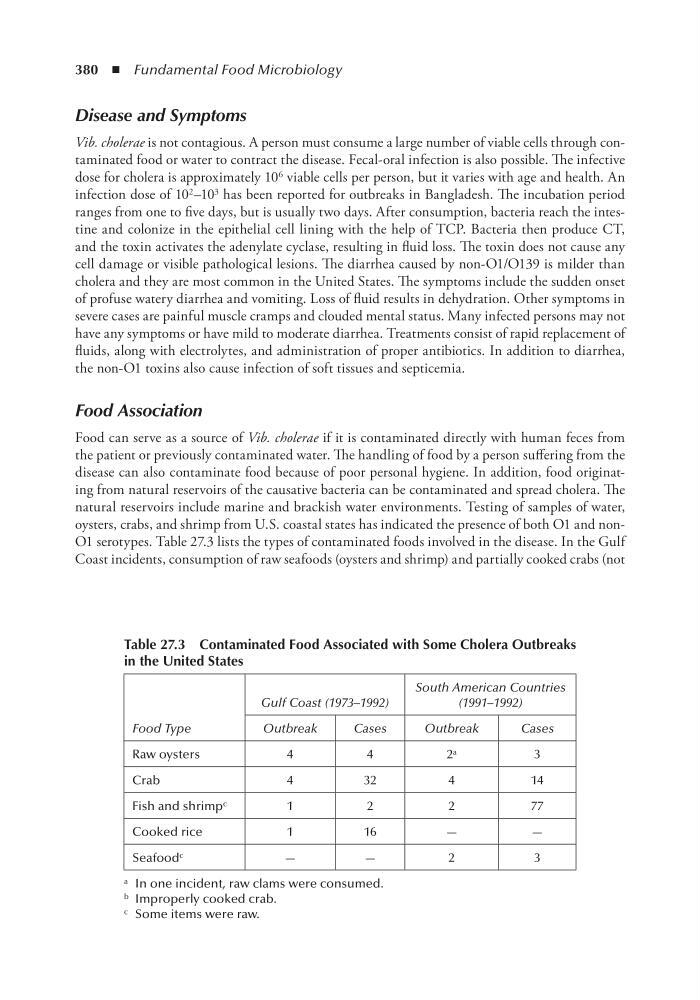
oysters, crabs, and shrimp from U.S. coastal states has indicated the presence of both O1 and nonO1 serotypes. Table 27.3 lists the types of contaminated foods involved in the disease. In the Gulf
Coast incidents, consumption of raw seafoods (oysters and shrimp) and partially cooked crabs (not
table 27.3 Contaminated Food Associated with Some Cholera outbreaks
in the United States
Food Type
Gulf Coast (1973–1992)
South American Countries
(1991–1992)
Outbreak
Cases
Outbreak
Cases
Raw oysters
4
4
2 a
3
Crab
4
32
4
14
Fish and shrimp c
1
2
2
77
Cooked rice
1
16
—
—
Seafood c
—
—
2
3
a In one incident, raw clams were consumed.
b Improperly cooked crab.
c Some items were raw.
Disease and Symptoms
Vib. cholerae is not contagious. A person must consume a large number of viable cells through contaminated food or water to contract the disease. Fecal-oral infection is also possible. The infective
dose for cholera is approximately 10 6 viable cells per person, but it varies with age and health. An
infection dose of 10 2 –10 3 has been reported for outbreaks in Bangladesh. The incubation period
ranges from one to five days, but is usually two days. After consumption, bacteria reach the intestine and colonize in the epithelial cell lining with the help of TCP. Bacteria then produce CT,
and the toxin activates the adenylate cyclase, resulting in fluid loss. The toxin does not cause any
cell damage or visible pathological lesions. The diarrhea caused by non-O1/O139 is milder than
cholera and they are most common in the United States. The symptoms include the sudden onset
of profuse watery diarrhea and vomiting. Loss of fluid results in dehydration. Other symptoms in
severe cases are painful muscle cramps and clouded mental status. Many infected persons may not
have any symptoms or have mild to moderate diarrhea. Treatments consist of rapid replacement of
fluids, along with electrolytes, and administration of proper antibiotics. In addition to diarrhea,
the non-O1 toxins also cause infection of soft tissues and septicemia.
Food Association
Food can serve as a source of Vib. cholerae if it is contaminated directly with human feces from
the patient or previously contaminated water. The handling of food by a person suffering from the
disease can also contaminate food because of poor personal hygiene. In addition, food originating from natural reservoirs of the causative bacteria can be contaminated and spread cholera. The
natural reservoirs include marine and brackish water environments. Testing of samples of water,
oysters, crabs, and shrimp from U.S. coastal states has indicated the presence of both O1 and nonO1 serotypes. Table 27.3 lists the types of contaminated foods involved in the disease. In the Gulf
Coast incidents, consumption of raw seafoods (oysters and shrimp) and partially cooked crabs (not
table 27.3 Contaminated Food Associated with Some Cholera outbreaks
in the United States
Food Type
Gulf Coast (1973–1992)
South American Countries
(1991–1992)
Outbreak
Cases
Outbreak
Cases
Raw oysters
4
4
2 a
3
Crab
4
32
4
14
Fish and shrimp c
1
2
2
77
Cooked rice
1
16
—
—
Seafood c
—
—
2
3
a In one incident, raw clams were consumed.
b Improperly cooked crab.
c Some items were raw.