

Foodborne Toxico-Infections ◾ 373
Disease and Symptoms 4,5
Once the enterotoxin (CPE) is produced in the intestinal lumen, it binds to claudin protein (receptor) in the tight junction on intestinal epithelial cells, inserts into the membrane, and the toxin
is then nicked, and this changes membrane permeability, resulting in loss of water, Na + , and Cl – .
The enterotoxin causes only gastroenteritis. CPE also causes epithelial cell death and leads to
damage in microvilli, epithelial sloughing, and necrosis, further triggering fluid and electrolyte
loss. The symptoms appear 8–24 hours following ingestion of a large number of viable cells (≥5 ×
10 5 /g) through a food. The main symptoms are diarrhea and abdominal pain. Nausea, vomiting,
and fever also can occur but are less common. Fatality, although rare, can occur among the very
young, elderly, and sick. Symptoms generally disappear within 24 hours. It is considered a mild
disease and is seldom reported.
Food Association
Raw meat from animals and birds is most commonly contaminated with the spores and cells
from the digestive tract content, whereas vegetables and spices commonly get them from soil and
dust. As the bacterium has some amino acid requirements for growth, meat and meat-containing
foods provide good environments for cell growth. The foods commonly incriminated with the
outbreaks include meat stews (beef and poultry), roasts, meat pies, casseroles, gravies, sauces, bean
dishes, and some Mexican foods (tacos and enchiladas). Table 27.1 lists the food types involved in
190 Clo. perfringens gastroenteritis outbreaks in the United States from 1973 to 1987. Among the
Raw materials
containing Clo.
perfringens cells
Cooking
Human
contamination of
foods with Clo.
perfringens
Slow
chilling
Eating
Germination of
spores to
vegetative Clo.
perfringens cells
Food poisoning
Sporulation and
CPE production
in the gut
Inactivation of
vegetative cells
and survival of
spores
Entry of
vegetative Clo.
perfringens cells
into gut
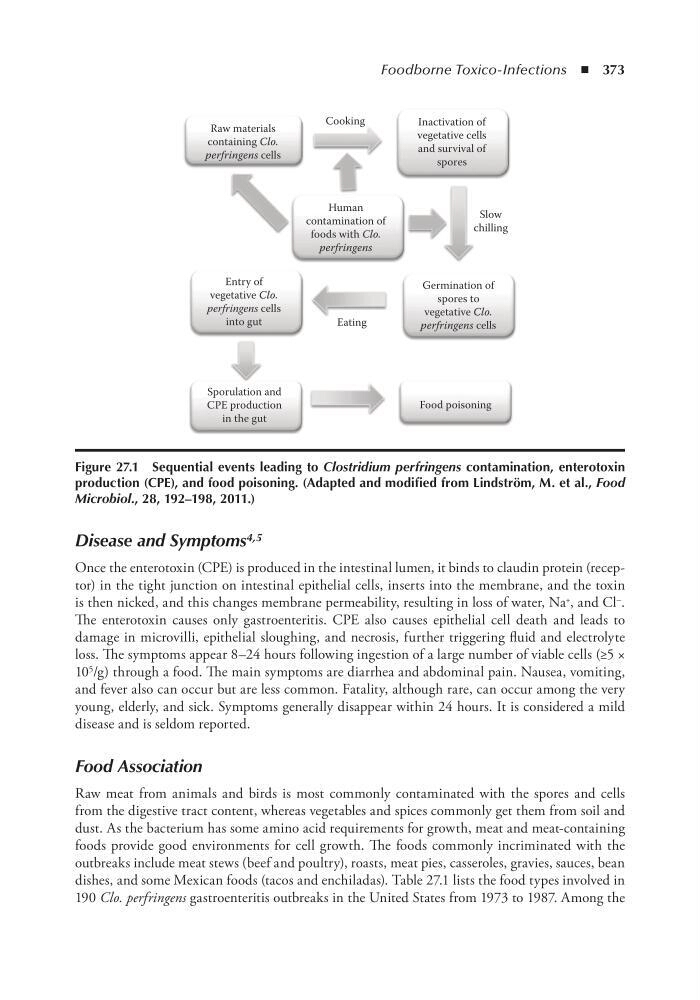
Figure 27.1 Sequential events leading to Clostridium perfringens contamination, enterotoxin
production (CPe), and food poisoning. (Adapted and modified from Lindström, M. et al., Food
Microbiol., 28, 192–198, 2011.)
Disease and Symptoms 4,5
Once the enterotoxin (CPE) is produced in the intestinal lumen, it binds to claudin protein (receptor) in the tight junction on intestinal epithelial cells, inserts into the membrane, and the toxin
is then nicked, and this changes membrane permeability, resulting in loss of water, Na + , and Cl – .
The enterotoxin causes only gastroenteritis. CPE also causes epithelial cell death and leads to
damage in microvilli, epithelial sloughing, and necrosis, further triggering fluid and electrolyte
loss. The symptoms appear 8–24 hours following ingestion of a large number of viable cells (≥5 ×
10 5 /g) through a food. The main symptoms are diarrhea and abdominal pain. Nausea, vomiting,
and fever also can occur but are less common. Fatality, although rare, can occur among the very
young, elderly, and sick. Symptoms generally disappear within 24 hours. It is considered a mild
disease and is seldom reported.
Food Association
Raw meat from animals and birds is most commonly contaminated with the spores and cells
from the digestive tract content, whereas vegetables and spices commonly get them from soil and
dust. As the bacterium has some amino acid requirements for growth, meat and meat-containing
foods provide good environments for cell growth. The foods commonly incriminated with the
outbreaks include meat stews (beef and poultry), roasts, meat pies, casseroles, gravies, sauces, bean
dishes, and some Mexican foods (tacos and enchiladas). Table 27.1 lists the food types involved in
190 Clo. perfringens gastroenteritis outbreaks in the United States from 1973 to 1987. Among the
Raw materials
containing Clo.
perfringens cells
Cooking
Human
contamination of
foods with Clo.
perfringens
Slow
chilling
Eating
Germination of
spores to
vegetative Clo.
perfringens cells
Food poisoning
Sporulation and
CPE production
in the gut
Inactivation of
vegetative cells
and survival of
spores
Entry of
vegetative Clo.
perfringens cells
into gut
Figure 27.1 Sequential events leading to Clostridium perfringens contamination, enterotoxin
production (CPe), and food poisoning. (Adapted and modified from Lindström, M. et al., Food
Microbiol., 28, 192–198, 2011.)