

342 ◾ Fundamental Food Microbiology
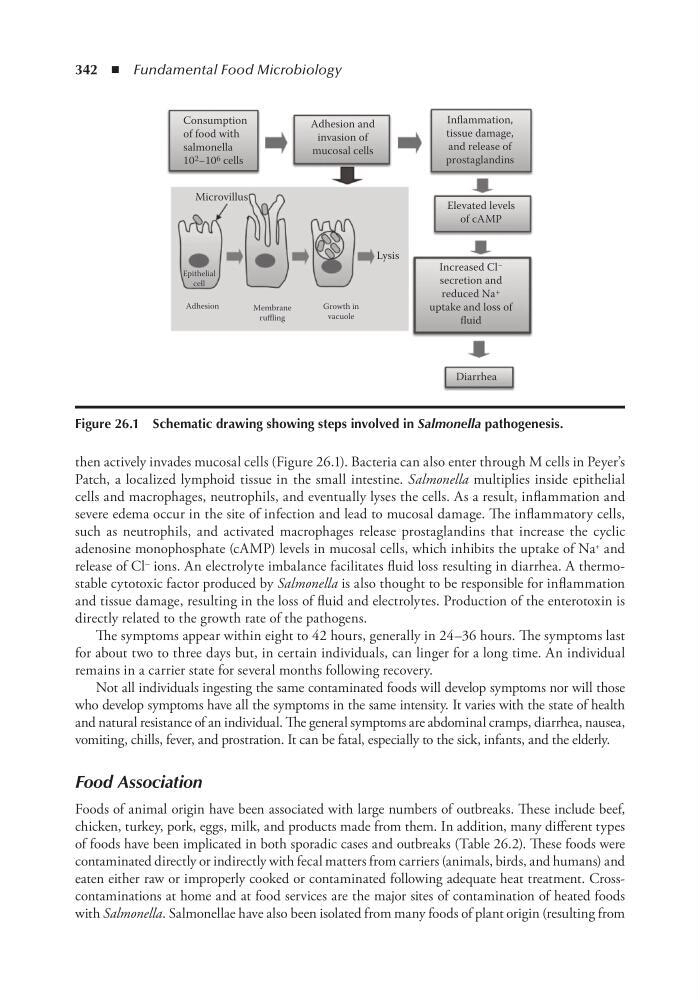
then actively invades mucosal cells (Figure 26.1). Bacteria can also enter through M cells in Peyer’s
Patch, a localized lymphoid tissue in the small intestine. Salmonella multiplies inside epithelial
cells and macrophages, neutrophils, and eventually lyses the cells. As a result, inflammation and
severe edema occur in the site of infection and lead to mucosal damage. The inflammatory cells,
such as neutrophils, and activated macrophages release prostaglandins that increase the cyclic
adenosine monophosphate (cAMP) levels in mucosal cells, which inhibits the uptake of Na + and
release of Cl – ions. An electrolyte imbalance facilitates fluid loss resulting in diarrhea. A thermostable cytotoxic factor produced by Salmonella is also thought to be responsible for inflammation
and tissue damage, resulting in the loss of fluid and electrolytes. Production of the enterotoxin is
directly related to the growth rate of the pathogens.
The symptoms appear within eight to 42 hours, generally in 24–36 hours. The symptoms last
for about two to three days but, in certain individuals, can linger for a long time. An individual
remains in a carrier state for several months following recovery.
Not all individuals ingesting the same contaminated foods will develop symptoms nor will those
who develop symptoms have all the symptoms in the same intensity. It varies with the state of health
and natural resistance of an individual. The general symptoms are abdominal cramps, diarrhea, nausea,
vomiting, chills, fever, and prostration. It can be fatal, especially to the sick, infants, and the elderly.
Food Association
Foods of animal origin have been associated with large numbers of outbreaks. These include beef,
chicken, turkey, pork, eggs, milk, and products made from them. In addition, many different types
of foods have been implicated in both sporadic cases and outbreaks (Table 26.2). These foods were
contaminated directly or indirectly with fecal matters from carriers (animals, birds, and humans) and
eaten either raw or improperly cooked or contaminated following adequate heat treatment. Crosscontaminations at home and at food services are the major sites of contamination of heated foods
with Salmonella. Salmonellae have also been isolated from many foods of plant origin (resulting from
Consumption
of food with
salmonella
10 2 −10 6 cells
Adhesion and
invasion of
mucosal cells
Inflammation,
tissue damage,
and release of
prostaglandins
Elevated levels
of cAMP
Increased Cl −
secretion and
reduced Na +
uptake and loss of
fluid
Diarrhea
Adhesion
Membrane
ruffling
Epithelial
cell
Growth in
vacuole
Lysis
Microvillus
Figure 26.1 Schematic drawing showing steps involved in Salmonella pathogenesis.
then actively invades mucosal cells (Figure 26.1). Bacteria can also enter through M cells in Peyer’s
Patch, a localized lymphoid tissue in the small intestine. Salmonella multiplies inside epithelial
cells and macrophages, neutrophils, and eventually lyses the cells. As a result, inflammation and
severe edema occur in the site of infection and lead to mucosal damage. The inflammatory cells,
such as neutrophils, and activated macrophages release prostaglandins that increase the cyclic
adenosine monophosphate (cAMP) levels in mucosal cells, which inhibits the uptake of Na + and
release of Cl – ions. An electrolyte imbalance facilitates fluid loss resulting in diarrhea. A thermostable cytotoxic factor produced by Salmonella is also thought to be responsible for inflammation
and tissue damage, resulting in the loss of fluid and electrolytes. Production of the enterotoxin is
directly related to the growth rate of the pathogens.
The symptoms appear within eight to 42 hours, generally in 24–36 hours. The symptoms last
for about two to three days but, in certain individuals, can linger for a long time. An individual
remains in a carrier state for several months following recovery.
Not all individuals ingesting the same contaminated foods will develop symptoms nor will those
who develop symptoms have all the symptoms in the same intensity. It varies with the state of health
and natural resistance of an individual. The general symptoms are abdominal cramps, diarrhea, nausea,
vomiting, chills, fever, and prostration. It can be fatal, especially to the sick, infants, and the elderly.
Food Association
Foods of animal origin have been associated with large numbers of outbreaks. These include beef,
chicken, turkey, pork, eggs, milk, and products made from them. In addition, many different types
of foods have been implicated in both sporadic cases and outbreaks (Table 26.2). These foods were
contaminated directly or indirectly with fecal matters from carriers (animals, birds, and humans) and
eaten either raw or improperly cooked or contaminated following adequate heat treatment. Crosscontaminations at home and at food services are the major sites of contamination of heated foods
with Salmonella. Salmonellae have also been isolated from many foods of plant origin (resulting from
Consumption
of food with
salmonella
10 2 −10 6 cells
Adhesion and
invasion of
mucosal cells
Inflammation,
tissue damage,
and release of
prostaglandins
Elevated levels
of cAMP
Increased Cl −
secretion and
reduced Na +
uptake and loss of
fluid
Diarrhea
Adhesion
Membrane
ruffling
Epithelial
cell
Growth in
vacuole
Lysis
Microvillus
Figure 26.1 Schematic drawing showing steps involved in Salmonella pathogenesis.