

318 ◾ Fundamental Food Microbiology
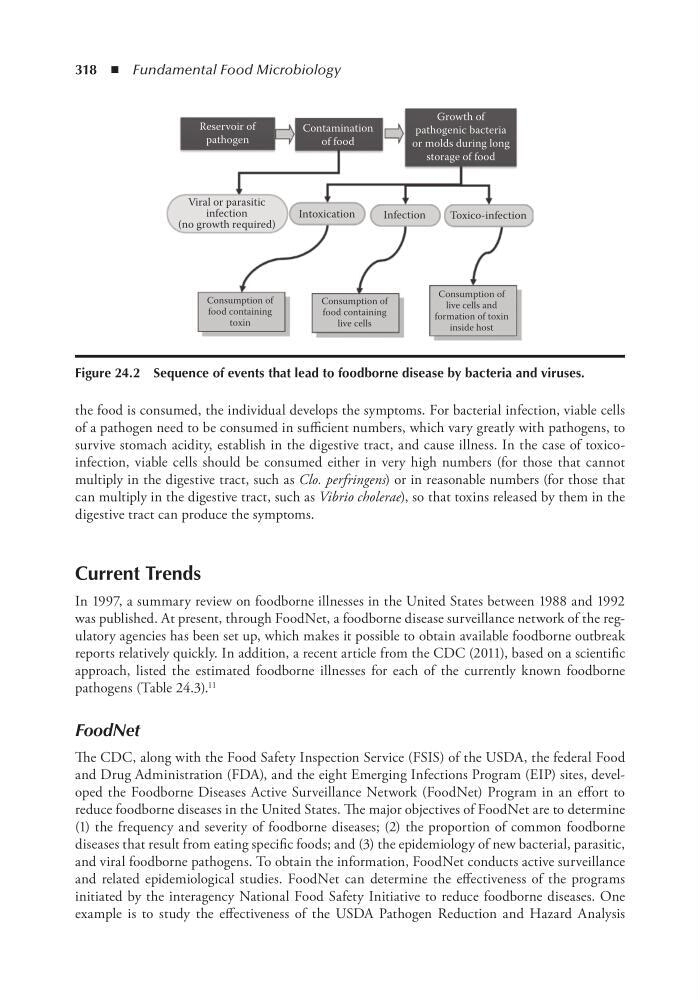
the food is consumed, the individual develops the symptoms. For bacterial infection, viable cells
of a pathogen need to be consumed in sufficient numbers, which vary greatly with pathogens, to
survive stomach acidity, establish in the digestive tract, and cause illness. In the case of toxicoinfection, viable cells should be consumed either in very high numbers (for those that cannot
multiply in the digestive tract, such as Clo. perfringens) or in reasonable numbers (for those that
can multiply in the digestive tract, such as Vibrio cholerae), so that toxins released by them in the
digestive tract can produce the symptoms.
Current trends
In 1997, a summary review on foodborne illnesses in the United States between 1988 and 1992
was published. At present, through FoodNet, a foodborne disease surveillance network of the regulatory agencies has been set up, which makes it possible to obtain available foodborne outbreak
reports relatively quickly. In addition, a recent article from the CDC (2011), based on a scientific
approach, listed the estimated foodborne illnesses for each of the currently known foodborne
pathogens (Table 24.3). 11
FoodNet
The CDC, along with the Food Safety Inspection Service (FSIS) of the USDA, the federal Food
and Drug Administration (FDA), and the eight Emerging Infections Program (EIP) sites, developed the Foodborne Diseases Active Surveillance Network (FoodNet) Program in an effort to
reduce foodborne diseases in the United States. The major objectives of FoodNet are to determine
(1) the frequency and severity of foodborne diseases; (2) the proportion of common foodborne
diseases that result from eating specific foods; and (3) the epidemiology of new bacterial, parasitic,
and viral foodborne pathogens. To obtain the information, FoodNet conducts active surveillance
and related epidemiological studies. FoodNet can determine the effectiveness of the programs
initiated by the interagency National Food Safety Initiative to reduce foodborne diseases. One
example is to study the effectiveness of the USDA Pathogen Reduction and Hazard Analysis
Reservoir of
pathogen
Contamination
of food
Growth of
pathogenic bacteria
or molds during long
storage of food
Viral or parasitic
infection
(no growth required)
Intoxication
Infection
Toxico-infection
Consumption of
food containing
toxin
Consumption of
food containing
live cells
Consumption of
live cells and
formation of toxin
inside host
Figure 24.2 Sequence of events that lead to foodborne disease by bacteria and viruses.
the food is consumed, the individual develops the symptoms. For bacterial infection, viable cells
of a pathogen need to be consumed in sufficient numbers, which vary greatly with pathogens, to
survive stomach acidity, establish in the digestive tract, and cause illness. In the case of toxicoinfection, viable cells should be consumed either in very high numbers (for those that cannot
multiply in the digestive tract, such as Clo. perfringens) or in reasonable numbers (for those that
can multiply in the digestive tract, such as Vibrio cholerae), so that toxins released by them in the
digestive tract can produce the symptoms.
Current trends
In 1997, a summary review on foodborne illnesses in the United States between 1988 and 1992
was published. At present, through FoodNet, a foodborne disease surveillance network of the regulatory agencies has been set up, which makes it possible to obtain available foodborne outbreak
reports relatively quickly. In addition, a recent article from the CDC (2011), based on a scientific
approach, listed the estimated foodborne illnesses for each of the currently known foodborne
pathogens (Table 24.3). 11
FoodNet
The CDC, along with the Food Safety Inspection Service (FSIS) of the USDA, the federal Food
and Drug Administration (FDA), and the eight Emerging Infections Program (EIP) sites, developed the Foodborne Diseases Active Surveillance Network (FoodNet) Program in an effort to
reduce foodborne diseases in the United States. The major objectives of FoodNet are to determine
(1) the frequency and severity of foodborne diseases; (2) the proportion of common foodborne
diseases that result from eating specific foods; and (3) the epidemiology of new bacterial, parasitic,
and viral foodborne pathogens. To obtain the information, FoodNet conducts active surveillance
and related epidemiological studies. FoodNet can determine the effectiveness of the programs
initiated by the interagency National Food Safety Initiative to reduce foodborne diseases. One
example is to study the effectiveness of the USDA Pathogen Reduction and Hazard Analysis
Reservoir of
pathogen
Contamination
of food
Growth of
pathogenic bacteria
or molds during long
storage of food
Viral or parasitic
infection
(no growth required)
Intoxication
Infection
Toxico-infection
Consumption of
food containing
toxin
Consumption of
food containing
live cells
Consumption of
live cells and
formation of toxin
inside host
Figure 24.2 Sequence of events that lead to foodborne disease by bacteria and viruses.