

312 ◾ Fundamental Food Microbiology
Intoxication
Illness occurs as a consequence of ingestion of a preformed bacterial or mold toxin (mycotoxin)
from its growth in a food. A toxin has to be present in the contaminated food in an active form.
Once the microorganisms have grown and produced a toxin in a food, there is no need of viable
cells during the consumption of the food for illness to occur. An example is Staphylococcal food
poisoning.
Infection
Illness occurs as a result of the consumption of food and water contaminated with enteropathogenic bacteria or viruses. It is necessary that the cells of enteropathogenic bacteria and viruses
remain alive in the food or water during consumption. The viable cells, even if present in small
numbers, have the potential to establish and multiply in the digestive tract to cause the illness (e.g.,
Salmonellosis, hepatitis A virus infection).
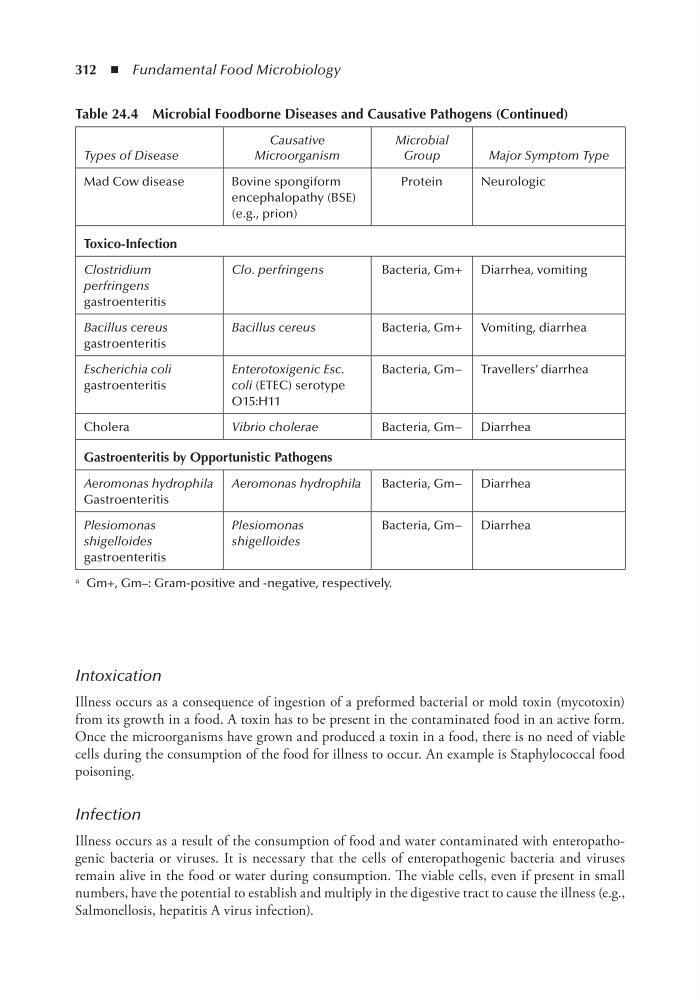
table 24.4 Microbial Foodborne Diseases and Causative Pathogens (Continued)
Types of Disease
Causative
Microorganism
Microbial
Group
Major Symptom Type
Mad Cow disease
Bovine spongiform
encephalopathy (BSE)
(e.g., prion)
Protein
Neurologic
toxico-infection
Clostridium
perfringens
gastroenteritis
Clo. perfringens
Bacteria, Gm+
Diarrhea, vomiting
Bacillus cereus
gastroenteritis
Bacillus cereus
Bacteria, Gm+
Vomiting, diarrhea
Escherichia coli
gastroenteritis
Enterotoxigenic Esc.
coli (ETEC) serotype
O15:H11
Bacteria, Gm−
Travellers’ diarrhea
Cholera
Vibrio cholerae
Bacteria, Gm−
Diarrhea
Gastroenteritis by opportunistic Pathogens
Aeromonas hydrophila
Gastroenteritis
Aeromonas hydrophila
Bacteria, Gm−
Diarrhea
Plesiomonas
shigelloides
gastroenteritis
Plesiomonas
shigelloides
Bacteria, Gm−
Diarrhea
a Gm+, Gm–: Gram-positive and -negative, respectively.
Intoxication
Illness occurs as a consequence of ingestion of a preformed bacterial or mold toxin (mycotoxin)
from its growth in a food. A toxin has to be present in the contaminated food in an active form.
Once the microorganisms have grown and produced a toxin in a food, there is no need of viable
cells during the consumption of the food for illness to occur. An example is Staphylococcal food
poisoning.
Infection
Illness occurs as a result of the consumption of food and water contaminated with enteropathogenic bacteria or viruses. It is necessary that the cells of enteropathogenic bacteria and viruses
remain alive in the food or water during consumption. The viable cells, even if present in small
numbers, have the potential to establish and multiply in the digestive tract to cause the illness (e.g.,
Salmonellosis, hepatitis A virus infection).
table 24.4 Microbial Foodborne Diseases and Causative Pathogens (Continued)
Types of Disease
Causative
Microorganism
Microbial
Group
Major Symptom Type
Mad Cow disease
Bovine spongiform
encephalopathy (BSE)
(e.g., prion)
Protein
Neurologic
toxico-infection
Clostridium
perfringens
gastroenteritis
Clo. perfringens
Bacteria, Gm+
Diarrhea, vomiting
Bacillus cereus
gastroenteritis
Bacillus cereus
Bacteria, Gm+
Vomiting, diarrhea
Escherichia coli
gastroenteritis
Enterotoxigenic Esc.
coli (ETEC) serotype
O15:H11
Bacteria, Gm−
Travellers’ diarrhea
Cholera
Vibrio cholerae
Bacteria, Gm−
Diarrhea
Gastroenteritis by opportunistic Pathogens
Aeromonas hydrophila
Gastroenteritis
Aeromonas hydrophila
Bacteria, Gm−
Diarrhea
Plesiomonas
shigelloides
gastroenteritis
Plesiomonas
shigelloides
Bacteria, Gm−
Diarrhea
a Gm+, Gm–: Gram-positive and -negative, respectively.