

New Food Spoilage Bacteria in Refrigerated Foods ◾ 285
QUESTIONS
1. Define psychrophilic and psychrotrophic microorganisms. Discuss why psychrotrophs are
important in food spoilage.
2. Briefly discuss the reasons for the current popularity of refrigerated foods.
3. What are the possible causes of microbiological problems in refrigerated foods?
4. List six bacterial genera or species that are currently designated as new spoilage bacteria.
Explain the possible reasons for their becoming important in the spoilage of refrigerated foods.
5. A processor recently started producing a new vacuum-packaged, low-heat processed, low-fat
meat product with an expected shelf life of 60 days at 40°F (4.4°C). He found that approximately 10% of the product was getting spoiled within 30–40 days. The characteristics were
accumulation of gas and purge (cloudy) with an acidic and cheesy odor. He asks you to help
him determine the causes and resolve the problem. Explain briefly, in a stepwise fashion,
how you plan to proceed in order to understand the problem (causes, sources, sequence of
events, etc.) and solve it.
6. Answer questions 3–6 in Chapter 3 with the current understanding from this chapter on the
pathogen problems in the listed foods. Suggest their route of contamination of the respective
products and the sequences that led to the problem in each case.
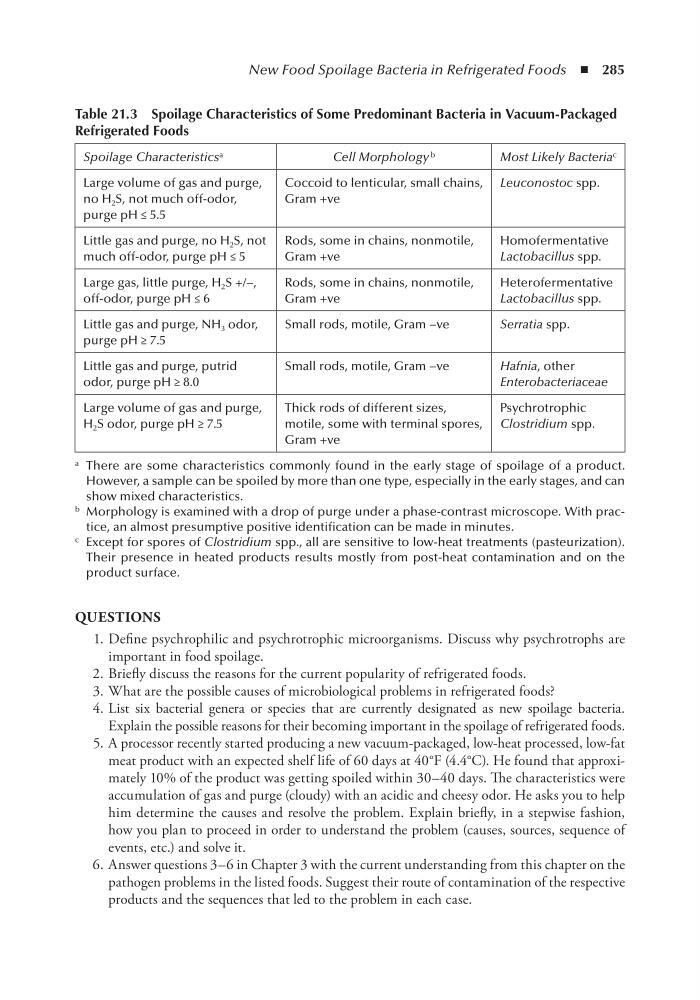
table 21.3 Spoilage Characteristics of Some Predominant Bacteria in Vacuum-Packaged
Refrigerated Foods
Spoilage Characteristics a
Cell Morphology b
Most Likely Bacteria c
Large volume of gas and purge,
no H 2 S, not much off-odor,
purge pH ≤ 5.5
Coccoid to lenticular, small chains,
Gram +ve
Leuconostoc spp.
Little gas and purge, no H 2 S, not
much off-odor, purge pH ≤ 5
Rods, some in chains, nonmotile,
Gram +ve
Homofermentative
Lactobacillus spp.
Large gas, little purge, H 2 S +/−,
off-odor, purge pH ≤ 6
Rods, some in chains, nonmotile,
Gram +ve
Heterofermentative
Lactobacillus spp.
Little gas and purge, NH 3 odor,
purge pH ≥ 7.5
Small rods, motile, Gram −ve
Serratia spp.
Little gas and purge, putrid
odor, purge pH ≥ 8.0
Small rods, motile, Gram −ve
Hafnia, other
Enterobacteriaceae
Large volume of gas and purge,
H 2 S odor, purge pH ≥ 7.5
Thick rods of different sizes,
motile, some with terminal spores,
Gram +ve
Psychrotrophic
Clostridium spp.
a There are some characteristics commonly found in the early stage of spoilage of a product.
However, a sample can be spoiled by more than one type, especially in the early stages, and can
show mixed characteristics.
b Morphology is examined with a drop of purge under a phase-contrast microscope. With practice, an almost presumptive positive identification can be made in minutes.
c Except for spores of Clostridium spp., all are sensitive to low-heat treatments (pasteurization).
Their presence in heated products results mostly from post-heat contamination and on the
product surface.
QUESTIONS
1. Define psychrophilic and psychrotrophic microorganisms. Discuss why psychrotrophs are
important in food spoilage.
2. Briefly discuss the reasons for the current popularity of refrigerated foods.
3. What are the possible causes of microbiological problems in refrigerated foods?
4. List six bacterial genera or species that are currently designated as new spoilage bacteria.
Explain the possible reasons for their becoming important in the spoilage of refrigerated foods.
5. A processor recently started producing a new vacuum-packaged, low-heat processed, low-fat
meat product with an expected shelf life of 60 days at 40°F (4.4°C). He found that approximately 10% of the product was getting spoiled within 30–40 days. The characteristics were
accumulation of gas and purge (cloudy) with an acidic and cheesy odor. He asks you to help
him determine the causes and resolve the problem. Explain briefly, in a stepwise fashion,
how you plan to proceed in order to understand the problem (causes, sources, sequence of
events, etc.) and solve it.
6. Answer questions 3–6 in Chapter 3 with the current understanding from this chapter on the
pathogen problems in the listed foods. Suggest their route of contamination of the respective
products and the sequences that led to the problem in each case.
table 21.3 Spoilage Characteristics of Some Predominant Bacteria in Vacuum-Packaged
Refrigerated Foods
Spoilage Characteristics a
Cell Morphology b
Most Likely Bacteria c
Large volume of gas and purge,
no H 2 S, not much off-odor,
purge pH ≤ 5.5
Coccoid to lenticular, small chains,
Gram +ve
Leuconostoc spp.
Little gas and purge, no H 2 S, not
much off-odor, purge pH ≤ 5
Rods, some in chains, nonmotile,
Gram +ve
Homofermentative
Lactobacillus spp.
Large gas, little purge, H 2 S +/−,
off-odor, purge pH ≤ 6
Rods, some in chains, nonmotile,
Gram +ve
Heterofermentative
Lactobacillus spp.
Little gas and purge, NH 3 odor,
purge pH ≥ 7.5
Small rods, motile, Gram −ve
Serratia spp.
Little gas and purge, putrid
odor, purge pH ≥ 8.0
Small rods, motile, Gram −ve
Hafnia, other
Enterobacteriaceae
Large volume of gas and purge,
H 2 S odor, purge pH ≥ 7.5
Thick rods of different sizes,
motile, some with terminal spores,
Gram +ve
Psychrotrophic
Clostridium spp.
a There are some characteristics commonly found in the early stage of spoilage of a product.
However, a sample can be spoiled by more than one type, especially in the early stages, and can
show mixed characteristics.
b Morphology is examined with a drop of purge under a phase-contrast microscope. With practice, an almost presumptive positive identification can be made in minutes.
c Except for spores of Clostridium spp., all are sensitive to low-heat treatments (pasteurization).
Their presence in heated products results mostly from post-heat contamination and on the
product surface.