

Important Factors in Microbial Food Spoilage ◾ 251
Thus, metabolism of food nutrients during growth of microorganisms in a food can adversely
change its acceptance quality in several ways. Some of the changes are odor (resulting from production of volatile end products), color (pigment production or oxidation of natural color compounds, such as oxidation of meat myoglobin), texture (the breakdown of pectin by pectinases in
vegetables, softening of the tissues in meat by proteinases, or thickening of milk by proteolytic
enzymes), accumulation of gas (resulting from production of CO 2 , H 2 , or H 2 S), formation of
slime (resulting from production of dextran and different types of exopolysaccharides or too many
microbial cells resulting in confluent growth), and accumulation of liquid (purge accumulation in
fresh and processed meats resulting from breakdown of structures holding the water of hydration).
Some of these changes also occur from the effect of microbial metabolites on food pH. Production
of organic acids by microorganisms, causing a lowering of food pH, can reduce the water-holding
ability of food (such as growth of some lactic acid bacteria in low-fat, high-pH-processed meat
products). Similarly, production of basic compounds by microorganisms in a food can shift its pH
to the alkaline side and reduce its acceptance quality (such as decarboxylation of amino acids in
some low-heat-processed meat products with the production of amines, shifting the pH to basic
and changing product color from light brown to pink in some processed meats; Chapter 21).
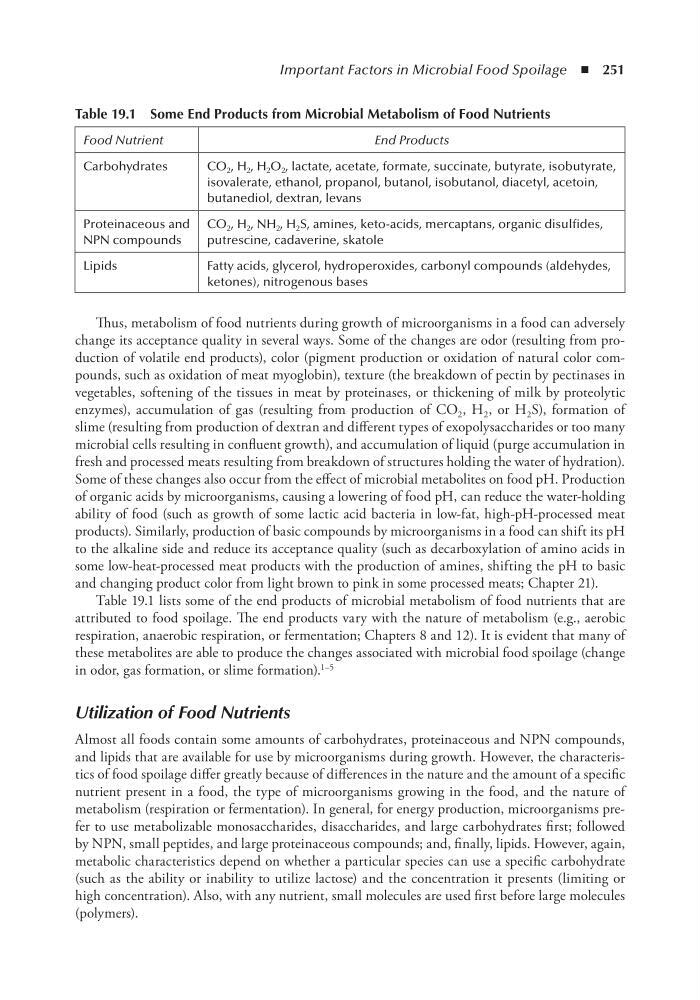
Table 19.1 lists some of the end products of microbial metabolism of food nutrients that are
attributed to food spoilage. The end products vary with the nature of metabolism (e.g., aerobic
respiration, anaerobic respiration, or fermentation; Chapters 8 and 12). It is evident that many of
these metabolites are able to produce the changes associated with microbial food spoilage (change
in odor, gas formation, or slime formation). 1–5
Utilization of Food Nutrients
Almost all foods contain some amounts of carbohydrates, proteinaceous and NPN compounds,
and lipids that are available for use by microorganisms during growth. However, the characteristics of food spoilage differ greatly because of differences in the nature and the amount of a specific
nutrient present in a food, the type of microorganisms growing in the food, and the nature of
metabolism (respiration or fermentation). In general, for energy production, microorganisms prefer to use metabolizable monosaccharides, disaccharides, and large carbohydrates first; followed
by NPN, small peptides, and large proteinaceous compounds; and, finally, lipids. However, again,
metabolic characteristics depend on whether a particular species can use a specific carbohydrate
(such as the ability or inability to utilize lactose) and the concentration it presents (limiting or
high concentration). Also, with any nutrient, small molecules are used first before large molecules
(polymers).
table 19.1 Some end Products from Microbial Metabolism of Food nutrients
Food Nutrient
End Products
Carbohydrates
CO 2 , H 2 , H 2 O 2 , lactate, acetate, formate, succinate, butyrate, isobutyrate,
isovalerate, ethanol, propanol, butanol, isobutanol, diacetyl, acetoin,
butanediol, dextran, levans
Proteinaceous and
NPN compounds
CO 2 , H 2 , NH 2 , H 2 S, amines, keto-acids, mercaptans, organic disulfides,
putrescine, cadaverine, skatole
Lipids
Fatty acids, glycerol, hydroperoxides, carbonyl compounds (aldehydes,
ketones), nitrogenous bases
Thus, metabolism of food nutrients during growth of microorganisms in a food can adversely
change its acceptance quality in several ways. Some of the changes are odor (resulting from production of volatile end products), color (pigment production or oxidation of natural color compounds, such as oxidation of meat myoglobin), texture (the breakdown of pectin by pectinases in
vegetables, softening of the tissues in meat by proteinases, or thickening of milk by proteolytic
enzymes), accumulation of gas (resulting from production of CO 2 , H 2 , or H 2 S), formation of
slime (resulting from production of dextran and different types of exopolysaccharides or too many
microbial cells resulting in confluent growth), and accumulation of liquid (purge accumulation in
fresh and processed meats resulting from breakdown of structures holding the water of hydration).
Some of these changes also occur from the effect of microbial metabolites on food pH. Production
of organic acids by microorganisms, causing a lowering of food pH, can reduce the water-holding
ability of food (such as growth of some lactic acid bacteria in low-fat, high-pH-processed meat
products). Similarly, production of basic compounds by microorganisms in a food can shift its pH
to the alkaline side and reduce its acceptance quality (such as decarboxylation of amino acids in
some low-heat-processed meat products with the production of amines, shifting the pH to basic
and changing product color from light brown to pink in some processed meats; Chapter 21).
Table 19.1 lists some of the end products of microbial metabolism of food nutrients that are
attributed to food spoilage. The end products vary with the nature of metabolism (e.g., aerobic
respiration, anaerobic respiration, or fermentation; Chapters 8 and 12). It is evident that many of
these metabolites are able to produce the changes associated with microbial food spoilage (change
in odor, gas formation, or slime formation). 1–5
Utilization of Food Nutrients
Almost all foods contain some amounts of carbohydrates, proteinaceous and NPN compounds,
and lipids that are available for use by microorganisms during growth. However, the characteristics of food spoilage differ greatly because of differences in the nature and the amount of a specific
nutrient present in a food, the type of microorganisms growing in the food, and the nature of
metabolism (respiration or fermentation). In general, for energy production, microorganisms prefer to use metabolizable monosaccharides, disaccharides, and large carbohydrates first; followed
by NPN, small peptides, and large proteinaceous compounds; and, finally, lipids. However, again,
metabolic characteristics depend on whether a particular species can use a specific carbohydrate
(such as the ability or inability to utilize lactose) and the concentration it presents (limiting or
high concentration). Also, with any nutrient, small molecules are used first before large molecules
(polymers).
table 19.1 Some end Products from Microbial Metabolism of Food nutrients
Food Nutrient
End Products
Carbohydrates
CO 2 , H 2 , H 2 O 2 , lactate, acetate, formate, succinate, butyrate, isobutyrate,
isovalerate, ethanol, propanol, butanol, isobutanol, diacetyl, acetoin,
butanediol, dextran, levans
Proteinaceous and
NPN compounds
CO 2 , H 2 , NH 2 , H 2 S, amines, keto-acids, mercaptans, organic disulfides,
putrescine, cadaverine, skatole
Lipids
Fatty acids, glycerol, hydroperoxides, carbonyl compounds (aldehydes,
ketones), nitrogenous bases