

Intestinal Bacteria and Probiotics ◾ 205
report regarding the research requirements before claiming a strain to have benefits, are the correct
steps to remove the myths surrounding beneficial properties of probiotic bacteria.
Safety of Probiotics
There have been a few reports indicating the involvement of certain strains of probiotics, such
as Bacillus subtilis, Lactobacillus rhamonosus, and Saccharomyces cerevisiae (Boulardii) in causing
infections (bacteremia, endocarditis, and septic shock) in humans with underlying conditions. 15,16
Lactic acid bacteria, especially those used in food fermentation and as probiotics, are considered
food grade and have been given the GRAS (generally regarded as safe) status internationally. In
this regard, involvement of these bacteria in health hazards raised questions about their safety. The
best answer to this doubt is an aphorism of the 16th-century German scientist Paracelsus: “All
substances are poison—the right dose differentiates a poison and a remedy.” From ancient civilization on, people have been consuming live cells of many of these bacteria through foods without
having major incidence of a health hazard, and they, without being eliminated, remained in our
food chain. There are three possible reasons for the infections that result:
1. The true identity of a strain is not known. Many strains currently used, especially as probiotics, have not been correctly identified to the species level (especially by genetic techniques),
have not been tested for their beneficial properties to humans, or their sources have not been
identified. The products may be contaminated with pathogens because they have been produced under unsanitary conditions.
2. Being overly anxious for the benefit, an individual may consume a product in large volume.
If the individual is immunocompromised and has underlying conditions, the large dose can
cause opportunistic infection.
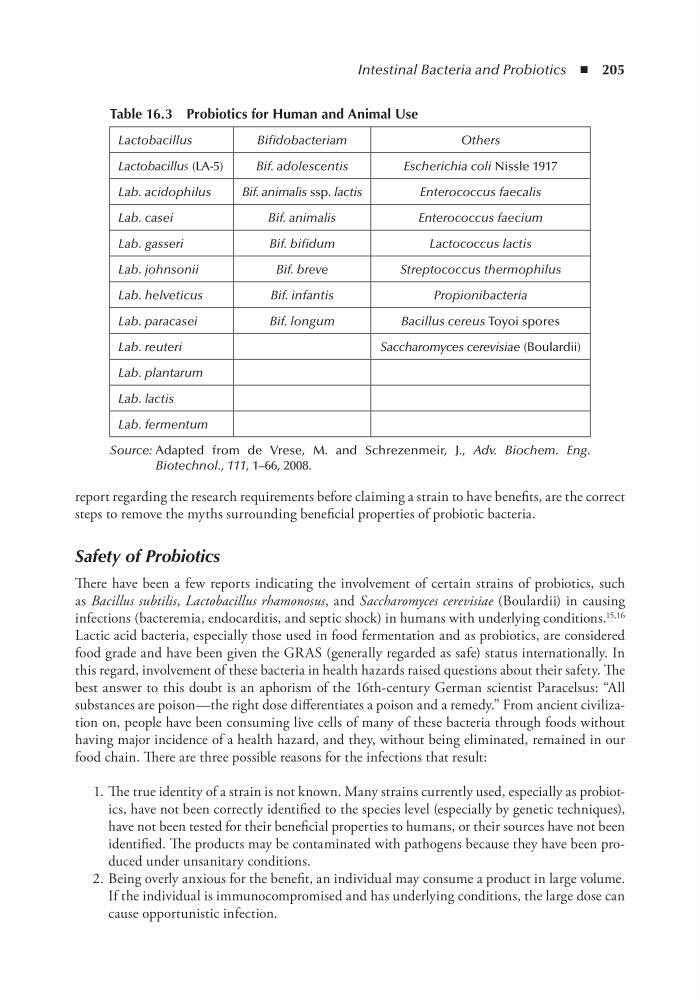
table 16.3 Probiotics for Human and Animal Use
Lactobacillus
Bifidobacteriam
Others
Lactobacillus (LA-5)
Bif. adolescentis
Escherichia coli Nissle 1917
Lab. acidophilus
Bif. animalis ssp. lactis
Enterococcus faecalis
Lab. casei
Bif. animalis
Enterococcus faecium
Lab. gasseri
Bif. bifidum
Lactococcus lactis
Lab. johnsonii
Bif. breve
Streptococcus thermophilus
Lab. helveticus
Bif. infantis
Propionibacteria
Lab. paracasei
Bif. longum
Bacillus cereus Toyoi spores
Lab. reuteri
Saccharomyces cerevisiae (Boulardii)
Lab. plantarum
Lab. lactis
Lab. fermentum
Source: Adapted from de Vrese, M. and Schrezenmeir, J., Adv. Biochem. Eng.
Biotechnol., 111, 1–66, 2008.
report regarding the research requirements before claiming a strain to have benefits, are the correct
steps to remove the myths surrounding beneficial properties of probiotic bacteria.
Safety of Probiotics
There have been a few reports indicating the involvement of certain strains of probiotics, such
as Bacillus subtilis, Lactobacillus rhamonosus, and Saccharomyces cerevisiae (Boulardii) in causing
infections (bacteremia, endocarditis, and septic shock) in humans with underlying conditions. 15,16
Lactic acid bacteria, especially those used in food fermentation and as probiotics, are considered
food grade and have been given the GRAS (generally regarded as safe) status internationally. In
this regard, involvement of these bacteria in health hazards raised questions about their safety. The
best answer to this doubt is an aphorism of the 16th-century German scientist Paracelsus: “All
substances are poison—the right dose differentiates a poison and a remedy.” From ancient civilization on, people have been consuming live cells of many of these bacteria through foods without
having major incidence of a health hazard, and they, without being eliminated, remained in our
food chain. There are three possible reasons for the infections that result:
1. The true identity of a strain is not known. Many strains currently used, especially as probiotics, have not been correctly identified to the species level (especially by genetic techniques),
have not been tested for their beneficial properties to humans, or their sources have not been
identified. The products may be contaminated with pathogens because they have been produced under unsanitary conditions.
2. Being overly anxious for the benefit, an individual may consume a product in large volume.
If the individual is immunocompromised and has underlying conditions, the large dose can
cause opportunistic infection.
table 16.3 Probiotics for Human and Animal Use
Lactobacillus
Bifidobacteriam
Others
Lactobacillus (LA-5)
Bif. adolescentis
Escherichia coli Nissle 1917
Lab. acidophilus
Bif. animalis ssp. lactis
Enterococcus faecalis
Lab. casei
Bif. animalis
Enterococcus faecium
Lab. gasseri
Bif. bifidum
Lactococcus lactis
Lab. johnsonii
Bif. breve
Streptococcus thermophilus
Lab. helveticus
Bif. infantis
Propionibacteria
Lab. paracasei
Bif. longum
Bacillus cereus Toyoi spores
Lab. reuteri
Saccharomyces cerevisiae (Boulardii)
Lab. plantarum
Lab. lactis
Lab. fermentum
Source: Adapted from de Vrese, M. and Schrezenmeir, J., Adv. Biochem. Eng.
Biotechnol., 111, 1–66, 2008.