

Microbial Stress Response in the Food Environment ◾ 113
for their detection in food to safeguard the health of the consumers and to prevent loss of food
from spoilage.
QUESTIONS
1. Define stress adaptation of foodborne bacterial cells and list six types of environments where
bacterial cells can encounter stress during the handling of foods.
2. Describe the possible mechanisms by which bacterial cells can adapt to a suboptimal stress.
Also explain how exposure to one stress can provide protection against multiple stresses.
3. List the importance of bacterial stress adaptation in food microbiology.
4. Explain the phenomenon of bacterial sublethal injury and list six conditions of foodhandling procedures that can inflict sublethal injury to bacterial cells, bacterial spores, and
yeast and molds.
5. List six altered characteristics (manifestations) of sublethally injured bacterial cells.
6. List two structural and two functional components of bacterial cells that show sublethal
injury and indicate the nature of changes of the cell components.
7. Discuss the mechanism of repair of sublethal injury and the nature of the repair environment.
8. A suspension of Salmonella cells was subjected to a sublethal stress. Enumeration of cell suspensions before and after stress and after repair in a nonselective broth for one hour at 30°C
provided the following data (CFUs/mL; NSA, nonselective agar; SA, selective agar media):
Optimum
Suboptimum
Growth range
Level of stress
Lethal
Sublethal
Stress adaptation (increased resistance)
Sublethal injury (easily repaired)
VBNC or not normally culturable (NNC)
Dead or nonculturable in any circumstance
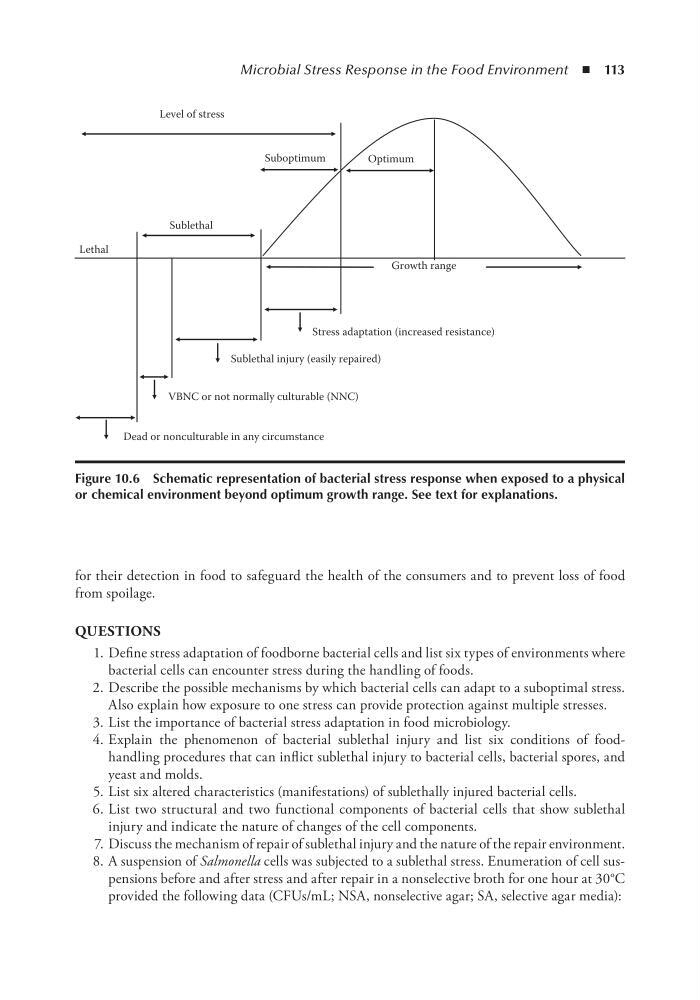
Figure 10.6 Schematic representation of bacterial stress response when exposed to a physical
or chemical environment beyond optimum growth range. See text for explanations.
for their detection in food to safeguard the health of the consumers and to prevent loss of food
from spoilage.
QUESTIONS
1. Define stress adaptation of foodborne bacterial cells and list six types of environments where
bacterial cells can encounter stress during the handling of foods.
2. Describe the possible mechanisms by which bacterial cells can adapt to a suboptimal stress.
Also explain how exposure to one stress can provide protection against multiple stresses.
3. List the importance of bacterial stress adaptation in food microbiology.
4. Explain the phenomenon of bacterial sublethal injury and list six conditions of foodhandling procedures that can inflict sublethal injury to bacterial cells, bacterial spores, and
yeast and molds.
5. List six altered characteristics (manifestations) of sublethally injured bacterial cells.
6. List two structural and two functional components of bacterial cells that show sublethal
injury and indicate the nature of changes of the cell components.
7. Discuss the mechanism of repair of sublethal injury and the nature of the repair environment.
8. A suspension of Salmonella cells was subjected to a sublethal stress. Enumeration of cell suspensions before and after stress and after repair in a nonselective broth for one hour at 30°C
provided the following data (CFUs/mL; NSA, nonselective agar; SA, selective agar media):
Optimum
Suboptimum
Growth range
Level of stress
Lethal
Sublethal
Stress adaptation (increased resistance)
Sublethal injury (easily repaired)
VBNC or not normally culturable (NNC)
Dead or nonculturable in any circumstance
Figure 10.6 Schematic representation of bacterial stress response when exposed to a physical
or chemical environment beyond optimum growth range. See text for explanations.