

102 ◾ Fundamental Food Microbiology
characteristics that are different from those of normal cells. This situation can be both disadvantageous and advantageous, as described in the following sections.
Pathogens and Spoilage Bacteria Surviving in Low-pH Foods
Most foodborne pathogens (especially the enteric pathogens) and spoilage bacteria (especially
Gram-negative) are susceptible to low pH and die off rapidly in high-acid foods (pH ≤ 4.5) during
storage. Also, at low pH, normal cells are susceptible to other antimicrobial treatments (such as
hydrostatic pressure, pasteurization temperature, or preservatives) at a much lower level. However,
if they are first acid-adapted, they become relatively resistant to lower pH and other treatments at
minimal levels and survive in food. Recent occurrence of foodborne diseases from the consumption of fruit juices, fermented sausages, and acidified foods containing viable Salmonella, Esc. coli
O157:H7, and Lis. monocytogenes are thought to be a result of acid-adapted pathogenic strains
surviving low pH and low heat treatment.
To overcome the problem, it is necessary to avoid exposure of the food (containing the target
cells) to mild treatments; instead, several mild treatments can be used simultaneously to destroy
the strains (hurdle concept, see Chapter 41).
Stress-Adapted Pathogens Surviving Stomach pH
Cells of most enteric pathogens associated with foodborne infections (see Chapter 26) are highly
susceptible to low pH of the stomach and die off. This is probably one of the reasons why dose level is
high (≥10 6 viable cells) for many enteric pathogens to cause infection in the gastrointestinal (GI) tract.
Many of the cells ingested are killed in the stomach, but a few survive, enter the GI tract, and set up
infection. However, if a pathogenic strain in a food is stress-adapted, even consumption of a much
lower number will enable it to survive in the stomach and cause infection in the GI tract. 14 An attempt
should be made to eliminate or reduce the presence of stress-adapted pathogens in a ready-to-eat food.
Regulon
(
38 )
Heat shock gene family
Heat shock proteins
Provide protection
against stress
RNA poly (core)
RNA poly (holo)
rpoH
Promoter
σ
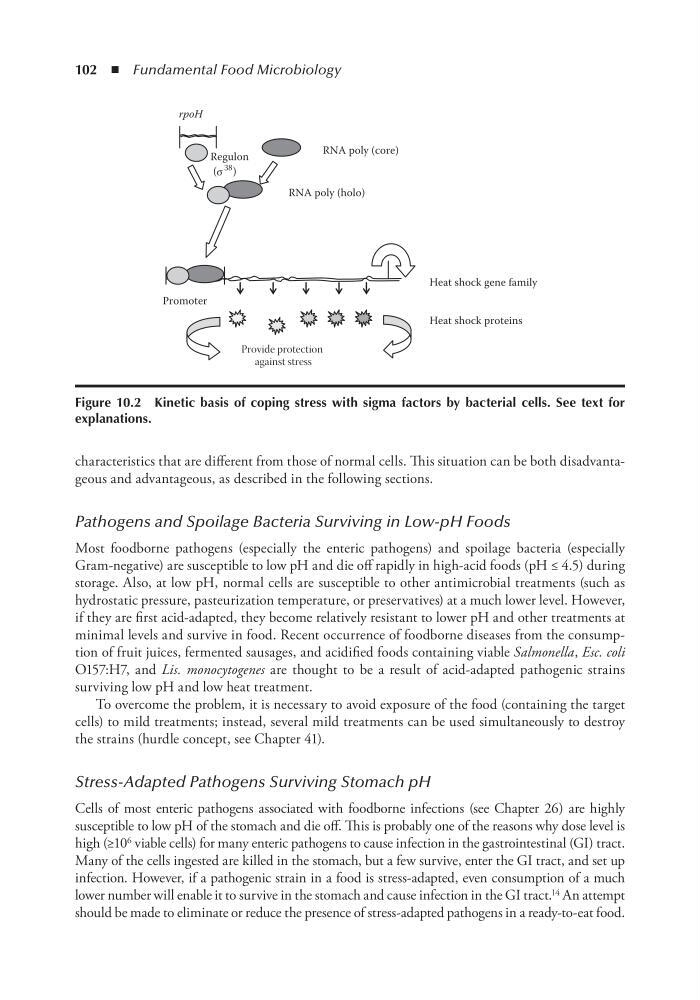
Figure 10.2 Kinetic basis of coping stress with sigma factors by bacterial cells. See text for
explanations.
characteristics that are different from those of normal cells. This situation can be both disadvantageous and advantageous, as described in the following sections.
Pathogens and Spoilage Bacteria Surviving in Low-pH Foods
Most foodborne pathogens (especially the enteric pathogens) and spoilage bacteria (especially
Gram-negative) are susceptible to low pH and die off rapidly in high-acid foods (pH ≤ 4.5) during
storage. Also, at low pH, normal cells are susceptible to other antimicrobial treatments (such as
hydrostatic pressure, pasteurization temperature, or preservatives) at a much lower level. However,
if they are first acid-adapted, they become relatively resistant to lower pH and other treatments at
minimal levels and survive in food. Recent occurrence of foodborne diseases from the consumption of fruit juices, fermented sausages, and acidified foods containing viable Salmonella, Esc. coli
O157:H7, and Lis. monocytogenes are thought to be a result of acid-adapted pathogenic strains
surviving low pH and low heat treatment.
To overcome the problem, it is necessary to avoid exposure of the food (containing the target
cells) to mild treatments; instead, several mild treatments can be used simultaneously to destroy
the strains (hurdle concept, see Chapter 41).
Stress-Adapted Pathogens Surviving Stomach pH
Cells of most enteric pathogens associated with foodborne infections (see Chapter 26) are highly
susceptible to low pH of the stomach and die off. This is probably one of the reasons why dose level is
high (≥10 6 viable cells) for many enteric pathogens to cause infection in the gastrointestinal (GI) tract.
Many of the cells ingested are killed in the stomach, but a few survive, enter the GI tract, and set up
infection. However, if a pathogenic strain in a food is stress-adapted, even consumption of a much
lower number will enable it to survive in the stomach and cause infection in the GI tract. 14 An attempt
should be made to eliminate or reduce the presence of stress-adapted pathogens in a ready-to-eat food.
Regulon
(
38 )
Heat shock gene family
Heat shock proteins
Provide protection
against stress
RNA poly (core)
RNA poly (holo)
rpoH
Promoter
σ
Figure 10.2 Kinetic basis of coping stress with sigma factors by bacterial cells. See text for
explanations.