

100 ◾ Fundamental Food Microbiology
Stress Adaptation
Definition and Observations
Stress adaptation or stress response has been explained as a situation whereby a brief exposure of a
bacterial population to a suboptimal physical or chemical (growth) environment enables the cells
to resist subsequent exposure to the same or other types of harsher treatment to which the species
is normally susceptible. This phenomenon has been observed among many foodborne pathogens
and spoilage bacteria following exposure of cells to various suboptimal physical and chemical
environments, such as cold and warm temperatures, low A W , low hydrostatic pressure, UV light,
high salt concentrations, bacteriocins, preservatives, detergents, several dyes, and antibiotics. It
is assumed that a brief exposure to a suboptimal environment triggers some cellular mechanisms
that enables them to resist subsequent exposure to harsher treatment. 5 However, once the cells
are removed and allowed to grow for several generations in the optimum conditions, they do not
remain resistant; rather, they revert to the original state. Several confusing and ambiguous terms
have been used by different research groups to describe the stress adaptation phenomenon in bacteria. Some terms for suboptimal pH are included here.
◾ Acid resistance or acid adaptation. An exposure of cells for an extended period to a mild acidic
environment (e.g., pH 5.0–5.8) enables them to develop resistance to subsequent exposure
to pH ≤ 2.5.
◾ Acid tolerance or acid tolerance response (ATR). A brief exposure of cells to a mild acidic environment enables them to survive subsequent exposure to pH 2.4–4.0.
◾ Acid shock response (ASR). The response of bacterial cells to a low pH without previous adaptation to a mild pH.
Many studies have been conducted to determine the stress adaptation of foodborne bacteria.
Escherichia coli cells exposed for one or two generations at pH 5.0 survive better subsequently at
pH 3–4 (but not pH < 2). Similarly, a brief exposure of Esc. coli cells to 50°C enables the cells to
survive better at 60°C (but not >72°C). Similarly, acid-adapted Listeria monocytogenes cells survive well when exposed to pH 3.5. Acid-adapted Lis. monocytogenes cells also develop resistance
to nisin. Lis. monocytogenes cells briefly exposed to 0.1% H 2 O 2 also developed cross-resistance
against subsequent exposure to 0.5% H 2 O 2 , 5% ethanol, 7% NaCl, pH 5.0, or 45°C as compared with unadapted control cells. Heat resistance (increase in D value) of Lis. monocytogenes,
Salmonella serovars, and Esc. coli O157:H7 suspended in low-pH fruit juices has been reported.
Lethal
Lethal
Sublethal
Sublethal
Suboptimal
Optimal
Suboptimal
Stress
Stress
Growth range
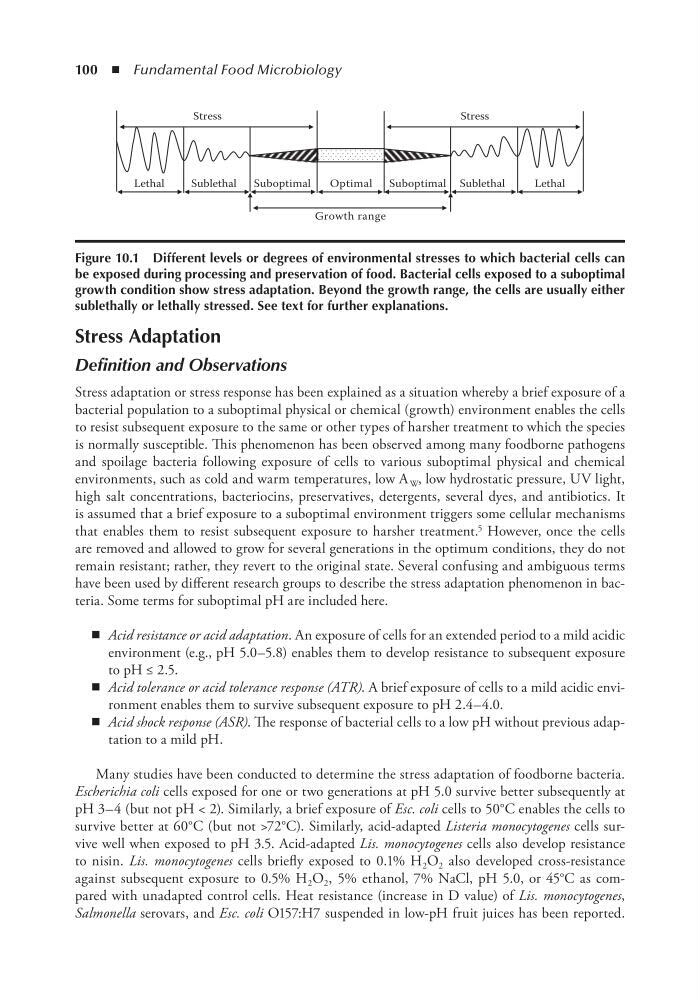
Figure 10.1 Different levels or degrees of environmental stresses to which bacterial cells can
be exposed during processing and preservation of food. Bacterial cells exposed to a suboptimal
growth condition show stress adaptation. Beyond the growth range, the cells are usually either
sublethally or lethally stressed. See text for further explanations.
Stress Adaptation
Definition and Observations
Stress adaptation or stress response has been explained as a situation whereby a brief exposure of a
bacterial population to a suboptimal physical or chemical (growth) environment enables the cells
to resist subsequent exposure to the same or other types of harsher treatment to which the species
is normally susceptible. This phenomenon has been observed among many foodborne pathogens
and spoilage bacteria following exposure of cells to various suboptimal physical and chemical
environments, such as cold and warm temperatures, low A W , low hydrostatic pressure, UV light,
high salt concentrations, bacteriocins, preservatives, detergents, several dyes, and antibiotics. It
is assumed that a brief exposure to a suboptimal environment triggers some cellular mechanisms
that enables them to resist subsequent exposure to harsher treatment. 5 However, once the cells
are removed and allowed to grow for several generations in the optimum conditions, they do not
remain resistant; rather, they revert to the original state. Several confusing and ambiguous terms
have been used by different research groups to describe the stress adaptation phenomenon in bacteria. Some terms for suboptimal pH are included here.
◾ Acid resistance or acid adaptation. An exposure of cells for an extended period to a mild acidic
environment (e.g., pH 5.0–5.8) enables them to develop resistance to subsequent exposure
to pH ≤ 2.5.
◾ Acid tolerance or acid tolerance response (ATR). A brief exposure of cells to a mild acidic environment enables them to survive subsequent exposure to pH 2.4–4.0.
◾ Acid shock response (ASR). The response of bacterial cells to a low pH without previous adaptation to a mild pH.
Many studies have been conducted to determine the stress adaptation of foodborne bacteria.
Escherichia coli cells exposed for one or two generations at pH 5.0 survive better subsequently at
pH 3–4 (but not pH < 2). Similarly, a brief exposure of Esc. coli cells to 50°C enables the cells to
survive better at 60°C (but not >72°C). Similarly, acid-adapted Listeria monocytogenes cells survive well when exposed to pH 3.5. Acid-adapted Lis. monocytogenes cells also develop resistance
to nisin. Lis. monocytogenes cells briefly exposed to 0.1% H 2 O 2 also developed cross-resistance
against subsequent exposure to 0.5% H 2 O 2 , 5% ethanol, 7% NaCl, pH 5.0, or 45°C as compared with unadapted control cells. Heat resistance (increase in D value) of Lis. monocytogenes,
Salmonella serovars, and Esc. coli O157:H7 suspended in low-pH fruit juices has been reported.
Lethal
Lethal
Sublethal
Sublethal
Suboptimal
Optimal
Suboptimal
Stress
Stress
Growth range
Figure 10.1 Different levels or degrees of environmental stresses to which bacterial cells can
be exposed during processing and preservation of food. Bacterial cells exposed to a suboptimal
growth condition show stress adaptation. Beyond the growth range, the cells are usually either
sublethally or lethally stressed. See text for further explanations.