

Microbial Growth Characteristics ◾ 57
information is important to determine some microbiological criteria of food, especially in controlling spoilage and pathogenic microorganisms in food. It is important to note that by changing
some environmental parameters (e.g., refrigeration), the growth rate of some microbial species can
be slowed down, but after a long time, the population can reach high numbers and cause problems
in a food. Dead cells, by the action of autolytic enzymes, may lyse and release the cellular enzymes
in a food, which then can act on food components.
nature of Microbial Growth in Food
Mixed Population
Normally, a food harbors a mixed population of microorganisms that can include different species
and strains of bacteria, yeasts, and molds. 3,4 Some species can be present in relatively higher numbers
than others. The growth characteristics of a mixed population differ in several respects from that of
a pure culture (a single strain of a species). Depending on the environment, which includes both the
food environment (intrinsic) and the environment in which the food is stored (extrinsic), some of
the species or strains can be in an optimum or near-optimum growth condition. Because of a rapid
rate of growth during storage, they will outnumber the others and become predominant. This can
occur even if they are initially present in low numbers. This is often the case in foods kept for a long
time under a specific condition, such as at refrigerated temperatures. If the product is enumerated
initially, it may show that the majority of microbial populations is able to grow at 35°C, and only a
few grow at 4°C (refrigerated temperature). If the product is enumerated after a few weeks of refrigerated storage, usually populations that grow at 4°C outnumber those that grow at 35°C, but not those
Log
10 /mL
9
8
7
6
5
4
3
2
a
b
c
d
a: Lag
b: Exponential (logarithmic)
c: Stationary
d: Decline (death)
Hours at 37°C
0
4
8
12
16
20
24
28
32
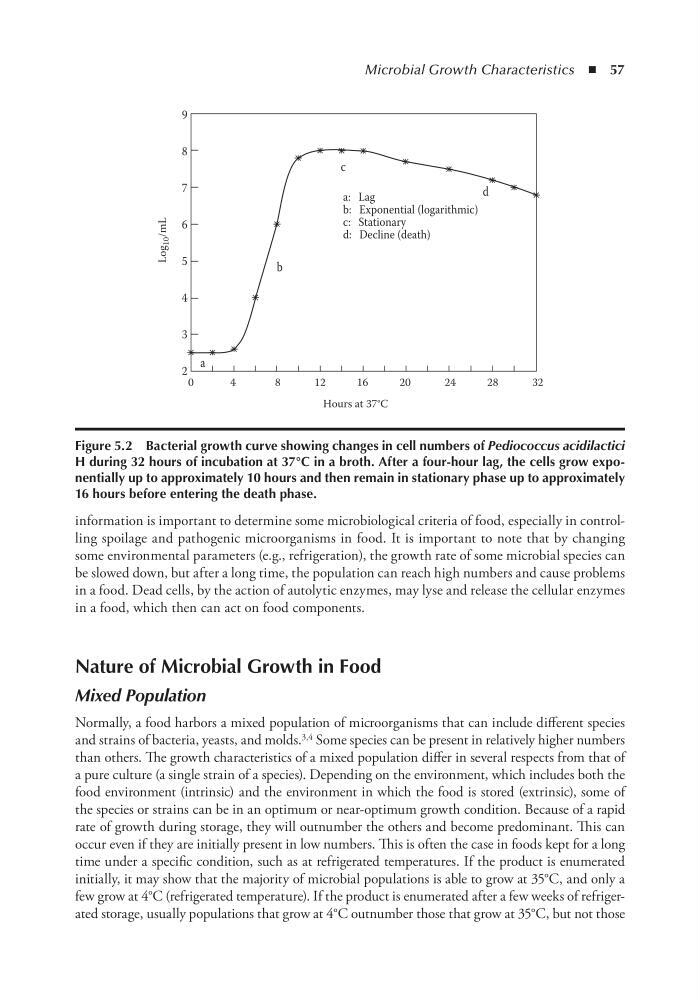
Figure 5.2 Bacterial growth curve showing changes in cell numbers of Pediococcus acidilactici
H during 32 hours of incubation at 37°C in a broth. After a four-hour lag, the cells grow exponentially up to approximately 10 hours and then remain in stationary phase up to approximately
16 hours before entering the death phase.
information is important to determine some microbiological criteria of food, especially in controlling spoilage and pathogenic microorganisms in food. It is important to note that by changing
some environmental parameters (e.g., refrigeration), the growth rate of some microbial species can
be slowed down, but after a long time, the population can reach high numbers and cause problems
in a food. Dead cells, by the action of autolytic enzymes, may lyse and release the cellular enzymes
in a food, which then can act on food components.
nature of Microbial Growth in Food
Mixed Population
Normally, a food harbors a mixed population of microorganisms that can include different species
and strains of bacteria, yeasts, and molds. 3,4 Some species can be present in relatively higher numbers
than others. The growth characteristics of a mixed population differ in several respects from that of
a pure culture (a single strain of a species). Depending on the environment, which includes both the
food environment (intrinsic) and the environment in which the food is stored (extrinsic), some of
the species or strains can be in an optimum or near-optimum growth condition. Because of a rapid
rate of growth during storage, they will outnumber the others and become predominant. This can
occur even if they are initially present in low numbers. This is often the case in foods kept for a long
time under a specific condition, such as at refrigerated temperatures. If the product is enumerated
initially, it may show that the majority of microbial populations is able to grow at 35°C, and only a
few grow at 4°C (refrigerated temperature). If the product is enumerated after a few weeks of refrigerated storage, usually populations that grow at 4°C outnumber those that grow at 35°C, but not those
Log
10 /mL
9
8
7
6
5
4
3
2
a
b
c
d
a: Lag
b: Exponential (logarithmic)
c: Stationary
d: Decline (death)
Hours at 37°C
0
4
8
12
16
20
24
28
32
Figure 5.2 Bacterial growth curve showing changes in cell numbers of Pediococcus acidilactici
H during 32 hours of incubation at 37°C in a broth. After a four-hour lag, the cells grow exponentially up to approximately 10 hours and then remain in stationary phase up to approximately
16 hours before entering the death phase.