

355
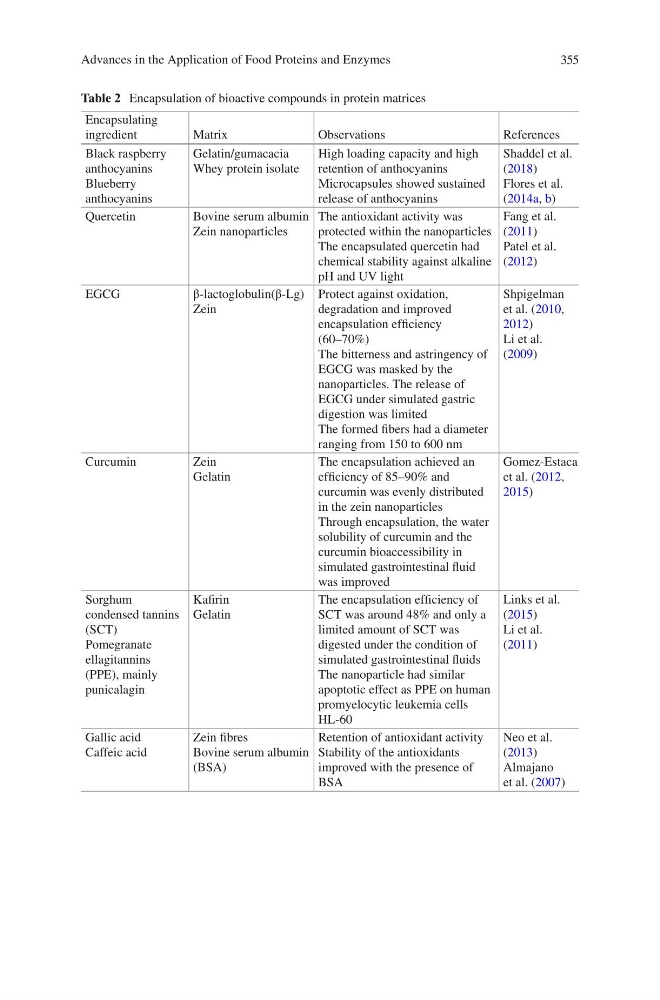
Table 2 Encapsulation of bioactive compounds in protein matrices
Encapsulating
ingredient
Matrix
Observations
References
Black raspberry
anthocyanins
Blueberry
anthocyanins
Gelatin/gumacacia
Whey protein isolate
High loading capacity and high
retention of anthocyanins
Microcapsules showed sustained
release of anthocyanins
Shaddel et al.
(2018)
Flores et al.
(2014a, b)
Quercetin
Bovine serum albumin
Zein nanoparticles
The antioxidant activity was
protected within the nanoparticles
The encapsulated quercetin had
chemical stability against alkaline
pH and UV light
Fang et al.
(2011)
Patel et al.
(2012)
EGCG
β-lactoglobulin(β-Lg)
Zein
Protect against oxidation,
degradation and improved
encapsulation efficiency
(60–70%)
The bitterness and astringency of
EGCG was masked by the
nanoparticles. The release of
EGCG under simulated gastric
digestion was limited
The formed fibers had a diameter
ranging from 150 to 600 nm
Shpigelman
et al. (2010,
2012)
Li et al.
(2009)
Curcumin
Zein
Gelatin
The encapsulation achieved an
efficiency of 85–90% and
curcumin was evenly distributed
in the zein nanoparticles
Through encapsulation, the water
solubility of curcumin and the
curcumin bioaccessibility in
simulated gastrointestinal fluid
was improved
Gomez-Estaca
et al. (2012,
2015)
Sorghum
condensed tannins
(SCT)
Pomegranate
ellagitannins
(PPE), mainly
punicalagin
Kafirin
Gelatin
The encapsulation efficiency of
SCT was around 48% and only a
limited amount of SCT was
digested under the condition of
simulated gastrointestinal fluids
The nanoparticle had similar
apoptotic effect as PPE on human
promyelocytic leukemia cells
HL-60
Links et al.
(2015)
Li et al.
(2011)
Gallic acid
Caffeic acid
Zein fibres
Bovine serum albumin
(BSA)
Retention of antioxidant activity
Stability of the antioxidants
improved with the presence of
BSA
Neo et al.
(2013)
Almajano
et al. (2007)
Advances in the Application of Food Proteins and Enzymes
Table 2 Encapsulation of bioactive compounds in protein matrices
Encapsulating
ingredient
Matrix
Observations
References
Black raspberry
anthocyanins
Blueberry
anthocyanins
Gelatin/gumacacia
Whey protein isolate
High loading capacity and high
retention of anthocyanins
Microcapsules showed sustained
release of anthocyanins
Shaddel et al.
(2018)
Flores et al.
(2014a, b)
Quercetin
Bovine serum albumin
Zein nanoparticles
The antioxidant activity was
protected within the nanoparticles
The encapsulated quercetin had
chemical stability against alkaline
pH and UV light
Fang et al.
(2011)
Patel et al.
(2012)
EGCG
β-lactoglobulin(β-Lg)
Zein
Protect against oxidation,
degradation and improved
encapsulation efficiency
(60–70%)
The bitterness and astringency of
EGCG was masked by the
nanoparticles. The release of
EGCG under simulated gastric
digestion was limited
The formed fibers had a diameter
ranging from 150 to 600 nm
Shpigelman
et al. (2010,
2012)
Li et al.
(2009)
Curcumin
Zein
Gelatin
The encapsulation achieved an
efficiency of 85–90% and
curcumin was evenly distributed
in the zein nanoparticles
Through encapsulation, the water
solubility of curcumin and the
curcumin bioaccessibility in
simulated gastrointestinal fluid
was improved
Gomez-Estaca
et al. (2012,
2015)
Sorghum
condensed tannins
(SCT)
Pomegranate
ellagitannins
(PPE), mainly
punicalagin
Kafirin
Gelatin
The encapsulation efficiency of
SCT was around 48% and only a
limited amount of SCT was
digested under the condition of
simulated gastrointestinal fluids
The nanoparticle had similar
apoptotic effect as PPE on human
promyelocytic leukemia cells
HL-60
Links et al.
(2015)
Li et al.
(2011)
Gallic acid
Caffeic acid
Zein fibres
Bovine serum albumin
(BSA)
Retention of antioxidant activity
Stability of the antioxidants
improved with the presence of
BSA
Neo et al.
(2013)
Almajano
et al. (2007)
Advances in the Application of Food Proteins and Enzymes