

253
(Sun et al. 2012). Other mechanisms through which bovine lactoferrin exhibits antitumor activity include delayed angiogenesis and reduced endothelial cell proliferation (Shimamura et al. 2004; Hoskin and Ramamoorthy 2008).
Lactoferricin obtained by peptic digestion of bovine lactoferrin has also shown
to be potent against many cancer cell lines including breast, colon, leukemia, and
ovarian cancer without any toxic effects of harming normal cells (Furlong et al.
2010). Lactoferricin’s activity is attributed to its strong cationic character that helps
in interaction with negatively charged cancer cells, and the subsequent weakening
of cancer cell membranes (Hoskin and Ramamoorthy 2008). Other mechanisms by
which lactoferricin shows its anticancer activity is by inducing apoptosis, modulating gene expression, and preventing angiogenesis (De Mejia and Dia 2010). The
cytotoxic effect of bovine lactoferricin fragment obtained during hydrolysis of
bovine lactoferrin has also been reported in several types of rat and human cancer
cell lines in vivo (Yoo et al. 1997; Eliassen et al. 2002, 2006; Mader et al. 2005).
Other components of whey protein too have shown anti-carcinogenic effects, for
instance, antiproliferative effects of α-lactalbumin in colon adenocarcinoma cell
lines (Sternhagen and Allen 2001; Sah et al. 2015), protective effects of
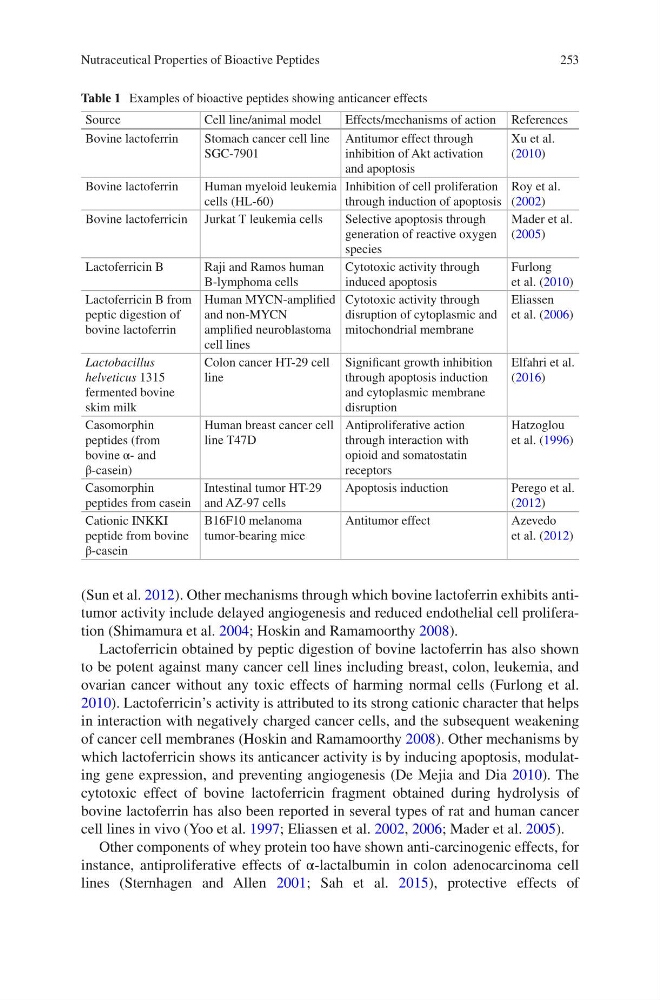
Table 1 Examples of bioactive peptides showing anticancer effects
Source
Cell line/animal model
Effects/mechanisms of action References
Bovine lactoferrin
Stomach cancer cell line
SGC-7901
Antitumor effect through
inhibition of Akt activation
and apoptosis
Xu et al.
(2010)
Bovine lactoferrin
Human myeloid leukemia
cells (HL-60)
Inhibition of cell proliferation
through induction of apoptosis
Roy et al.
(2002)
Bovine lactoferricin Jurkat T leukemia cells
Selective apoptosis through
generation of reactive oxygen
species
Mader et al.
(2005)
Lactoferricin B
Raji and Ramos human
B-lymphoma cells
Cytotoxic activity through
induced apoptosis
Furlong
et al. (2010)
Lactoferricin B from
peptic digestion of
bovine lactoferrin
Human MYCN-amplified
and non-MYCN
amplified neuroblastoma
cell lines
Cytotoxic activity through
disruption of cytoplasmic and
mitochondrial membrane
Eliassen
et al. (2006)
Lactobacillus
helveticus 1315
fermented bovine
skim milk
Colon cancer HT-29 cell
line
Significant growth inhibition
through apoptosis induction
and cytoplasmic membrane
disruption
Elfahri et al.
(2016)
Casomorphin
peptides (from
bovine α- and
β-casein)
Human breast cancer cell
line T47D
Antiproliferative action
through interaction with
opioid and somatostatin
receptors
Hatzoglou
et al. (1996)
Casomorphin
peptides from casein
Intestinal tumor HT-29
and AZ-97 cells
Apoptosis induction
Perego et al.
(2012)
Cationic INKKI
peptide from bovine
β-casein
B16F10 melanoma
tumor-bearing mice
Antitumor effect
Azevedo
et al. (2012)
Nutraceutical Properties of Bioactive Peptides
(Sun et al. 2012). Other mechanisms through which bovine lactoferrin exhibits antitumor activity include delayed angiogenesis and reduced endothelial cell proliferation (Shimamura et al. 2004; Hoskin and Ramamoorthy 2008).
Lactoferricin obtained by peptic digestion of bovine lactoferrin has also shown
to be potent against many cancer cell lines including breast, colon, leukemia, and
ovarian cancer without any toxic effects of harming normal cells (Furlong et al.
2010). Lactoferricin’s activity is attributed to its strong cationic character that helps
in interaction with negatively charged cancer cells, and the subsequent weakening
of cancer cell membranes (Hoskin and Ramamoorthy 2008). Other mechanisms by
which lactoferricin shows its anticancer activity is by inducing apoptosis, modulating gene expression, and preventing angiogenesis (De Mejia and Dia 2010). The
cytotoxic effect of bovine lactoferricin fragment obtained during hydrolysis of
bovine lactoferrin has also been reported in several types of rat and human cancer
cell lines in vivo (Yoo et al. 1997; Eliassen et al. 2002, 2006; Mader et al. 2005).
Other components of whey protein too have shown anti-carcinogenic effects, for
instance, antiproliferative effects of α-lactalbumin in colon adenocarcinoma cell
lines (Sternhagen and Allen 2001; Sah et al. 2015), protective effects of
Table 1 Examples of bioactive peptides showing anticancer effects
Source
Cell line/animal model
Effects/mechanisms of action References
Bovine lactoferrin
Stomach cancer cell line
SGC-7901
Antitumor effect through
inhibition of Akt activation
and apoptosis
Xu et al.
(2010)
Bovine lactoferrin
Human myeloid leukemia
cells (HL-60)
Inhibition of cell proliferation
through induction of apoptosis
Roy et al.
(2002)
Bovine lactoferricin Jurkat T leukemia cells
Selective apoptosis through
generation of reactive oxygen
species
Mader et al.
(2005)
Lactoferricin B
Raji and Ramos human
B-lymphoma cells
Cytotoxic activity through
induced apoptosis
Furlong
et al. (2010)
Lactoferricin B from
peptic digestion of
bovine lactoferrin
Human MYCN-amplified
and non-MYCN
amplified neuroblastoma
cell lines
Cytotoxic activity through
disruption of cytoplasmic and
mitochondrial membrane
Eliassen
et al. (2006)
Lactobacillus
helveticus 1315
fermented bovine
skim milk
Colon cancer HT-29 cell
line
Significant growth inhibition
through apoptosis induction
and cytoplasmic membrane
disruption
Elfahri et al.
(2016)
Casomorphin
peptides (from
bovine α- and
β-casein)
Human breast cancer cell
line T47D
Antiproliferative action
through interaction with
opioid and somatostatin
receptors
Hatzoglou
et al. (1996)
Casomorphin
peptides from casein
Intestinal tumor HT-29
and AZ-97 cells
Apoptosis induction
Perego et al.
(2012)
Cationic INKKI
peptide from bovine
β-casein
B16F10 melanoma
tumor-bearing mice
Antitumor effect
Azevedo
et al. (2012)
Nutraceutical Properties of Bioactive Peptides