

219
(Shewry et al. 2002). The storage proteins belong to different groups and have significantly different structures and properties. Globulins the major storage proteins
present in pseudo-cereals may be classified into groups depending on their sedimentation coefficients (which reflect their molecular masses). Typical 11S globulins are
hexameric with a molecular weight of the order of 250–400 k. The subunits consist
of two chains which are acidic and basic and linked by single disulphide bond. 7S
globulins are trimeric and have molecular weights in the order of 150–190 k and
have no disulphide bonds. Regarding albumins, they have a molecular weight of
8–15 k and contain a small and large subunit, which are linked by two disulphide
bonds. Taylor et al. (2016) reported that the major storage proteins of pseudo- cereals
are similar to the legume proteins, they contain 2S albumin and 11S globulin storage proteins, with 7S globulin present in buckwheat and amaranth. Tandang-Silvas
et al. (2012) found that globulins from pseudo-cereals have predominantly β-sheet
structure with β-barrel confirmation and therefore they are associated in the formation of good quality doughs. It has also been found that the 11S type globulins of
rice oats and pseudo-cereals polymerize by disulphide bonding. Whilst the composition and structure of these storage proteins share some similarities with glutenin,
but there are some important differences in terms of aminoacid composition,
sequence and secondary, tertiary and quaternary structure.
Proteins
Fibrous
Globular
Simple
Conjugated
(Insoluble in water)
( Insoluble in water)
Scleroproteins Pigment in chicken featherSimple
Conjugated
Collagen
Metalloproteins
Elastin
Chromoproteins
Keratin
S oluble in water
Insoluble in water
Glycoproteins
Protamines
Euglobulins
Fibroin
Mucoproteins
Histones
Glutelins
Phosphoproteins
Albumins
P rolamins
Lipoproteins
Pseudoglobulins
Nucleoproteins
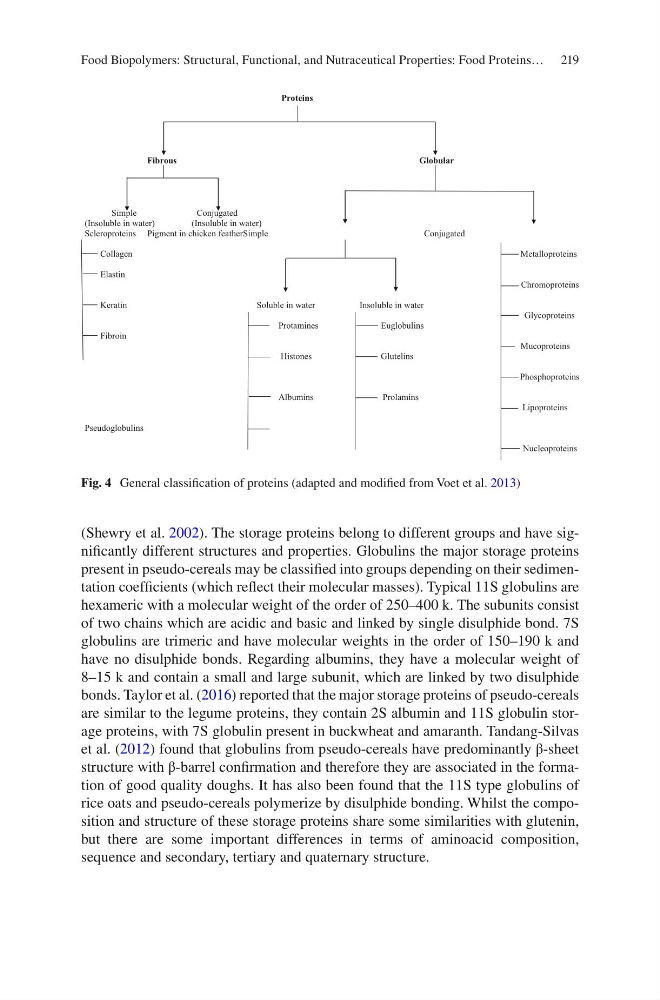
Fig. 4 General classification of proteins (adapted and modified from Voet et al. 2013)
Food Biopolymers: Structural, Functional, and Nutraceutical Properties: Food Proteins…
(Shewry et al. 2002). The storage proteins belong to different groups and have significantly different structures and properties. Globulins the major storage proteins
present in pseudo-cereals may be classified into groups depending on their sedimentation coefficients (which reflect their molecular masses). Typical 11S globulins are
hexameric with a molecular weight of the order of 250–400 k. The subunits consist
of two chains which are acidic and basic and linked by single disulphide bond. 7S
globulins are trimeric and have molecular weights in the order of 150–190 k and
have no disulphide bonds. Regarding albumins, they have a molecular weight of
8–15 k and contain a small and large subunit, which are linked by two disulphide
bonds. Taylor et al. (2016) reported that the major storage proteins of pseudo- cereals
are similar to the legume proteins, they contain 2S albumin and 11S globulin storage proteins, with 7S globulin present in buckwheat and amaranth. Tandang-Silvas
et al. (2012) found that globulins from pseudo-cereals have predominantly β-sheet
structure with β-barrel confirmation and therefore they are associated in the formation of good quality doughs. It has also been found that the 11S type globulins of
rice oats and pseudo-cereals polymerize by disulphide bonding. Whilst the composition and structure of these storage proteins share some similarities with glutenin,
but there are some important differences in terms of aminoacid composition,
sequence and secondary, tertiary and quaternary structure.
Proteins
Fibrous
Globular
Simple
Conjugated
(Insoluble in water)
( Insoluble in water)
Scleroproteins Pigment in chicken featherSimple
Conjugated
Collagen
Metalloproteins
Elastin
Chromoproteins
Keratin
S oluble in water
Insoluble in water
Glycoproteins
Protamines
Euglobulins
Fibroin
Mucoproteins
Histones
Glutelins
Phosphoproteins
Albumins
P rolamins
Lipoproteins
Pseudoglobulins
Nucleoproteins
Fig. 4 General classification of proteins (adapted and modified from Voet et al. 2013)
Food Biopolymers: Structural, Functional, and Nutraceutical Properties: Food Proteins…