

128
increasing. Commercial pectin is available mostly from citrus peel (85.5%), followed by apple pomace (14.0%) and a little amount is also obtained from sugar beet
pulp (0.5%) (Ciriminna et al. 2015). The main source of citrus peel is in turn
obtained from juices and essential oil production, while sugar beet pulp is obtained
from the sugar industry (Yapo et al. 2007). For proper utilization of pectin, the production process can be divided into three stages: pre-treatment stage, an extraction
operation, and a post-extraction stage (Gentilini et al. 2014: Lopes da Silva and Rao
2006; May 1990).
The physicochemical properties of pectin vary from source to source. As pectin
is a high molecular weight polysaccharide, its use is very common in the food
industry and has mostly been exploited for its physicochemical properties like, gelling, viscosity, emulsification and thickening. The interaction of pectin with water
involves the inclusion of water in the capillaries, network voids and junction zones
formed by gelling. The most striking feature of the pectin is its gel forming ability.
When the pectin molecule is partially dehydrated in presence of acid and sugar it
forms gel that is an intermediate between solution and precipitation (May 1990).
The properties of pectin which are responsible for its gel strength include molecular
weight and degree of esterification. This correlation can be explained that high
methoxyl pectins form quick gel solutions gel whereas low methoxyl pectin gels by
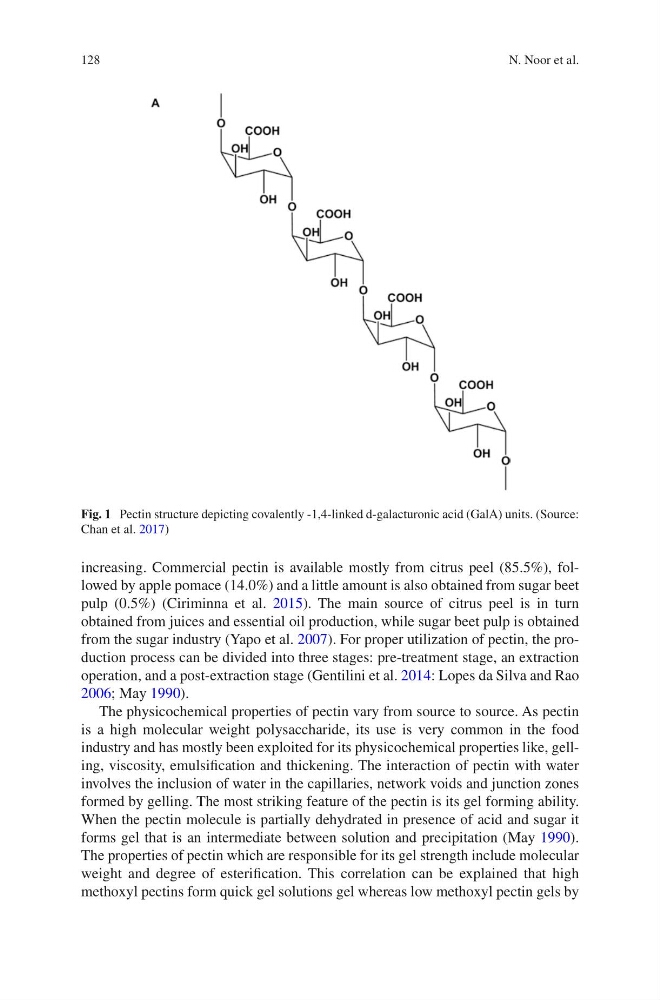
Fig. 1 Pectin structure depicting covalently -1,4-linked d-galacturonic acid (GalA) units. (Source:
Chan et al. 2017)
N. Noor et al.
increasing. Commercial pectin is available mostly from citrus peel (85.5%), followed by apple pomace (14.0%) and a little amount is also obtained from sugar beet
pulp (0.5%) (Ciriminna et al. 2015). The main source of citrus peel is in turn
obtained from juices and essential oil production, while sugar beet pulp is obtained
from the sugar industry (Yapo et al. 2007). For proper utilization of pectin, the production process can be divided into three stages: pre-treatment stage, an extraction
operation, and a post-extraction stage (Gentilini et al. 2014: Lopes da Silva and Rao
2006; May 1990).
The physicochemical properties of pectin vary from source to source. As pectin
is a high molecular weight polysaccharide, its use is very common in the food
industry and has mostly been exploited for its physicochemical properties like, gelling, viscosity, emulsification and thickening. The interaction of pectin with water
involves the inclusion of water in the capillaries, network voids and junction zones
formed by gelling. The most striking feature of the pectin is its gel forming ability.
When the pectin molecule is partially dehydrated in presence of acid and sugar it
forms gel that is an intermediate between solution and precipitation (May 1990).
The properties of pectin which are responsible for its gel strength include molecular
weight and degree of esterification. This correlation can be explained that high
methoxyl pectins form quick gel solutions gel whereas low methoxyl pectin gels by
Fig. 1 Pectin structure depicting covalently -1,4-linked d-galacturonic acid (GalA) units. (Source:
Chan et al. 2017)
N. Noor et al.