

42
3 Effects of the Introduction of Superconductivity into Electromagnetism
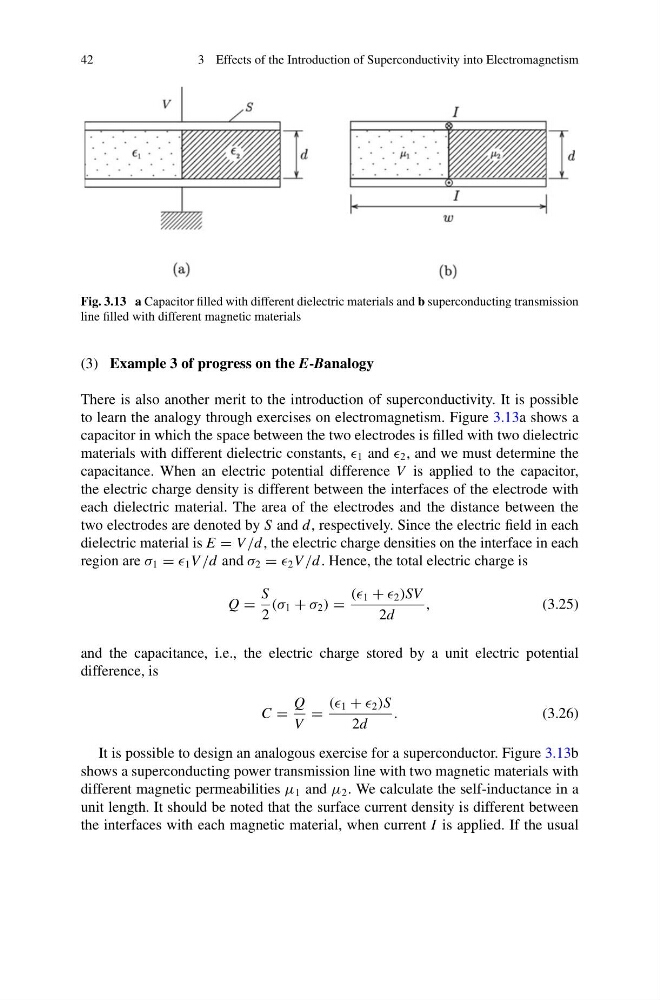
Fig. 3.13 a Capacitor filled with different dielectric materials and b superconducting transmission
line filled with different magnetic materials
(3) Example 3 of progress on the E-Banalogy
There is also another merit to the introduction of superconductivity. It is possible
to learn the analogy through exercises on electromagnetism. Figure 3.13a shows a
capacitor in which the space between the two electrodes is filled with two dielectric
materials with different dielectric constants, 1 and 2 , and we must determine the
capacitance. When an electric potential difference V is applied to the capacitor,
the electric charge density is different between the interfaces of the electrode with
each dielectric material. The area of the electrodes and the distance between the
two electrodes are denoted by S and d , respectively. Since the electric field in each
dielectric material is E = V /d , the electric charge densities on the interface in each
region are σ 1 = 1 V /d and σ 2 = 2 V /d . Hence, the total electric charge is
Q =
S
2
(σ 1 + σ 2 ) =
( 1 + 2 )SV
2d
,
(3.25)
and the capacitance, i.e., the electric charge stored by a unit electric potential
difference, is
C =
Q
V
=
( 1 + 2 )S
2d
.
(3.26)
It is possible to design an analogous exercise for a superconductor. Figure 3.13b
shows a superconducting power transmission line with two magnetic materials with
different magnetic permeabilities μ 1 and μ 2 . We calculate the self-inductance in a
unit length. It should be noted that the surface current density is different between
the interfaces with each magnetic material, when current I is applied. If the usual
3 Effects of the Introduction of Superconductivity into Electromagnetism
Fig. 3.13 a Capacitor filled with different dielectric materials and b superconducting transmission
line filled with different magnetic materials
(3) Example 3 of progress on the E-Banalogy
There is also another merit to the introduction of superconductivity. It is possible
to learn the analogy through exercises on electromagnetism. Figure 3.13a shows a
capacitor in which the space between the two electrodes is filled with two dielectric
materials with different dielectric constants, 1 and 2 , and we must determine the
capacitance. When an electric potential difference V is applied to the capacitor,
the electric charge density is different between the interfaces of the electrode with
each dielectric material. The area of the electrodes and the distance between the
two electrodes are denoted by S and d , respectively. Since the electric field in each
dielectric material is E = V /d , the electric charge densities on the interface in each
region are σ 1 = 1 V /d and σ 2 = 2 V /d . Hence, the total electric charge is
Q =
S
2
(σ 1 + σ 2 ) =
( 1 + 2 )SV
2d
,
(3.25)
and the capacitance, i.e., the electric charge stored by a unit electric potential
difference, is
C =
Q
V
=
( 1 + 2 )S
2d
.
(3.26)
It is possible to design an analogous exercise for a superconductor. Figure 3.13b
shows a superconducting power transmission line with two magnetic materials with
different magnetic permeabilities μ 1 and μ 2 . We calculate the self-inductance in a
unit length. It should be noted that the surface current density is different between
the interfaces with each magnetic material, when current I is applied. If the usual