

82
S. B. Christensen et al.
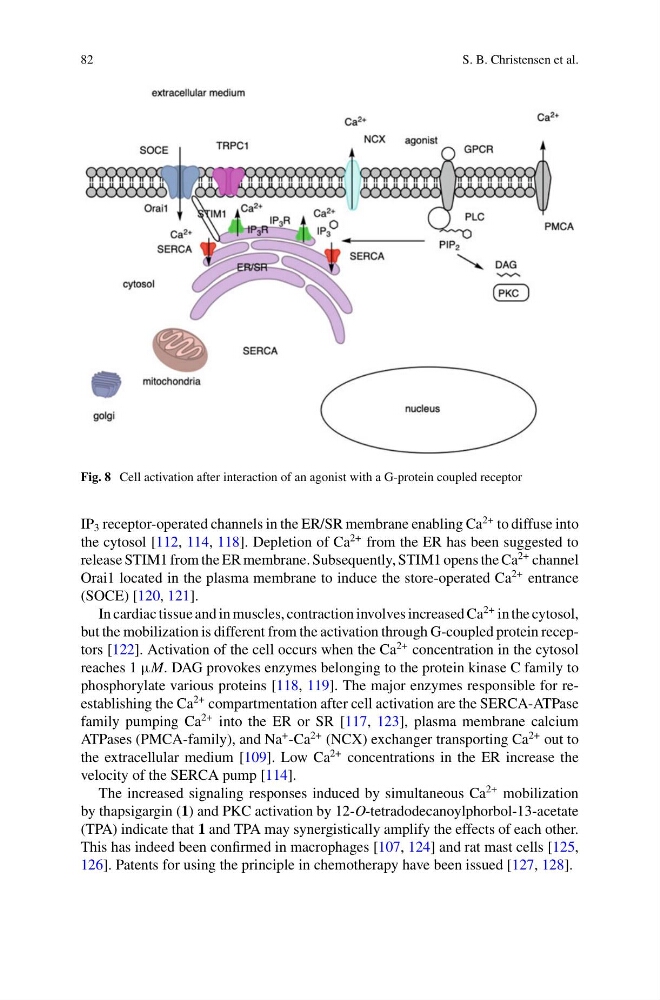
Fig. 8 Cell activation after interaction of an agonist with a G-protein coupled receptor
IP 3 receptor-operated channels in the ER/SR membrane enabling Ca
2+ to diffuse into
the cytosol [112, 114, 118]. Depletion of Ca
2+ from the ER has been suggested to
release STIM1 from the ER membrane. Subsequently, STIM1 opens the Ca
2+ channel
Orai1 located in the plasma membrane to induce the store-operated Ca
2+ entrance
(SOCE) [120, 121].
In cardiac tissue and in muscles, contraction involves increased Ca
2+ in the cytosol,
but the mobilization is different from the activation through G-coupled protein receptors [122]. Activation of the cell occurs when the Ca
2+ concentration in the cytosol
reaches 1 μM. DAG provokes enzymes belonging to the protein kinase C family to
phosphorylate various proteins [118, 119]. The major enzymes responsible for reestablishing the Ca
2+ compartmentation after cell activation are the SERCA-ATPase
family pumping Ca
2+ into the ER or SR [117, 123], plasma membrane calcium
ATPases (PMCA-family), and Na
+ -Ca
2+ (NCX) exchanger transporting Ca
2+ out to
the extracellular medium [109]. Low Ca
2+ concentrations in the ER increase the
velocity of the SERCA pump [114].
The increased signaling responses induced by simultaneous Ca
2+ mobilization
by thapsigargin (1) and PKC activation by 12-O-tetradodecanoylphorbol-13-acetate
(TPA) indicate that 1 and TPA may synergistically amplify the effects of each other.
This has indeed been confirmed in macrophages [107, 124] and rat mast cells [125,
126]. Patents for using the principle in chemotherapy have been issued [127, 128].
S. B. Christensen et al.
Fig. 8 Cell activation after interaction of an agonist with a G-protein coupled receptor
IP 3 receptor-operated channels in the ER/SR membrane enabling Ca
2+ to diffuse into
the cytosol [112, 114, 118]. Depletion of Ca
2+ from the ER has been suggested to
release STIM1 from the ER membrane. Subsequently, STIM1 opens the Ca
2+ channel
Orai1 located in the plasma membrane to induce the store-operated Ca
2+ entrance
(SOCE) [120, 121].
In cardiac tissue and in muscles, contraction involves increased Ca
2+ in the cytosol,
but the mobilization is different from the activation through G-coupled protein receptors [122]. Activation of the cell occurs when the Ca
2+ concentration in the cytosol
reaches 1 μM. DAG provokes enzymes belonging to the protein kinase C family to
phosphorylate various proteins [118, 119]. The major enzymes responsible for reestablishing the Ca
2+ compartmentation after cell activation are the SERCA-ATPase
family pumping Ca
2+ into the ER or SR [117, 123], plasma membrane calcium
ATPases (PMCA-family), and Na
+ -Ca
2+ (NCX) exchanger transporting Ca
2+ out to
the extracellular medium [109]. Low Ca
2+ concentrations in the ER increase the
velocity of the SERCA pump [114].
The increased signaling responses induced by simultaneous Ca
2+ mobilization
by thapsigargin (1) and PKC activation by 12-O-tetradodecanoylphorbol-13-acetate
(TPA) indicate that 1 and TPA may synergistically amplify the effects of each other.
This has indeed been confirmed in macrophages [107, 124] and rat mast cells [125,
126]. Patents for using the principle in chemotherapy have been issued [127, 128].