

70
S. B. Christensen et al.
HO
O
O
O
O
HO
O
O
O
O
O
O
OH
O
O
47
48
49
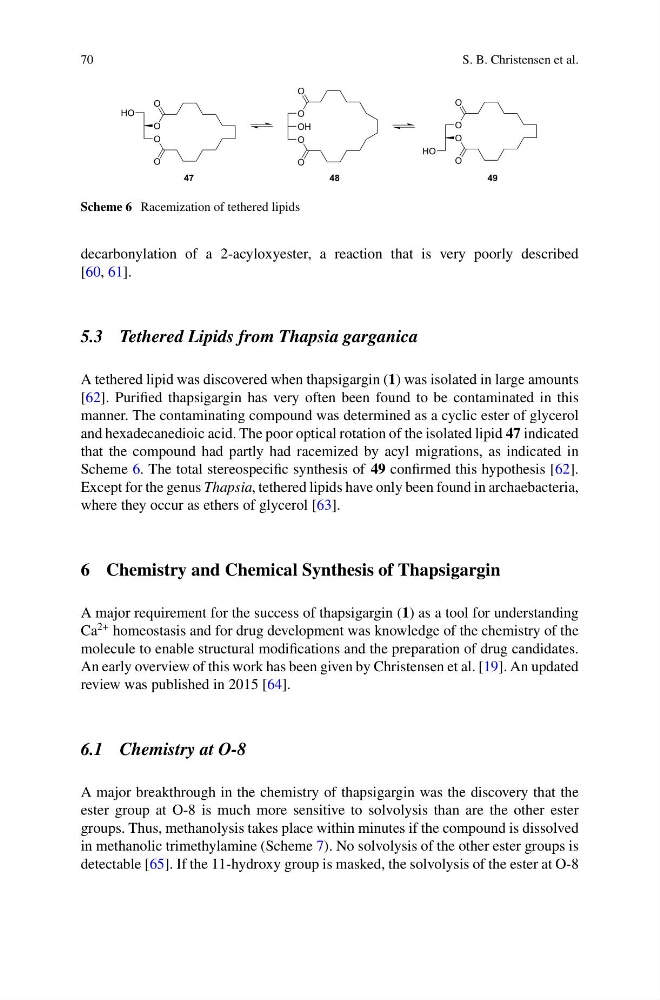
Scheme 6 Racemization of tethered lipids
decarbonylation of a 2-acyloxyester, a reaction that is very poorly described
[60, 61].
5.3 Tethered Lipids from Thapsia garganica
A tethered lipid was discovered when thapsigargin (1) was isolated in large amounts
[62]. Purified thapsigargin has very often been found to be contaminated in this
manner. The contaminating compound was determined as a cyclic ester of glycerol
and hexadecanedioic acid. The poor optical rotation of the isolated lipid 47 indicated
that the compound had partly had racemized by acyl migrations, as indicated in
Scheme 6. The total stereospecific synthesis of 49 confirmed this hypothesis [62].
Except for the genus Thapsia, tethered lipids have only been found in archaebacteria,
where they occur as ethers of glycerol [63].
6 Chemistry and Chemical Synthesis of Thapsigargin
A major requirement for the success of thapsigargin (1) as a tool for understanding
Ca
2+ homeostasis and for drug development was knowledge of the chemistry of the
molecule to enable structural modifications and the preparation of drug candidates.
An early overview of this work has been given by Christensen et al. [19]. An updated
review was published in 2015 [64].
6.1 Chemistry at O-8
A major breakthrough in the chemistry of thapsigargin was the discovery that the
ester group at O-8 is much more sensitive to solvolysis than are the other ester
groups. Thus, methanolysis takes place within minutes if the compound is dissolved
in methanolic trimethylamine (Scheme 7). No solvolysis of the other ester groups is
detectable [65]. If the 11-hydroxy group is masked, the solvolysis of the ester at O-8
S. B. Christensen et al.
HO
O
O
O
O
HO
O
O
O
O
O
O
OH
O
O
47
48
49
Scheme 6 Racemization of tethered lipids
decarbonylation of a 2-acyloxyester, a reaction that is very poorly described
[60, 61].
5.3 Tethered Lipids from Thapsia garganica
A tethered lipid was discovered when thapsigargin (1) was isolated in large amounts
[62]. Purified thapsigargin has very often been found to be contaminated in this
manner. The contaminating compound was determined as a cyclic ester of glycerol
and hexadecanedioic acid. The poor optical rotation of the isolated lipid 47 indicated
that the compound had partly had racemized by acyl migrations, as indicated in
Scheme 6. The total stereospecific synthesis of 49 confirmed this hypothesis [62].
Except for the genus Thapsia, tethered lipids have only been found in archaebacteria,
where they occur as ethers of glycerol [63].
6 Chemistry and Chemical Synthesis of Thapsigargin
A major requirement for the success of thapsigargin (1) as a tool for understanding
Ca
2+ homeostasis and for drug development was knowledge of the chemistry of the
molecule to enable structural modifications and the preparation of drug candidates.
An early overview of this work has been given by Christensen et al. [19]. An updated
review was published in 2015 [64].
6.1 Chemistry at O-8
A major breakthrough in the chemistry of thapsigargin was the discovery that the
ester group at O-8 is much more sensitive to solvolysis than are the other ester
groups. Thus, methanolysis takes place within minutes if the compound is dissolved
in methanolic trimethylamine (Scheme 7). No solvolysis of the other ester groups is
detectable [65]. If the 11-hydroxy group is masked, the solvolysis of the ester at O-8