

The Role of Total Synthesis in Structure …
33
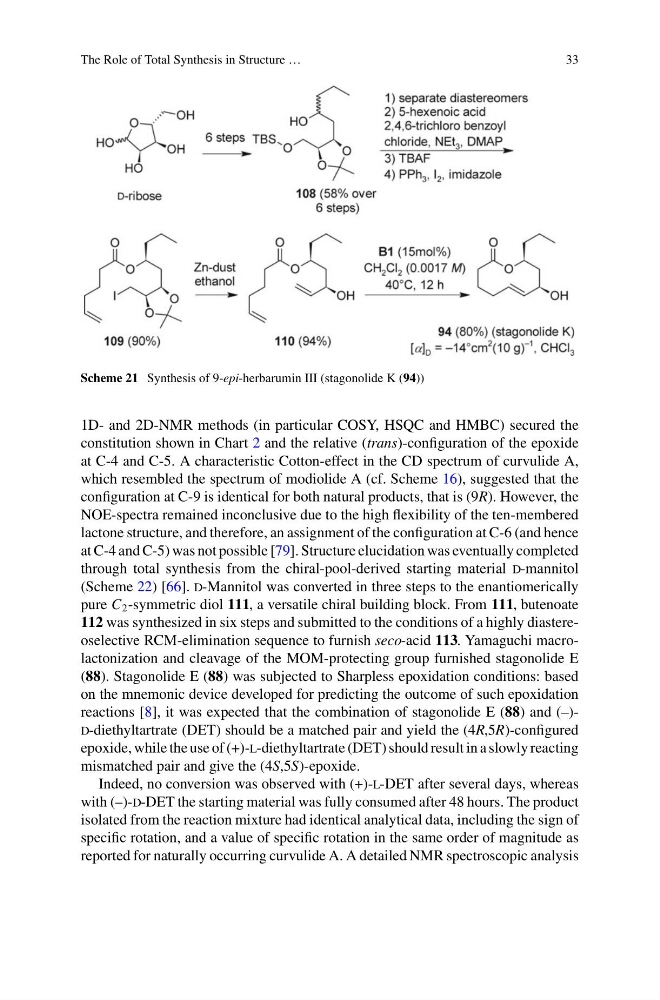
Scheme 21 Synthesis of 9-epi-herbarumin III (stagonolide K (94))
1D- and 2D-NMR methods (in particular COSY, HSQC and HMBC) secured the
constitution shown in Chart 2 and the relative (trans)-configuration of the epoxide
at C-4 and C-5. A characteristic Cotton-effect in the CD spectrum of curvulide A,
which resembled the spectrum of modiolide A (cf. Scheme 16), suggested that the
configuration at C-9 is identical for both natural products, that is (9R). However, the
NOE-spectra remained inconclusive due to the high flexibility of the ten-membered
lactone structure, and therefore, an assignment of the configuration at C-6 (and hence
at C-4 and C-5) was not possible [79]. Structure elucidation was eventually completed
through total synthesis from the chiral-pool-derived starting material d-mannitol
(Scheme 22) [66]. d-Mannitol was converted in three steps to the enantiomerically
pure C 2 -symmetric diol 111, a versatile chiral building block. From 111, butenoate
112 was synthesized in six steps and submitted to the conditions of a highly diastereoselective RCM-elimination sequence to furnish seco-acid 113. Yamaguchi macrolactonization and cleavage of the MOM-protecting group furnished stagonolide E
(88). Stagonolide E (88) was subjected to Sharpless epoxidation conditions: based
on the mnemonic device developed for predicting the outcome of such epoxidation
reactions [8], it was expected that the combination of stagonolide E (88) and (–)d-diethyltartrate (DET) should be a matched pair and yield the (4R,5R)-configured
epoxide, while the use of (+)-l-diethyltartrate (DET) should result in a slowly reacting
mismatched pair and give the (4S,5S)-epoxide.
Indeed, no conversion was observed with (+)-l-DET after several days, whereas
with (–)-d-DET the starting material was fully consumed after 48 hours. The product
isolated from the reaction mixture had identical analytical data, including the sign of
specific rotation, and a value of specific rotation in the same order of magnitude as
reported for naturally occurring curvulide A. A detailed NMR spectroscopic analysis
33
Scheme 21 Synthesis of 9-epi-herbarumin III (stagonolide K (94))
1D- and 2D-NMR methods (in particular COSY, HSQC and HMBC) secured the
constitution shown in Chart 2 and the relative (trans)-configuration of the epoxide
at C-4 and C-5. A characteristic Cotton-effect in the CD spectrum of curvulide A,
which resembled the spectrum of modiolide A (cf. Scheme 16), suggested that the
configuration at C-9 is identical for both natural products, that is (9R). However, the
NOE-spectra remained inconclusive due to the high flexibility of the ten-membered
lactone structure, and therefore, an assignment of the configuration at C-6 (and hence
at C-4 and C-5) was not possible [79]. Structure elucidation was eventually completed
through total synthesis from the chiral-pool-derived starting material d-mannitol
(Scheme 22) [66]. d-Mannitol was converted in three steps to the enantiomerically
pure C 2 -symmetric diol 111, a versatile chiral building block. From 111, butenoate
112 was synthesized in six steps and submitted to the conditions of a highly diastereoselective RCM-elimination sequence to furnish seco-acid 113. Yamaguchi macrolactonization and cleavage of the MOM-protecting group furnished stagonolide E
(88). Stagonolide E (88) was subjected to Sharpless epoxidation conditions: based
on the mnemonic device developed for predicting the outcome of such epoxidation
reactions [8], it was expected that the combination of stagonolide E (88) and (–)d-diethyltartrate (DET) should be a matched pair and yield the (4R,5R)-configured
epoxide, while the use of (+)-l-diethyltartrate (DET) should result in a slowly reacting
mismatched pair and give the (4S,5S)-epoxide.
Indeed, no conversion was observed with (+)-l-DET after several days, whereas
with (–)-d-DET the starting material was fully consumed after 48 hours. The product
isolated from the reaction mixture had identical analytical data, including the sign of
specific rotation, and a value of specific rotation in the same order of magnitude as
reported for naturally occurring curvulide A. A detailed NMR spectroscopic analysis