

2.1 Nanoparticles 11
ceramic core, usually, is either magnetic or luminescent, or multifunctional. In
the design depicted in Figure 2.5, the coupling layer may consist of an appropriate
polymer or a type of glucose; however, in many cases, hydroxylated silica is sufficient, too. At the surface of the coupling layer, the biological molecules, such as
proteins or enzymes are attached.
Bulk nanocomposites – as described in this chapter – are composite materials
with at least one phase exhibiting the special properties of a nanomaterial. In
general, random arrangements of nanoparticles in the composite are assumed.
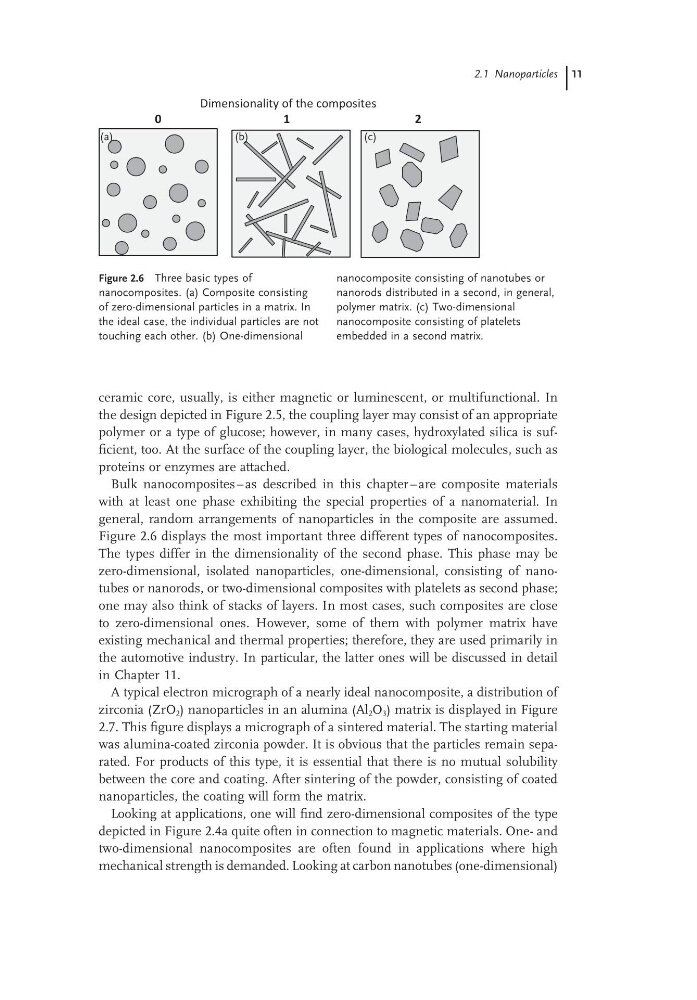
Figure 2.6 displays the most important three different types of nanocomposites.
The types differ in the dimensionality of the second phase. This phase may be
zero-dimensional, isolated nanoparticles, one-dimensional, consisting of nanotubes or nanorods, or two-dimensional composites with platelets as second phase;
one may also think of stacks of layers. In most cases, such composites are close
to zero-dimensional ones. However, some of them with polymer matrix have
existing mechanical and thermal properties; therefore, they are used primarily in
the automotive industry. In particular, the latter ones will be discussed in detail
in Chapter 11.
A typical electron micrograph of a nearly ideal nanocomposite, a distribution of
zirconia (ZrO 2 ) nanoparticles in an alumina (Al 2 O 3 ) matrix is displayed in Figure
2.7. This figure displays a micrograph of a sintered material. The starting material
was alumina-coated zirconia powder. It is obvious that the particles remain separated. For products of this type, it is essential that there is no mutual solubility
between the core and coating. After sintering of the powder, consisting of coated
nanoparticles, the coating will form the matrix.
Looking at applications, one will find zero-dimensional composites of the type
depicted in Figure 2.4a quite often in connection to magnetic materials. One- and
two-dimensional nanocomposites are often found in applications where high
mechanical strength is demanded. Looking at carbon nanotubes (one-dimensional)
Figure 2.6 Three basic types of
nanocomposites. (a) Composite consisting
of zero-dimensional particles in a matrix. In
the ideal case, the individual particles are not
touching each other. (b) One-dimensional
nanocomposite consisting of nanotubes or
nanorods distributed in a second, in general,
polymer matrix. (c) Two-dimensional
nanocomposite consisting of platelets
embedded in a second matrix.
Dimensionality of the composites
0
1
2
(a)
(b)
(c)
ceramic core, usually, is either magnetic or luminescent, or multifunctional. In
the design depicted in Figure 2.5, the coupling layer may consist of an appropriate
polymer or a type of glucose; however, in many cases, hydroxylated silica is sufficient, too. At the surface of the coupling layer, the biological molecules, such as
proteins or enzymes are attached.
Bulk nanocomposites – as described in this chapter – are composite materials
with at least one phase exhibiting the special properties of a nanomaterial. In
general, random arrangements of nanoparticles in the composite are assumed.
Figure 2.6 displays the most important three different types of nanocomposites.
The types differ in the dimensionality of the second phase. This phase may be
zero-dimensional, isolated nanoparticles, one-dimensional, consisting of nanotubes or nanorods, or two-dimensional composites with platelets as second phase;
one may also think of stacks of layers. In most cases, such composites are close
to zero-dimensional ones. However, some of them with polymer matrix have
existing mechanical and thermal properties; therefore, they are used primarily in
the automotive industry. In particular, the latter ones will be discussed in detail
in Chapter 11.
A typical electron micrograph of a nearly ideal nanocomposite, a distribution of
zirconia (ZrO 2 ) nanoparticles in an alumina (Al 2 O 3 ) matrix is displayed in Figure
2.7. This figure displays a micrograph of a sintered material. The starting material
was alumina-coated zirconia powder. It is obvious that the particles remain separated. For products of this type, it is essential that there is no mutual solubility
between the core and coating. After sintering of the powder, consisting of coated
nanoparticles, the coating will form the matrix.
Looking at applications, one will find zero-dimensional composites of the type
depicted in Figure 2.4a quite often in connection to magnetic materials. One- and
two-dimensional nanocomposites are often found in applications where high
mechanical strength is demanded. Looking at carbon nanotubes (one-dimensional)
Figure 2.6 Three basic types of
nanocomposites. (a) Composite consisting
of zero-dimensional particles in a matrix. In
the ideal case, the individual particles are not
touching each other. (b) One-dimensional
nanocomposite consisting of nanotubes or
nanorods distributed in a second, in general,
polymer matrix. (c) Two-dimensional
nanocomposite consisting of platelets
embedded in a second matrix.
Dimensionality of the composites
0
1
2
(a)
(b)
(c)