

their biocompatibility and ability to form highly porous structures
with the ability to support cell proliferation [2, 12, 13].
2 Materials
2.1 Alginate and
Cross-linking
Reagents
1. Sodium alginate solution: 8% (w/v) sodium alginate in deionized water (DIW) (see Note 1).
2. Primary crosslinking solution: 80 mM calcium chloride in
DIW; for printing cell-laden constructs, concentration shall
be increased to 160 mM.
3. Secondary crosslinking solution: 100 mM calcium chloride
in DIW.
4. Tertiary crosslinking solution: 40 mM barium chloride in DIW.
2.2 Equipment and
Consumables for 3D
Printing
1. 5 mL syringes.
2. Dispensing needle.
3. Nitrocellulose filtration paper.
4. Petri dishes.
5. Tweezers.
6. Vortex.
7. 3D bioprinter (e.g., Fab@home) (see Note 2).
8. Computer with CAD and 3D printing softwares.
9. Cell suspension: ca. 20 million cells per mL (see Notes 3 and 4).
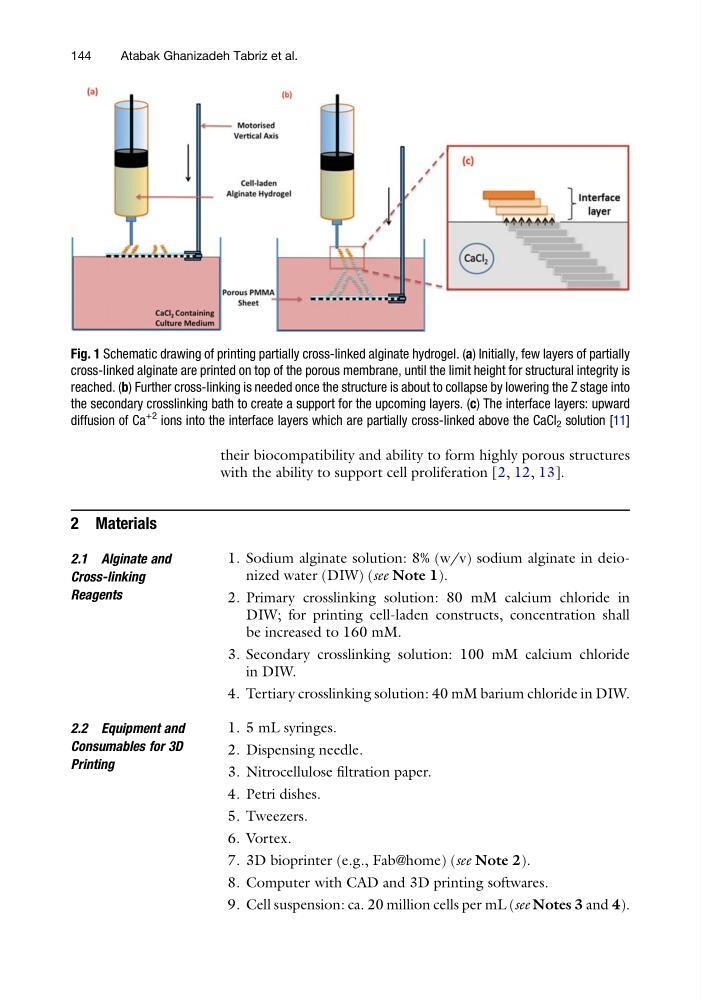
Fig. 1 Schematic drawing of printing partially cross-linked alginate hydrogel. (a) Initially, few layers of partially
cross-linked alginate are printed on top of the porous membrane, until the limit height for structural integrity is
reached. (b) Further cross-linking is needed once the structure is about to collapse by lowering the Z stage into
the secondary crosslinking bath to create a support for the upcoming layers. (c) The interface layers: upward
diffusion of Ca
+2 ions into the interface layers which are partially cross-linked above the CaCl 2 solution [11]
144
Atabak Ghanizadeh Tabriz et al.
with the ability to support cell proliferation [2, 12, 13].
2 Materials
2.1 Alginate and
Cross-linking
Reagents
1. Sodium alginate solution: 8% (w/v) sodium alginate in deionized water (DIW) (see Note 1).
2. Primary crosslinking solution: 80 mM calcium chloride in
DIW; for printing cell-laden constructs, concentration shall
be increased to 160 mM.
3. Secondary crosslinking solution: 100 mM calcium chloride
in DIW.
4. Tertiary crosslinking solution: 40 mM barium chloride in DIW.
2.2 Equipment and
Consumables for 3D
Printing
1. 5 mL syringes.
2. Dispensing needle.
3. Nitrocellulose filtration paper.
4. Petri dishes.
5. Tweezers.
6. Vortex.
7. 3D bioprinter (e.g., Fab@home) (see Note 2).
8. Computer with CAD and 3D printing softwares.
9. Cell suspension: ca. 20 million cells per mL (see Notes 3 and 4).
Fig. 1 Schematic drawing of printing partially cross-linked alginate hydrogel. (a) Initially, few layers of partially
cross-linked alginate are printed on top of the porous membrane, until the limit height for structural integrity is
reached. (b) Further cross-linking is needed once the structure is about to collapse by lowering the Z stage into
the secondary crosslinking bath to create a support for the upcoming layers. (c) The interface layers: upward
diffusion of Ca
+2 ions into the interface layers which are partially cross-linked above the CaCl 2 solution [11]
144
Atabak Ghanizadeh Tabriz et al.