

be superimposed to build a 3D construct of the desired
geometry.
5. Gently dispense few mL of the crosslinking solution on the
construct surface to induce alginate crosslinking.
6. After 5 min, remove the crosslinking solution, and gently wash
the crosslinked scaffold in cell culture medium to terminate the
gelation process.
7. Check the constructs under an inverted microscope. Two representative cell-laden constructs with different printing patterns are reported in Fig. 2.
8. Incubate constructs at 37
C in a 5% CO 2 atmosphere with
frequent medium changes (see Note 7). At selected timepoints, constructs can be retrieved and used for biological
characterization.
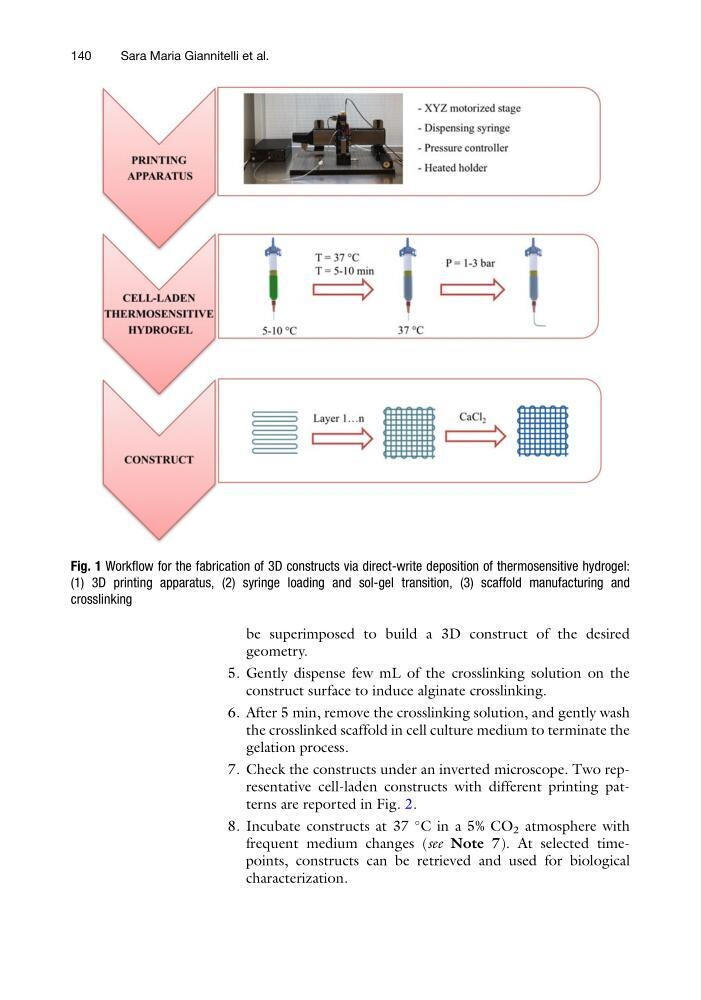
Fig. 1 Workflow for the fabrication of 3D constructs via direct-write deposition of thermosensitive hydrogel:
(1) 3D printing apparatus, (2) syringe loading and sol-gel transition, (3) scaffold manufacturing and
crosslinking
140
Sara Maria Giannitelli et al.
geometry.
5. Gently dispense few mL of the crosslinking solution on the
construct surface to induce alginate crosslinking.
6. After 5 min, remove the crosslinking solution, and gently wash
the crosslinked scaffold in cell culture medium to terminate the
gelation process.
7. Check the constructs under an inverted microscope. Two representative cell-laden constructs with different printing patterns are reported in Fig. 2.
8. Incubate constructs at 37
C in a 5% CO 2 atmosphere with
frequent medium changes (see Note 7). At selected timepoints, constructs can be retrieved and used for biological
characterization.
Fig. 1 Workflow for the fabrication of 3D constructs via direct-write deposition of thermosensitive hydrogel:
(1) 3D printing apparatus, (2) syringe loading and sol-gel transition, (3) scaffold manufacturing and
crosslinking
140
Sara Maria Giannitelli et al.