

9. Incubate the samples in the staining solution for 45 min on a
shaker, protected from light.
10. Wash the samples in PBS twice.
11. Store the samples at 4
C, protected from light until imaging
using CLSM. For an example image, see Fig. 6.
4 Notes
1. You can simulate the printing time in Mach3 software under
the “Tool Path” tab, “Simulate Program Run.” The example
code provided above takes approximately 15 h to run.
2. Every MEW machine is different, and so optimization of the
voltage, temperature, gas pressure, and x-y stage speed will be
required. The time taken to equilibrate can be quite long as the
flow rates are very low, and so it is useful to let the machine run
for a few hours with a test scaffold before attempting to print an
entire scaffold.
3. The spacing of the fibers will dramatically affect the seeding
density. In the above example, the space between fibers is
0.2 mm; spacing greater than this may mean more cells fall
through the scaffold during seeding.
4. The scaffolds may be pre-treated to increase cellular adhesion,
for example, NaOH etching or plasma treatment.
5. The amount of cells may be adjusted to the size of the scaffold.
6. The cell suspension may be aspirated from the bottom of the
well plate every 20 min following initial seeding and reseeded
onto the scaffold to maximize cell attachment to the scaffold.
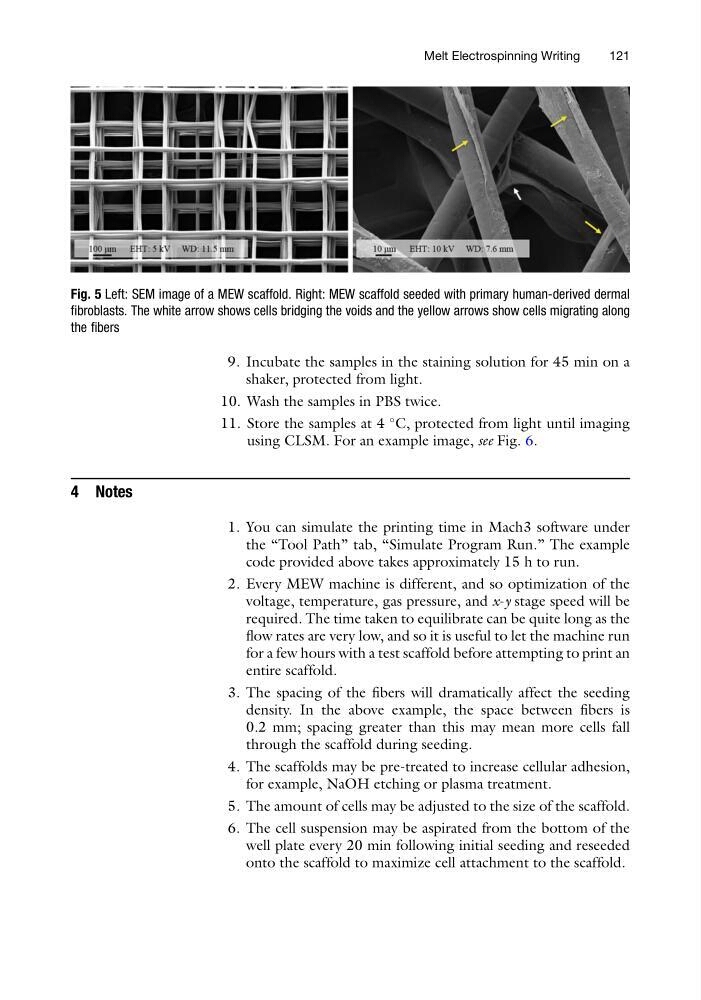
Fig. 5 Left: SEM image of a MEW scaffold. Right: MEW scaffold seeded with primary human-derived dermal
fibroblasts. The white arrow shows cells bridging the voids and the yellow arrows show cells migrating along
the fibers
Melt Electrospinning Writing
121
shaker, protected from light.
10. Wash the samples in PBS twice.
11. Store the samples at 4
C, protected from light until imaging
using CLSM. For an example image, see Fig. 6.
4 Notes
1. You can simulate the printing time in Mach3 software under
the “Tool Path” tab, “Simulate Program Run.” The example
code provided above takes approximately 15 h to run.
2. Every MEW machine is different, and so optimization of the
voltage, temperature, gas pressure, and x-y stage speed will be
required. The time taken to equilibrate can be quite long as the
flow rates are very low, and so it is useful to let the machine run
for a few hours with a test scaffold before attempting to print an
entire scaffold.
3. The spacing of the fibers will dramatically affect the seeding
density. In the above example, the space between fibers is
0.2 mm; spacing greater than this may mean more cells fall
through the scaffold during seeding.
4. The scaffolds may be pre-treated to increase cellular adhesion,
for example, NaOH etching or plasma treatment.
5. The amount of cells may be adjusted to the size of the scaffold.
6. The cell suspension may be aspirated from the bottom of the
well plate every 20 min following initial seeding and reseeded
onto the scaffold to maximize cell attachment to the scaffold.
Fig. 5 Left: SEM image of a MEW scaffold. Right: MEW scaffold seeded with primary human-derived dermal
fibroblasts. The white arrow shows cells bridging the voids and the yellow arrows show cells migrating along
the fibers
Melt Electrospinning Writing
121